
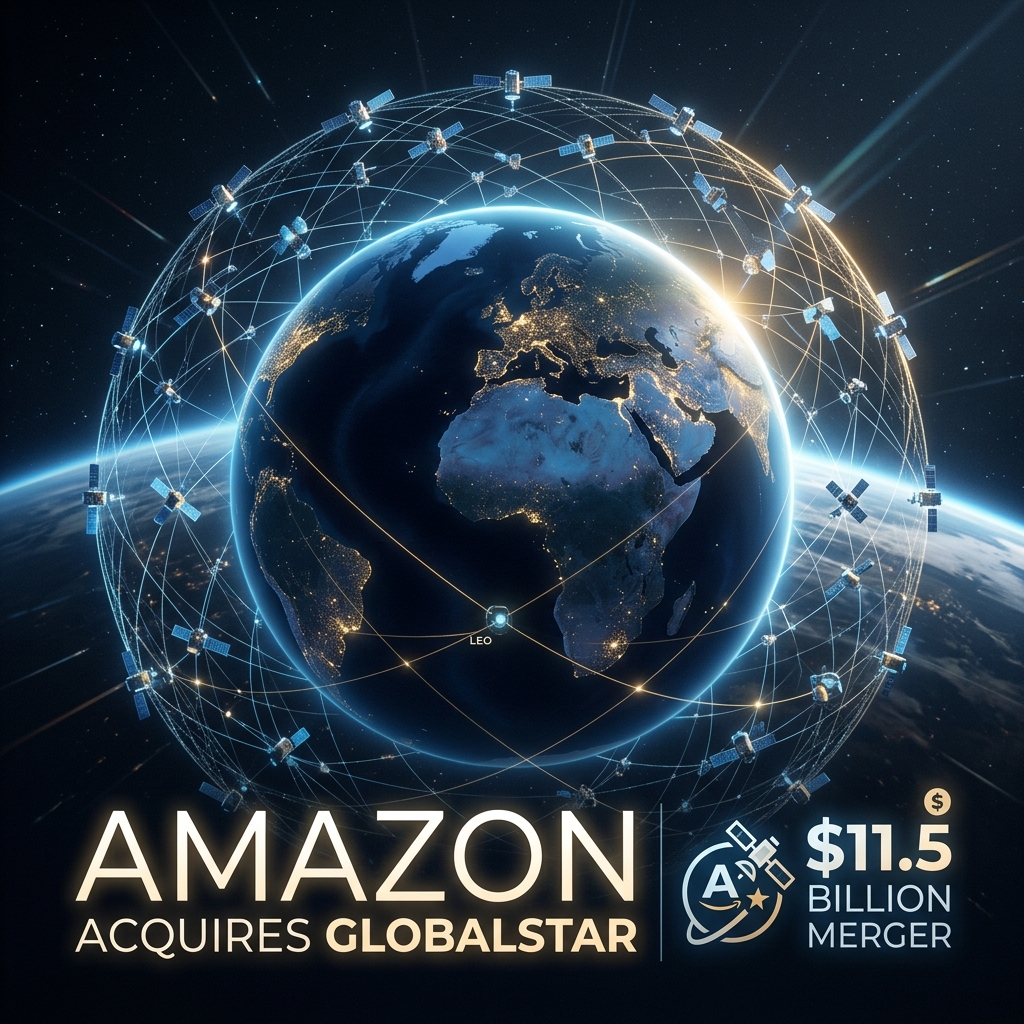

I have to admit, when the notification flashed across my screen this morning, I had to read it twice. Amazon, the e-commerce titan that has been slowly and methodically building its own orbital empire, just dropped $11.57 billion to acquire Globalstar.
Let that sink in for a second. Eleven point five billion dollars.
For years, we’ve watched Elon Musk’s Starlink completely dominate the Low Earth Orbit (LEO) satellite narrative. They launched thousands of satellites, disrupted global telecom, and even caused geopolitical stirrings (which I covered in depth when discussing Elon Musk’s Starlink: A Silent Threat to India’s Sovereignty?).
Meanwhile, Amazon’s Project Kuiper–recently rebranded as “Amazon Leo”–has felt like a lumbering giant. They had the capital, they had the ambition, but they lacked the operational velocity that SpaceX seemed to conjure out of thin air.
But today changes everything. By acquiring Globalstar, Amazon didn’t just buy a fleet of aging satellites. They bought the regulatory golden ticket. They bought the spectrum. And most importantly, they bought an immediate, operational footprint in the Direct-to-Device (D2D) satellite market.
If you thought the space race was over, you were dead wrong. The real war for orbital supremacy just began.
The $11.5 Billion Blueprint: Buying Time and Spectrum
To understand why Andy Jassy just signed an $11.6 billion check, you have to look past the physical hardware in orbit. Yes, Globalstar has satellites. Yes, they have ground stations. But in the world of telecommunications, hardware is the easy part. You can build a satellite if you have enough money. What you cannot build is the right to transmit data over specific, globally recognized radio frequencies.
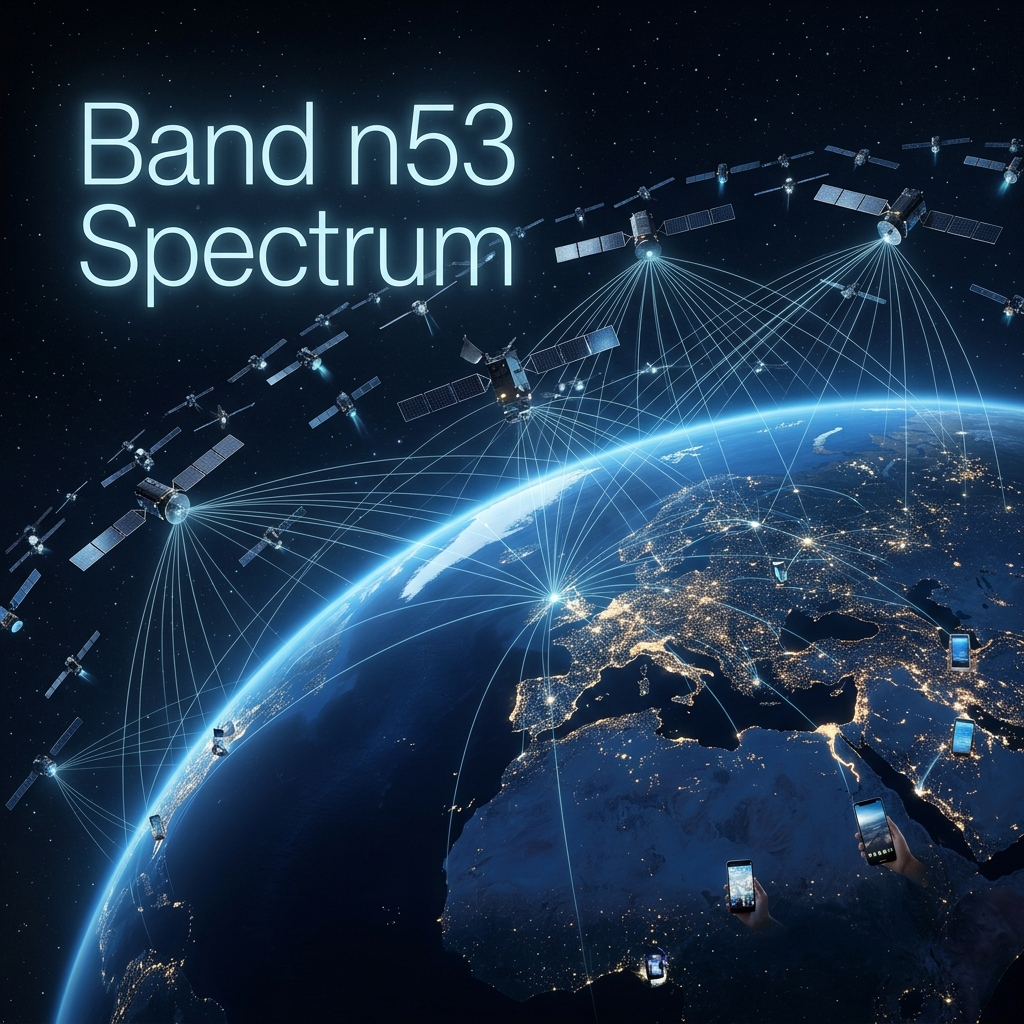
This acquisition is entirely about spectrum licensing. Specifically, it’s about the highly coveted Band n53 (2483.5 to 2495 MHz).
For the uninitiated, spectrum is the invisible real estate of the modern world. It is strictly regulated, fiercely guarded, and impossibly expensive to acquire. Band n53 is a mid-band spectrum that is internationally recognized for mobile satellite services (MSS). What makes it so incredibly valuable is that it is the perfect frequency for Direct-to-Device (D2D) communications.
Direct-to-Device is the holy grail of satellite internet. Historically, connecting to a satellite required a massive, clunky terminal (think of those giant dish antennas or the bulky Starlink receivers). D2D changes the paradigm entirely. It allows a satellite in Low Earth Orbit to communicate directly with the standard, unmodified smartphone sitting in your pocket.
Amazon’s original plan for Amazon Leo was to launch their own constellation and then spend years–perhaps a decade–lobbying international regulatory bodies like the FCC and the ITU to secure the necessary spectrum rights to offer D2D services. It would have been a grueling, bureaucratic nightmare.
By acquiring Globalstar, Amazon just bought a shortcut. They bypassed the regulatory line entirely. They now own the rights to Band n53. They don’t have to ask for permission to enter the D2D market; they just bought the front door.
This is a masterstroke in corporate strategy. Amazon realized they couldn’t beat Starlink’s launch cadence, so they decided to beat them on regulatory positioning. With Globalstar’s spectrum integrated into the Amazon Leo architecture, Amazon is now perfectly positioned to launch advanced voice, data, and messaging services directly to consumer smartphones by their targeted window of early 2028.
The Starlink Rivalry: A Tale of Two Mega-Constellations
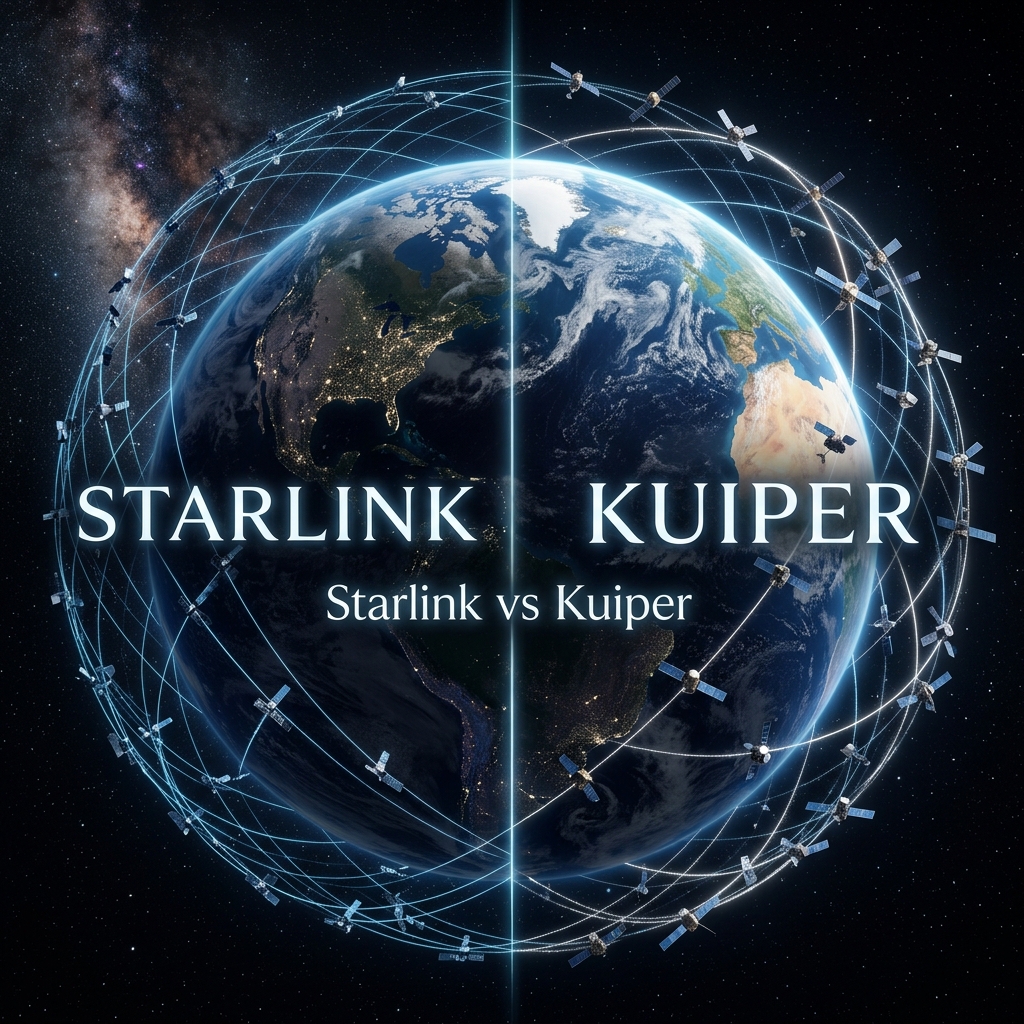
Let’s not pretend this isn’t a direct assault on SpaceX. For anyone who has spent time on Reddit communities like r/hardware or r/SpaceXLounge, the narrative has been overwhelmingly clear: Starlink won the first round.
Starlink currently has thousands of satellites in orbit, providing high-speed internet to millions of users across the globe. They are the undisputed kings of LEO. They recently started testing their own D2D capabilities in partnership with T-Mobile, promising basic texting coverage in the near future.
They have the momentum, the media hype, and the undeniable economic advantage of owning their own reusable rockets. Starlink can launch its own payloads on its own schedule, drastically undercutting the launch costs of its competitors.
But Amazon is playing a completely different game. When you read through the financial forums analyzing this $11.5B deal, it becomes clear that Amazon isn’t just trying to be a consumer ISP. They are the backbone of the modern internet. Amazon Web Services (AWS) powers a massive, indispensable chunk of the global web. By integrating Amazon Leo with AWS infrastructure, Amazon can offer enterprise clients an end-to-end data solution that SpaceX simply cannot match.
Imagine a multinational logistics company. They use AWS to host their backend databases. They use Amazon Leo to track their shipping containers across the middle of the Pacific Ocean, utilizing the newly acquired Globalstar spectrum to transmit data directly from the containers to the cloud without needing a separate ground terminal. It is a closed-loop, vertically integrated data ecosystem that bypasses terrestrial networks entirely.
Furthermore, Amazon’s deep pockets mean they can afford to play the long game. While SpaceX needs to constantly launch and replenish their Starlink fleet to generate consumer revenue and satisfy eager investors, Amazon can subsidize the deployment of Amazon Leo using the massive, trillion-dollar profits generated by their retail and cloud divisions. They don’t need Amazon Leo to be profitable on day one. They just need it to capture market share.
The acquisition of Globalstar gives Amazon the one thing they lacked: a regulatory moat. SpaceX might have more hardware in the sky today, but Amazon now controls a dedicated, globally recognized frequency band that is perfectly optimized for smartphone connectivity.
The battle between Starlink and Amazon Leo is no longer a theoretical concept drawn up in Jeff Bezos’s office; it is an active, multi-billion dollar arms race that will dictate the future of human connectivity.
The Apple Equation: What Happens to Emergency SOS?
Of course, you can’t talk about Globalstar without talking about Apple.
Back in 2022, Apple revolutionized the smartphone industry when they introduced Emergency SOS via satellite on the iPhone 14. That entire system–the one that has saved countless lives of stranded hikers and motorists–is powered by Globalstar. Apple invested hundreds of millions of dollars into Globalstar’s infrastructure to make that feature a reality.
So, what happens now that Amazon owns the network powering one of the iPhone’s most critical safety features?
According to the official acquisition filings, Amazon and Apple have entered into a “long-term agreement” to ensure the continuity of these services. Amazon has publicly stated that they will continue to power existing and future satellite features for supported iPhone and Apple Watch models.
This is a fascinating dynamic. Amazon and Apple are fierce competitors in many arenas–from smart home devices to streaming media. Yet, they are now inextricably linked in orbit.
I’ve been tracking the upcoming hardware releases closely and it’s clear that Apple intends to expand their satellite capabilities far beyond simple emergency text messages. We are looking at a future where the iPhone 18 might offer true, high-speed satellite messaging and perhaps even voice calls when off the grid.
To achieve that, Apple needs massive orbital capacity. By allowing Amazon to acquire Globalstar, Apple effectively outsourced the astronomical capital expenditure required to upgrade the satellite network. Amazon will bear the multi-billion dollar cost of launching the next generation of Amazon Leo satellites, and Apple will simply lease the capacity on the Band n53 spectrum to power their iPhone features.
It is a win-win scenario. Amazon gets the spectrum they desperately need to compete with Starlink, and Apple ensures that their flagship device remains the undisputed king of off-grid connectivity without having to actually build their own satellite constellation.
The Consumer Impact: The Reality of 2028
As tech enthusiasts, it is easy to get swept up in the billions of dollars and the orbital chess moves being played by executives in Seattle and Texas. But what does this actually mean for you, the average consumer, when you upgrade your smartphone in a few years?
The reality is that we are standing on the precipice of the “post-dead-zone” era.
Right now, if you drive an hour outside of a major city limits, hike up a mountain, or take a boat off the coast, you are likely to lose terrestrial cellular reception. Your incredibly expensive, thousand-dollar smartphone suddenly becomes a very sophisticated brick. The integration of Globalstar’s Band n53 spectrum into the Amazon Leo network means that by the targeted rollout in early 2028, the very concept of “no service” will be completely eradicated from the global lexicon.
You will be able to text your family from the middle of the Sahara Desert. You will be able to stream high-fidelity Apple Music while sailing across the Atlantic Ocean. And you will do this all from the exact same, unmodified smartphone you are holding right now. You won’t need to purchase a specialized, rugged satellite phone, and you won’t need to drag around a clunky dish antenna. The radio frequency chips inside the iPhone 18 and the Galaxy S26 will naturally natively sync with the Amazon Leo satellites passing silently overhead.
However, this unprecedented convenience will likely come at a substantial cost. The terrestrial telecom industry is about to undergo a massive, painful paradigm shift. Traditional mobile carriers like Verizon, AT&T, Vodafone, and Jio will have to completely rethink their foundational business models. Why would a consumer pay a premium for a traditional, geographically-limited cellular plan if their phone can natively connect to Amazon Leo from literally anywhere on the face of the Earth?
We will almost certainly see complex, multi-tiered partnerships emerge, where traditional carriers lease bulk capacity from Amazon and SpaceX to offer “hybrid” connectivity plans. Your phone will prioritize terrestrial 5G and 6G cellular towers when you are in the city (because terrestrial networks will always offer higher bandwidth density and lower latency for dense populations), but the device will seamlessly switch to an Amazon Leo satellite connection the moment you step off the grid. You won’t even notice the handover; the bars on your phone will simply change color or display a tiny satellite icon.
This monumental acquisition also raises significant, sobering questions about market consolidation and the centralization of power. If Amazon and SpaceX successfully control the only two viable LEO constellations capable of delivering reliable D2D connectivity, we are looking at a telecom duopoly of global proportions. The internet–the very lifeblood of modern society, commerce, and communication–will be heavily controlled by two massive megacorporations orbiting above our heads. It forces us to ask: what happens if they decide to throttle access? What happens during a geopolitical conflict? These are the real-world implications hidden beneath the $11.5B price tag.
Final Thoughts: A Calculated Masterstroke
I’ve criticized Amazon in the past for moving too slowly on Project Kuiper. I’ve questioned their ability to compete with SpaceX’s aggressive, iterate-and-explode methodology. But I have to give credit where credit is due.
The $11.5 billion acquisition of Globalstar is a calculated, brutal masterstroke.
Amazon didn’t try to out-launch SpaceX. They recognized that the real bottleneck in the D2D satellite market wasn’t hardware; it was regulatory permission. By purchasing Globalstar, Amazon instantly acquired the spectrum licenses required to blanket the Earth in connectivity.
They secured a massive, ongoing revenue stream from Apple. They bypassed a decade of regulatory red tape. And they positioned themselves as the only legitimate threat to Starlink’s orbital monopoly.
The deal is expected to close in 2027, with the first wave of next-generation Amazon Leo D2D services rolling out in early 2028. It is going to be a long, expensive road ahead for Amazon. But for the first time in years, the race for Low Earth Orbit actually looks like a fair fight.
Watch the skies. The real war is just beginning.
Har Har Mahadev 🔱, Jai Maa saraswati🌺