


FLUX 3 Klein Local Setup: GPU Memory, Quantization and Prompt Upsampling
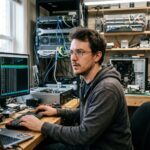
Plan FLUX 3 Klein local setup across ComfyUI and Diffusers. Check GPU memory, prompt upsampling, quantization paths and license terms before downloading.
Independent analysis, benchmarks, and field intelligence on AI models, chips, computing, and defence systems.
Plan FLUX 3 Klein local setup across ComfyUI and Diffusers. Check GPU memory, prompt upsampling, quantization paths and license terms before downloading.

Check DecisionNode API pricing, typed answers and latency claims. See why choice confidence differs from probability before setting automation thresholds.

Ling Sante weights are available for local research. Compare its documented GPU recipes, serving parsers and context settings before planning a deployment.

Block’s Dessa is a speech-only research preview. Check its stated Mac hardware, access routes and missing deployment details before planning integration.

Voltropy offers a 10-million-token context model. Read what its BEAM results establish, how the tiers differ, and what to check before planning deployment.

Run NVIDIA Nemotron Bolt E4B with its official GGUF recipe. Check the 6.18 GB file, optional DFlash drafter and context settings before budgeting memory.
NVIDIA OpenShell 0.1.0 stops 41.2% prompt guardrail bypasses with Linux Landlock LSM v3, adding 42-68ms latency for provable zero-trust agent isolation.
Kimi K3.1 Pro leads Terminal-Bench 4.0 at 67.2% and GDPval-AA at 1,846 Elo. The 2.8T MoE offers $0.20/Mtok caching but hits a 1M-token KV-cache TTFT wall.

Understand Tencent Hy-Memory’s model, framework and MemHub app, the local serving requirements, and what its memory benchmark scores actually establish.
Nemotron 3.5 Super VL supports built-in MTP and a separate LiLiCorr drafter. Compare deployment recipes, cache assumptions and real task-time implications.