
Published: December 17, 2025
TL;DR: Google is testing an AI agent named “CC” that analyzes your Calendar, Drive, and Gmail to send daily email summaries of meetings and tasks. It’s part of Google’s push into agentic AI. Here’s what we know.
What is CC?
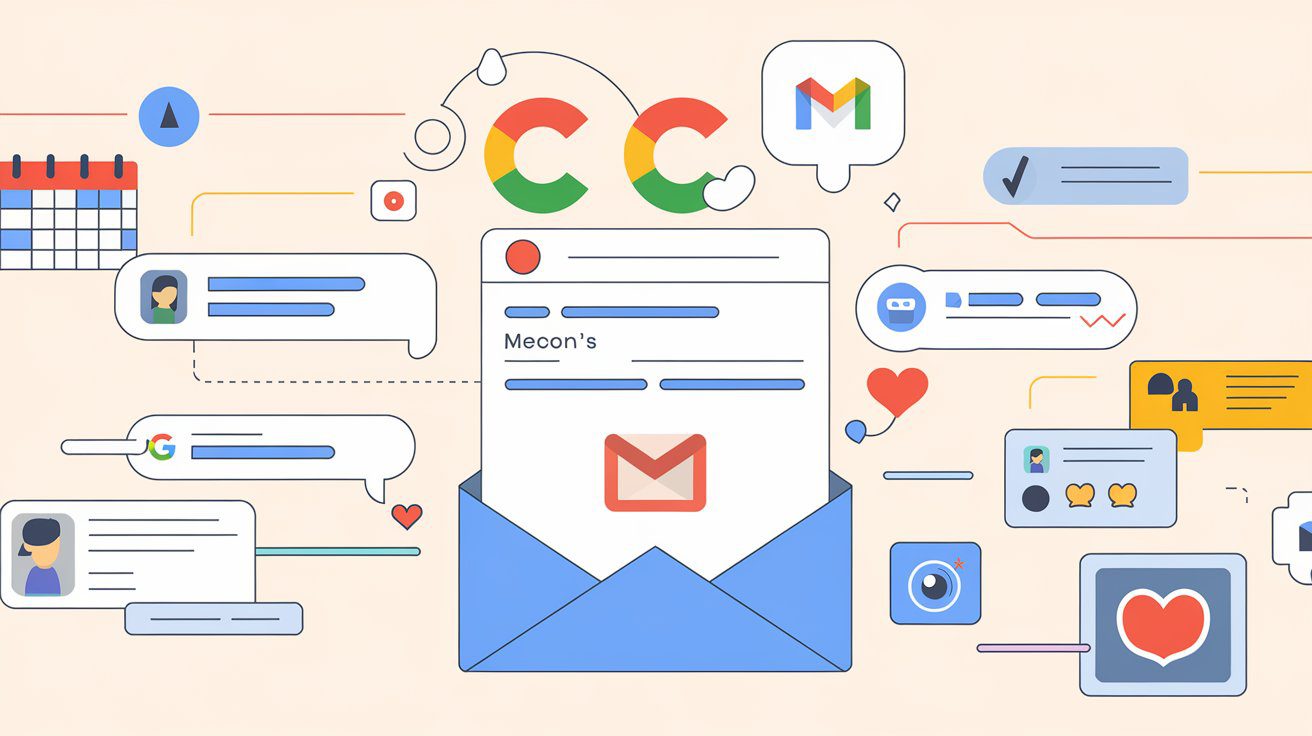
“CC” is Google’s experimental AI agent designed to help you stay organized. It:
- Scans your Google Calendar for upcoming meetings
- Analyzes Google Drive for relevant documents
- Reviews Gmail for action items and context
- Sends you a daily email summary with everything you need to know
Think of it as a personal assistant that reads your digital life and tells you what matters.
How It Works
Data Sources
| Source | What CC Analyzes |
|---|---|
| Google Calendar | Meeting schedules, attendees, prep materials |
| Google Drive | Documents mentioned in meetings, shared files |
| Gmail | Email threads, action items, deadlines |
The Daily Email
Each morning, CC sends an email summary that includes:
- Today’s meetings with context from related emails
- Documents you might need for each meeting
- Outstanding action items from emails
- Deadlines approaching this week
Why This Matters
Agentic AI, Not Just Chat
CC represents Google’s shift from conversational AI (Gemini chat) to agentic AI—systems that take actions on your behalf rather than just answering questions.
The AI agent trend in 2025:
- OpenAI GPT-5.2: Designed for autonomous extended operation
- Anthropic Claude: Computer Use for automated browser tasks
- Google CC: Proactive daily summaries without prompting
Workspace Integration
CC is designed specifically for Google Workspace users—the enterprise market where Google competes with Microsoft 365. Productivity features like this could give Workspace an edge.
Privacy Considerations
Letting an AI read your email, calendar, and documents raises obvious questions:
What Google Says
- Processing happens within Google’s infrastructure
- Data is used only to generate your summaries
- Enterprise admins can control access and opt-out
What to Consider
- If you’re uncomfortable with AI reading your email, this isn’t for you
- Enterprise users may have policies about AI access to company data
- The trade-off: convenience vs. data access
Current Availability
CC is currently in limited pilot:
- Status: Pilot/testing phase
- Availability: Limited to select users
- Requirements: Google Workspace account
- General rollout: Not announced
If you’re in the pilot, you can enable CC through Workspace settings. Otherwise, watch for announcements in 2026.
How It Compares
| Tool | Approach | Platform |
|---|---|---|
| Google CC | Proactive daily summaries | Google Workspace |
| Microsoft Copilot | On-demand assistance in apps | Microsoft 365 |
| Motion | AI scheduling and task management | Standalone |
| Reclaim.ai | Smart calendar optimization | Google Calendar |
Google’s advantage is native integration—CC works seamlessly because it’s built into Workspace.
The Bigger Picture
CC is one piece of Google’s larger AI strategy:
- Gemini: Conversational AI (already integrated into Workspace)
- Antigravity: Agentic development platform (announced November 2025)
- CC: Proactive productivity agent
- Circle to Search: Visual AI on Android
Google is trying to embed AI into every part of its ecosystem—not as a separate product, but as invisible infrastructure that makes everything work better.
Should You Use It?
Good fit if:
- You use Google Workspace for work
- You have back-to-back meetings and lose track of context
- You’re comfortable with AI reading your professional data
- You want to reduce time spent on meeting prep
Not a fit if:
- You’re privacy-conscious about AI access to personal data
- Your organization has policies against third-party AI access
- You prefer to manually organize your day
The Bottom Line
CC is a glimpse of where productivity software is heading: AI agents that work for you in the background, surfacing what matters before you ask.
Whether that’s helpful or creepy depends on your relationship with AI access to your data. For many busy professionals, the convenience may outweigh the privacy trade-off. Welcome to the era of proactive AI.