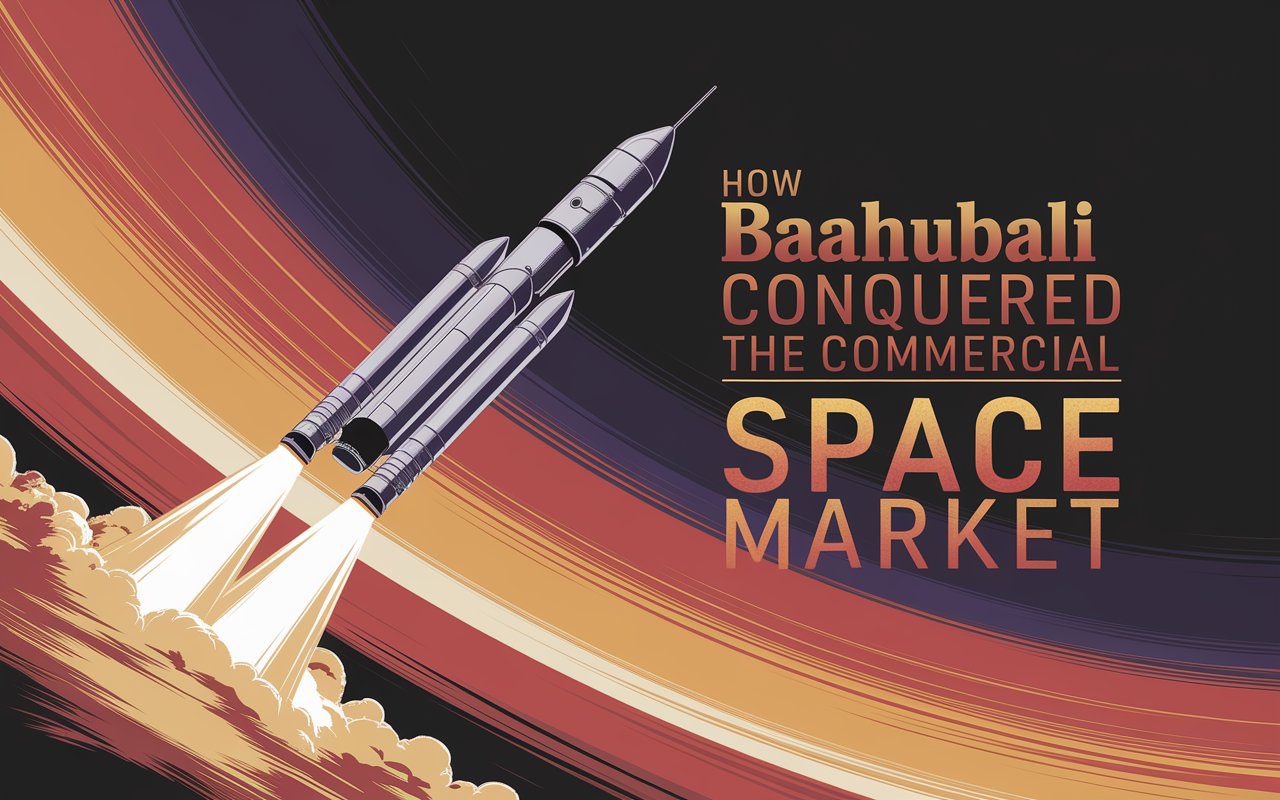

The successful launch of the 6.1-tonne BlueBird Block-2 satellite isn’t just a win for ISRO—it’s a geopolitical statement. In this comprehensive breakdown, we analyze the engineering, the economics, and the 20-year struggle that led to India’s “Baahubali” dominance.
🚀 Executive Summary (TL;DR)
- Mission Success: LVM3-M6 perfectly deployed the 6,100 kg BlueBird Block-2 into Low Earth Orbit (LEO).
- Record Payload: This is the heaviest payload ISRO has ever launched, proving the Vehicle’s “Human Rated” performance margins.
- Commercial Surge: NSIL revenue hit ₹3,026 Crore (FY25), a 43% jump, largely driven by LVM3 contracts.
- Cost Efficiency: At ~$5,000/kg, LVM3 is competitively positioned against Falcon 9 for dedicated mid-heavy missions.
- Future: Validates the C25 Cryogenic Stage for the upcoming Gaganyaan crewed mission (H1 2026).
When the Launch Vehicle Mark-3 (LVM3) roared off the Second Launch Pad at Sriharikota today, it didn’t just carry a satellite; it carried the vindication of a 20-year struggle. For decades, India’s space program was characterized by the reliable but small PSLV and the troubled GSLV Mk-II. The “heavy lift” capability was the final frontier, the exclusive club of space powers.
With the M6 mission, ISRO hasn’t just joined that club; they have set up a permanent office there. This wasn’t a test flight. It was a routine, boring, commercial delivery for a US-based client, proving that ISRO has transitioned from “research agency” to “global launch provider.”
The Payload: Why BlueBird Block-2 Matters
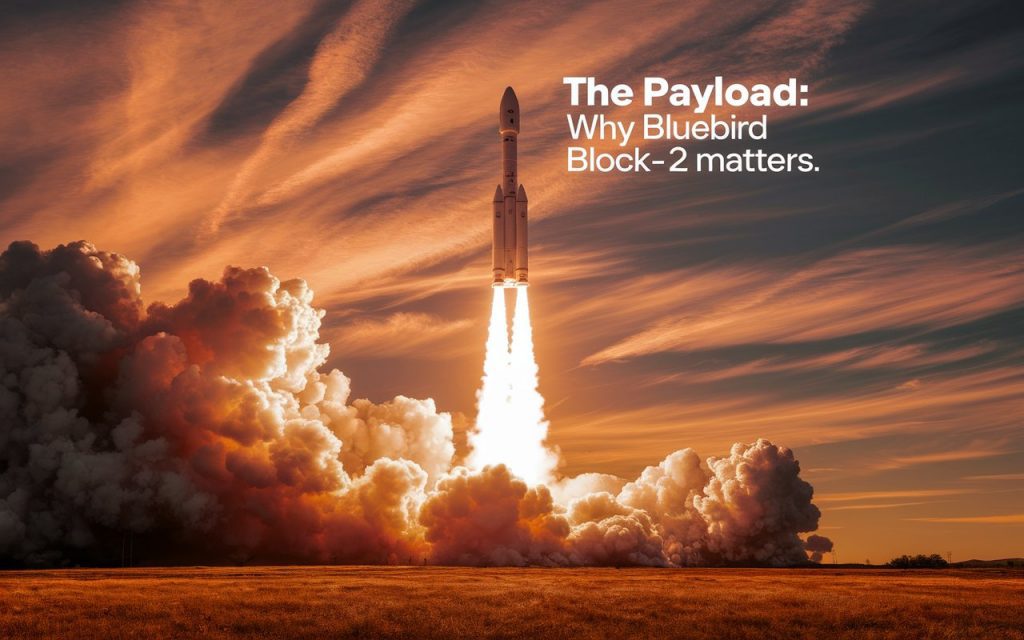
Most commercial launches carry standard telecommunications satellites (3-4 tonnes). The payload for this mission, the BlueBird Block-2 from AST SpaceMobile, is a beast of a different nature.
Weighing in at 6,100 kg, it pushes the LVM3 to its upper limits for LEO operations. For context, the LVM3’s theoretical LEO limit is often cited as 8,000 kg, but operational payloads rarely push this envelope. Launching 6.1 tonnes requires the C25 cryogenic upper stage to perform efficiently without margin for error.
Direct-to-Cell Technology
AST SpaceMobile isn’t building a normal network. They are building a space-based cellular broadband network accessible directly by standard mobile phones. No satellite phones, no special dishes.
To achieve this, the BlueBird satellites unfold massive phased-array antennas (over 200 square meters) in space. This essentially puts a cell tower in orbit. The sheer size and weight of these structures meant that lighter rockets like the PSLV (which lifts ~1.7 tonnes to GTO) were out of the question. AST needed a heavy lifter, and they chose ISRO over competitors, signaling a massive vote of confidence.
The Engineering: Making of the “Baahubali”
To appreciate today’s success, we must look at the scars of the past. The LVM3 (formerly GSLV Mk-III) was approved in 2002, but its journey was marred by the complexities of cryogenic technology.
C25 Cryogenic Engine: The Indigenous Triumph
The heart of the LVM3 is the C25 Upper Stage, powered by the CE-20 engine. Unlike the GSLV Mk-II, which initially struggled with reverse-engineered Russian designs, the CE-20 is a clean-sheet Indian design.
- Cycle: Gas Generator Cycle (open cycle), which is simpler and more robust than the Staged Combustion cycle used in earlier attempts.
- Thrust: 200 kN nominal thrust.
- Development Hell: The engine faced issues with ignition in vacuum conditions and stability during the mid-2010s. It took nearly a decade of ground testing at Mahendragiri to perfect.
Today’s launch marks the 10th successful flight of the CE-20 engine (including component tests and orbital missions). It has attained a reliability record that rivals the Merlin vacuum engine.
The Economics: ISRO vs. The World
SpaceX has driven the cost of launch down significantly, but ISRO remains the “value king” for dedicated missions. Let’s look at the numbers.
| Vehicle | Payload (LEO) | Approx. Cost | Cost per kg |
|---|---|---|---|
| SpaceX Falcon 9 (Reusable) | ~16,500 kg | $67 Million | ~$4,000 |
| ISRO LVM3 | ~10,000 kg | ~$50 Million | ~$5,000 |
| Ariane 6 (62) | ~10,300 kg | ~$75 Million | ~$7,200 |
While Falcon 9 is cheaper per kg on paper, that price applies if you fill the entire rocket. For a dedicated mission like BlueBird (6.1 tonnes), commissioning a Falcon 9 might be overkill or require waiting for a rideshare slot.
The LVM3 Advantage: For payloads in the 4-6 tonne range, LVM3 offers a dedicated slot at a very competitive aggregate price (~$50M vs $67M). This “mid-heavy” niche is where ISRO is printing money.
NSIL’s Meteoric Rise
NewSpace India Limited (NSIL) has transformed from a bureaucratic arm to a nimble corporate entity. The FY25 numbers are staggering.
| Metric | Value | Insight |
|---|---|---|
| Revenue (FY25) | ₹3,026 Cr | All-time high |
| Growth (YoY) | +43% | Explosive commercial demand |
| Net Profit | ₹1,242 Cr | Highly profitable operations |
This capital influx is vital. It allows ISRO to fund R&D for NGLV (Next Generation Launch Vehicle) while NSIL handles the production of LVM3 through industry partners like L&T and HAL.
The Human Rated Future
Every successful LVM3 launch is a data point for Gaganyaan. The vehicle used today is virtually identical to the one that will carry Indian astronauts.
Chairman S. Somanath confirmed that the “Human Rating” certification is complete. This involves:
- Structural Margins: Increasing safety factors from 1.1x to 1.4x.
- Quad-Redundancy: Digital flight control systems now have four parallel backups.
- ESCAPE System: The Crew Escape System (CES) has been integrated and tested.
With M6 validated, the roadmap is clear: G1 (Uncrewed) in December 2025, and H1 (First Indian Crew) in mid-2026.
Verdict: India’s Space Age is Here
The LVM3-M6 mission proves that India can build world-class heavy lifters, monetize them efficiently, and use them as a stepping stone for human spaceflight. The “budget space program” narrative is dead. ISRO is now a premium, high-reliability service provider on the global stage.
As we look toward 2026, with Gaganyaan on the horizon and NSIL’s order book overflowing, one thing is certain: The “Baahubali” of rockets has well and truly arrived.
Jai Maa Saraswati🌺, Har Har Mahadev🔱.