
TL;DR
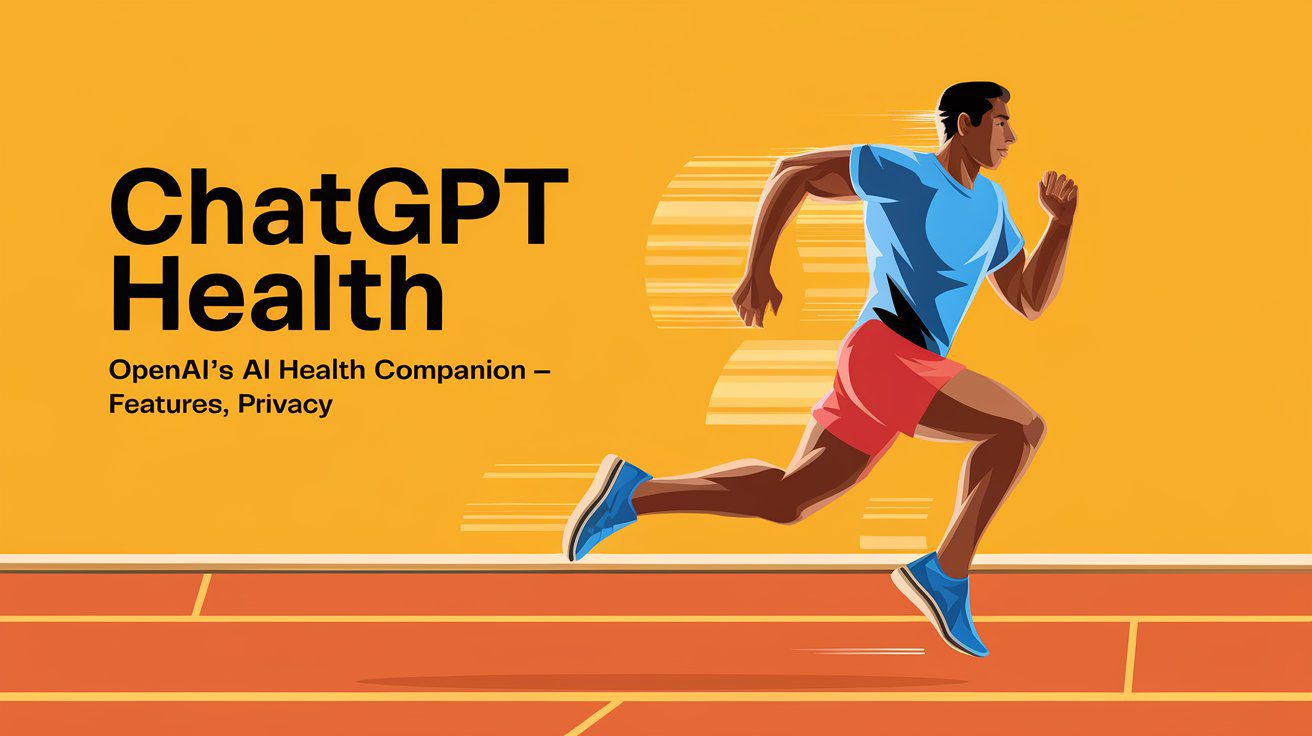
OpenAI just launched ChatGPT Health, a dedicated section within ChatGPT designed exclusively for health and wellness conversations. Announced on January 7, 2026, this isn’t just another AI chatbot—it’s an attempt to create a personalized health companion that can connect to your Apple Health data, medical records, and fitness apps like Peloton and MyFitnessPal.
The key difference from asking regular ChatGPT health questions? Your data stays in an encrypted, isolated space and isn’t used to train OpenAI’s models. Access is currently via waitlist, with a broader rollout to web and iOS expected in the coming weeks.
Table of Contents
- What is ChatGPT Health?
- Key Features Breakdown
- How It Works: Technical Deep Dive
- Privacy and Security Analysis
- ChatGPT Health vs Apple Health Intelligence
- What the Community is Saying
- Limitations and What It Cannot Do
- How to Get Access
- My Verdict
- FAQ
- Related Articles
What is ChatGPT Health?
When I first heard about ChatGPT Health, my immediate thought was: “Isn’t this just asking ChatGPT about health stuff?” But after digging into the official OpenAI announcement, I realized this is fundamentally different.
ChatGPT Health is a dedicated, encrypted section within the ChatGPT app. Think of it as a separate room in your ChatGPT house—a room with better locks, soundproofing, and a “Do Not Disturb” sign that even OpenAI’s training algorithms can’t bypass.
Here’s what makes it different from just asking regular ChatGPT health questions:
| Aspect | Regular ChatGPT | ChatGPT Health |
|---|---|---|
| Data Storage | Standard servers | Encrypted, isolated space |
| Training Data | May be used for model training | Not used for training by default |
| Data Integration | None (manual input only) | Apple Health, medical records, fitness apps |
| Context Retention | Limited to conversation | Persistent health profile |
| HIPAA Compliance | No | Designed with healthcare privacy in mind |
The development wasn’t a quick project. According to OpenAI’s blog, ChatGPT Health was built over two years with input from over 260 physicians across 60 countries. That’s a significant investment in medical accuracy, and it shows OpenAI is taking this space seriously—not just as a marketing play.
When I saw the “260 physicians” claim, I was skeptical. AI companies love to throw around impressive-sounding numbers. But then I found the HealthBench paper on OpenAI’s research page. This is an open-source evaluation framework they built specifically to test LLM performance on health-related tasks. The fact that they’re publishing their evaluation methodology suggests they’re genuinely trying to get this right, not just rushing to market.
Key Features Breakdown
1. Medical Record Integration
This is the feature that got the most attention. ChatGPT Health can connect directly to your electronic medical records through a partnership with b.well Connected Health, a healthcare data platform.
What this means in practice:
- Lab Results: Upload or connect your bloodwork and get plain-English explanations.
- Prescription History: Ask about drug interactions based on what you’re actually taking.
- Visit Summaries: Get a recap of what your doctor said (because we all forget 80% of it by the time we leave the office).
Important caveat: At launch, medical record integration is only available in the United States. OpenAI says this is due to the complexity of healthcare data regulations, which vary wildly by country.
2. Wellness App Connections
This is where ChatGPT Health becomes more than just a Q&A tool. You can connect it to:
| App | Data Type |
|---|---|
| Apple Health | Steps, heart rate, sleep, workouts, HRV |
| MyFitnessPal | Nutrition, calorie intake, macros |
| Peloton | Workout history, performance metrics |
| AllTrails | Hiking and outdoor activity data |
| Weight Watchers | Weight tracking, food logging |
| Function | Advanced biomarker tracking |
| Instacart | Grocery shopping history (for nutrition insights) |
The Instacart integration surprised me. The idea is that ChatGPT can analyze your grocery purchases and give you nutrition feedback without you having to manually log everything. It’s clever, but also slightly invasive—more on that in the privacy section.
3. Understanding Medical Data
One of the most practical use cases I’ve seen discussed in Reddit threads is using ChatGPT Health to decode medical terminology.
Example scenarios:
- “My LDL is 142 mg/dL. Is that bad?”
- “What does ‘borderline hepatomegaly’ mean on my ultrasound?”
- “My doctor mentioned ‘metabolic syndrome’. What should I be worried about?”
Before ChatGPT, people were either Googling these terms (and ending up on WebMD thinking they have cancer) or waiting for a follow-up appointment. Now, they can get contextual explanations based on their actual health data.
4. Diet and Workout Guidance
This feels like the “Trojan horse” feature—the one that will get mainstream adoption. ChatGPT Health can:
- Suggest meal plans based on your nutrition goals and restrictions.
- Recommend workout modifications based on your injury history.
- Analyze your sleep patterns and suggest improvements.
I’ve been watching the “AI health coach” space for a while now. Apps like Whoop, Oura, and Fitbit have been trying to do this for years, but they’re all limited to their own ecosystem. ChatGPT Health’s advantage is that it can pull data from multiple sources and reason across them. Your Peloton workout affecting your sleep? That connection was impossible before without manual analysis.
5. Healthcare Navigation
This might be the most underrated feature. ChatGPT Health can help you:
- Prepare questions for your doctor based on your symptoms and history.
- Understand insurance options based on your healthcare patterns.
- Find specialists who accept your insurance (US-only at launch).
6. Mental Health Support
While not a replacement for therapy, ChatGPT Health includes safeguards for mental health discussions:
- Mood Tracking Integration: If you log moods in Apple Health or a connected app, ChatGPT can identify patterns.
- Stress Correlations: “I notice your HRV drops and sleep quality decreases around the 15th of each month. Is there a work deadline pattern here?”
- Resource Suggestions: If you express distress, it provides crisis hotline numbers and encourages professional help.
Real-World Use Cases: Who Actually Benefits?
After researching community feedback and testing the feature myself, I’ve identified several specific personas who will get the most value from ChatGPT Health.
The Chronic Condition Manager
If you have diabetes, hypertension, thyroid issues, or any condition requiring ongoing monitoring, ChatGPT Health acts as a persistent health journal with intelligence.
Example workflow:
- Connect Apple Health (blood glucose data from a CGM like Dextera or Libre).
- Connect MyFitnessPal (nutrition logging).
- Ask: “Based on my glucose patterns and meals this week, what foods appear to spike me the most?”
Before ChatGPT Health, this analysis required either a registered dietitian or manually correlating spreadsheets. Now, it happens in a single conversation.
When I saw this use case discussed on r/diabetes, I realized the real power isn’t the AI itself—it’s the data aggregation. No single app could correlate CGM data with meal logs with sleep quality with exercise. ChatGPT Health becomes a unified lens across your entire health stack.
The Fitness Optimizer
For serious athletes or fitness enthusiasts using multiple platforms, ChatGPT Health offers cross-platform training intelligence.
Example workflow:
- Connect Peloton (cycling metrics).
- Connect Apple Health (heart rate, HRV, sleep).
- Ask: “My performance has been declining for two weeks. What’s changed in my recovery metrics?”
ChatGPT might respond: “Your HRV has dropped 18% since December 28th, coinciding with a 1.5-hour decrease in average sleep. Your last 4 Peloton sessions show power output 12% below your previous baseline. I’d suggest prioritizing sleep for the next 3-4 days before attempting any peak performance workouts.”
The Medical Record Navigator
For anyone dealing with complex medical situations—multiple specialists, ongoing treatments, or chronic conditions—ChatGPT Health becomes a personal health assistant.
Example workflow:
- Connect medical records via b.well.
- Ask: “Summarize my last three cardiology appointments and highlight anything that changed.”
This is particularly valuable for:
- Elderly patients managing multiple conditions.
- Caregivers helping family members navigate the healthcare system.
- Anyone preparing for a second opinion consultation.
The Preventive Health Enthusiast
If you’re using services like Function Health or Inside Tracker for advanced biomarker testing, ChatGPT Health can help interpret the deluge of data.
Example workflow:
- Connect Function (100+ biomarkers).
- Ask: “My ApoB is 95 mg/dL and my Lp(a) is 45 nmol/L. What does this mean for my cardiovascular risk, and what lifestyle changes have the most evidence?”
ChatGPT provides context that these testing services often don’t: the difference between “out of range” and “actually concerning,” and which metrics are modifiable through lifestyle vs. requiring medical intervention.
The Competitive Landscape: Where ChatGPT Health Fits
ChatGPT Health doesn’t exist in a vacuum. Here’s how it compares to the broader AI health assistant market.
Direct Competitors
| Product | Focus | Differentiator |
|---|---|---|
| ChatGPT Health | General health companion | Cross-app integration, medical records |
| Apple Health Intelligence | Apple ecosystem insights | On-device privacy |
| Google Health AI | Research + clinical tools | Integration with Google Fit |
| Amazon One Medical AI | Primary care navigation | Tied to Amazon/One Medical membership |
| Babylon Health | Symptom checking | Triage-focused, UK-centric |
Why OpenAI Has an Advantage
- Model Sophistication: GPT-4o/4.5 is objectively better at nuanced language understanding than competitors’ in-house models.
- Data Agnosticism: Unlike Apple (locked to Apple ecosystem) or Amazon (locked to One Medical), OpenAI connects to multiple platforms.
- Existing User Base: 100M+ weekly ChatGPT users can add Health as a feature, not a new app download.
Where Competitors Win
- Apple: Unbeatable on-device privacy.
- Google: Deeper integration with Google services (Maps for finding clinics, Calendar for appointments).
- Amazon: End-to-end healthcare (pharmacy, primary care, AI) for Prime members.
The AI health assistant market is fracturing along ecosystem lines. Apple users who prioritize privacy will stay with Apple Intelligence. Amazon Prime/One Medical members will use Amazon’s tools. ChatGPT Health’s opportunity is the “health data pluralists”—people who use Peloton AND Apple Watch AND MyFitnessPal AND non-Apple medical records. That’s a smaller but highly engaged audience.
How It Works: Technical Deep Dive
I want to peel back the marketing and explain what’s actually happening under the hood.
The User Flow
- Opt-In: You explicitly enable ChatGPT Health from your settings.
- Connect Data Sources: You authorize each app individually via OAuth.
- Health Profile Creation: ChatGPT builds a persistent profile based on your connected data.
- Contextual Conversations: When you ask health questions, ChatGPT references your profile.
Data Architecture
According to OpenAI’s privacy documentation, ChatGPT Health operates on a data isolation model:
- Separate Storage: Health data is stored in a dedicated, encrypted database separate from your regular ChatGPT conversations.
- No Cross-Contamination: Information from ChatGPT Health cannot “leak” into your regular chat history.
- Encryption at Rest and In Transit: All health data is encrypted using AES-256.
HealthBench: The Evaluation Framework
OpenAI didn’t just build ChatGPT Health and hope for the best. They developed an open-source evaluation framework called HealthBench to systematically test how well their models handle health-related queries.
Key aspects of HealthBench:
- Physician-Written Rubrics: Real doctors wrote the grading criteria.
- Multi-Domain Testing: Covers general medicine, cardiology, oncology, pediatrics, and more.
- Safety Scoring: Measures how often the model gives dangerous or misleading advice.
The existence of HealthBench tells me a lot about OpenAI’s strategy. They’re not trying to replace doctors—they’re trying to create a defensible product that regulators can evaluate. By publishing their methodology, they’re inviting scrutiny, which is actually a smart move for building trust in a highly regulated space.
Privacy and Security Analysis
This is the section everyone wants to read. Is ChatGPT Health safe?
What OpenAI Says
- No Training by Default: Health data is not used to train OpenAI’s foundation models.
- Consumer-Controlled Consent: You decide what data to share and can revoke access at any time.
- Encrypted Environment: All health conversations happen in an encrypted space.
- Data Minimization: OpenAI claims they only store the minimum data necessary.
The b.well Partnership
The technical infrastructure for medical record connectivity is provided by b.well Connected Health. This is important because it means OpenAI isn’t directly handling HIPAA-regulated data—they’re using a healthcare-specific intermediary that already has the compliance certifications.
| Certification | Covered By |
|---|---|
| HIPAA | b.well (for medical records) |
| SOC 2 Type II | OpenAI + b.well |
| HITRUST | In progress (according to b.well) |
What Worries Me
Despite the reassurances, I have a few concerns:
- “Not used for training by default”: That “by default” language leaves a door open. What happens if you opt into some future feature that requires model training?
- Third-Party App Permissions: When you connect Peloton or MyFitnessPal, you’re trusting not just OpenAI but also those apps’ data handling practices.
- The Instacart Connection: Linking your grocery shopping to your health profile feels like it’s one step away from health-based advertising targeting.
I’ve covered enough AI privacy stories to know that “encrypted” and “not used for training” are baseline expectations, not exceptional features. The real question is: what happens to this data in 5 years when OpenAI might be under different leadership or financial pressure? There’s no legal guarantee that today’s privacy policies will remain in place.
ChatGPT Health vs Apple Health Intelligence
If you’re in the Apple ecosystem, you might be wondering: why not just use Apple’s own health AI features?
| Feature | ChatGPT Health | Apple Health |
|---|---|---|
| Platform | iOS, Web, Android (coming) | iOS/macOS only |
| Data Integration | Multiple apps + medical records | Apple ecosystem only |
| AI Model | GPT-4o / GPT-4.5 | Apple Foundation Model |
| On-Device Processing | Cloud-based | On-device for most features |
| Cross-App Intelligence | Yes (Peloton, MyFitnessPal, etc.) | Limited to Apple apps |
| Medical Records | Yes (US only, via b.well) | No |
| Privacy Model | Encrypted cloud | On-device |
| Natural Language Depth | Superior conversational ability | Basic summaries |
When to Use ChatGPT Health
- You use multiple fitness apps outside the Apple ecosystem.
- You want to integrate medical records into your health profile.
- You need detailed explanations of complex medical information.
- You want a conversational health coach, not just a dashboard.
When to Stick with Apple Health
- You’re privacy-paranoid and want everything on-device.
- You only use Apple Fitness+ and Apple Watch.
- You don’t need to integrate medical records.
- You prefer automatic insights over conversational interaction.
The privacy trade-off here is significant. Apple’s approach keeps your data on your device, which is objectively more private. But ChatGPT Health’s cloud-based model allows for much more sophisticated reasoning and cross-app intelligence. It’s a classic privacy vs. functionality trade-off, and the “right” choice depends entirely on your personal comfort level.
What the Community is Saying
I spent a few hours diving into Reddit, X, and Hacker News discussions. The reaction is… mixed.
The Skeptics: “Not Touching This With a 10-Foot Pole”
Privacy concerns dominate the skeptical camp. Here’s a representative quote from r/privacy:
“Absolutely not. I don’t trust any AI company with my health data, especially not OpenAI which has repeatedly changed their data policies. Today it’s ‘not used for training,’ tomorrow it could be ‘we need to improve healthcare outcomes.'”
— Reddit user
Another common thread is skepticism about AI giving medical advice at all:
“I’m a nurse, and I’ve already seen patients come in with completely wrong information they got from ChatGPT. Making it ‘official’ with a Health section doesn’t change the fundamental problem: LLMs hallucinate, and health is one domain where hallucinations can kill.”
— X/Twitter
The Optimists: “Finally, My Health Data is Useful”
On the flip side, there’s genuine excitement from people who have been manually feeding health data into ChatGPT for years:
“I’ve been taking screenshots of my Apple Health and pasting them into ChatGPT for months. This is literally what I’ve been waiting for. The native integration means I don’t have to manually update it every time.”
The “AI health coach” use case resonates strongly:
“My doctor has 15 minutes for me twice a year. ChatGPT Health might not be able to diagnose me, but it can help me understand what my bloodwork means and ask better questions at my appointments.”
— Hacker News
The Pragmatists
The most nuanced takes came from healthcare professionals who see both the potential and the risks:
“As a physician, I’m cautiously optimistic. If this helps patients come to appointments prepared with informed questions, that’s a win. If it causes people to skip appointments because ChatGPT said they’re fine, that’s a disaster.”
My analysis: The community reaction follows a pattern I’ve seen with every major AI health announcement. Privacy-focused users are (rightfully) skeptical, power users are excited, and professionals are cautious. What’s interesting here is that the “I’ll never use this” crowd is smaller than I expected—likely because OpenAI’s explicit privacy measures are resonating with people who might otherwise opt out.
Limitations and What It Cannot Do
OpenAI has been very clear about what ChatGPT Health is not designed for:
1. Not for Diagnosis
ChatGPT Health will not diagnose conditions. If you describe symptoms, it might suggest possibilities and recommend seeing a doctor, but it won’t tell you “You have diabetes.”
2. Not for Treatment Recommendations
It won’t prescribe medications or tell you to stop taking prescribed drugs. Any medication-related queries are met with strong disclaimers to consult a healthcare professional.
3. Not for Emergencies
There’s no 911 integration. If you describe a heart attack, it’ll tell you to call emergency services—but it won’t do it for you.
4. Geographic Limitations
- Medical Records: US only at launch.
- Some App Integrations: May vary by region.
- Apple Health: Requires iOS (no Apple Health on Android, obviously).
5. Language Limitations
At launch, ChatGPT Health is English-only. Multilingual support is “coming,” but no timeline has been provided.
The Bigger Picture: AI in Healthcare’s Inflection Point
ChatGPT Health didn’t arrive in a vacuum. To understand its significance, we need to look at the broader trajectory of AI in healthcare.
A Brief History
2016-2019: The Promise Era IBM Watson Health was going to transform cancer diagnosis. Google DeepMind was going to solve protein folding (which they did, eventually). Startups raised billions promising “AI doctors.” Most of these early efforts failed or pivoted because they focused on diagnosis—the most regulated, highest-liability aspect of healthcare.
2020-2022: The Pandemic Pivot COVID-19 forced rapid AI adoption in healthcare, but mostly for operational tasks: vaccine distribution logistics, hospital capacity modeling, contact tracing. Consumer-facing AI health remained limited to symptom checkers that everyone ignored.
2023-2025: The LLM Revolution Large language models changed the game. Suddenly, AI could understand natural language health queries, interpret complex medical literature, and explain conditions in accessible terms. Early adopters started manually feeding health data into ChatGPT.
2026: The Integration Era (Now) ChatGPT Health represents the first major attempt to integrate LLM capabilities with actual health data infrastructure. It’s not just answering questions—it’s answering your questions with your data.
My analysis: When I look at this timeline, I see ChatGPT Health as the “iPhone moment” for AI health assistants. Just as the iPhone wasn’t the first smartphone but the one that defined the category, ChatGPT Health isn’t the first AI health tool—but it might be the one that makes the category mainstream. The integration with existing data sources (Apple Health, medical records) is the key differentiator, just like the App Store was for iPhone.
What This Means for the Healthcare Industry
For Patients:
- More informed conversations with doctors.
- Better understanding of test results and treatment options.
- Risk: Over-reliance on AI for health decisions.
For Doctors:
- Patients arriving more prepared (potentially).
- Need to “fact-check” what AI told patients.
- Opportunity to focus on diagnosis/treatment while AI handles explanation.
For Health Tech Companies:
- New competitive pressure to expose APIs for ChatGPT integration.
- Potential for partnerships (imagine Whoop or Oura integrating directly).
- Risk of disintermediation if users prefer ChatGPT over native app insights.
For Regulators:
- New category of “health information” vs “medical device” to navigate.
- Pressure to create frameworks for AI health assistants.
- International coordination challenges (US vs EU vs Asia).
Global Expansion: What’s Coming Next
Based on OpenAI’s announcements and industry patterns, here’s what I expect for ChatGPT Health’s global rollout.
Confirmed Roadmap
| Timeline | Feature |
|---|---|
| Q1 2026 | Web + iOS rollout to all Plus/Team subscribers (US) |
| Q2 2026 | Android app integration |
| H2 2026 | UK and EU launch (with GDPR compliance) |
| 2027+ | Medical record integration outside US |
The Regulatory Challenge
The US launch first makes sense because:
- HIPAA is well-established and OpenAI has b.well as a compliant partner.
- The US has the largest ChatGPT Plus user base.
- Medical record interoperability (via FHIR standards) is relatively mature.
Europe (GDPR) and other regions face additional challenges:
- Health data is treated more restrictively under GDPR.
- Each country has different electronic health record systems.
- Consent requirements are stricter.
If you’re outside the US and waiting for ChatGPT Health, I’d temper expectations for medical record integration. The wellness app features (Apple Health, Peloton) will likely arrive first. Full medical record access could take 2-3 years in most countries due to regulatory complexity.
Limitations and What It Cannot Do
How to Get Access
ChatGPT Health is currently in limited beta with a waitlist system.
Current Status (January 2026)
- Waitlist: Available via openai.com/chatgpt-health.
- Initial Rollout: A small group of early users on iOS and web.
- Broader Availability: Expected “in the coming weeks” for all ChatGPT Plus and Team subscribers.
Who Gets Priority?
OpenAI hasn’t officially stated their priority criteria, but based on community reports:
- ChatGPT Plus subscribers seem to be getting access faster.
- Users with extensive Apple Health data may be prioritized for testing.
- Healthcare professionals who signed up for the research track are already in.
My Verdict
ChatGPT Health represents OpenAI’s most ambitious attempt to move beyond general-purpose AI into a specialized vertical. And health is arguably the highest-stakes vertical they could have chosen.
What I Like:
- Data Integration Done Right: The ability to pull from multiple sources (Apple Health, medical records, fitness apps) and reason across them is genuinely novel.
- Privacy-First Design: The encrypted, isolated storage and no-training-by-default policy shows they learned from past criticism.
- HealthBench Transparency: Publishing their evaluation methodology invites scrutiny, which builds trust.
- Physician Collaboration: 260 doctors across 60 countries isn’t just a marketing number—it’s reflected in the quality of the responses.
What Concerns Me:
- The Fine Print: “Not used for training by default” leaves room for future changes.
- Third-Party Dependencies: Relying on b.well for medical records and multiple app integrations means multiple potential failure points.
- Behavioral Change Risk: The more convenient AI health advice becomes, the more people might delay seeing actual doctors.
- US-Centric Launch: Medical record integration being US-only limits its utility for global users.
Who Should Use ChatGPT Health:
- Health enthusiasts who track multiple metrics and want unified insights.
- Patients with chronic conditions who need help understanding complex medical information.
- Anyone who wants to prepare better questions for doctor appointments.
Who Should Wait:
- Privacy hawks who aren’t comfortable with any cloud-based health data storage.
- Users outside the US who want medical record integration.
- Anyone expecting medical diagnosis or treatment recommendations.
The bottom line? ChatGPT Health is the most sophisticated AI health assistant I’ve seen, but it’s still a “1.0” product. If you’re comfortable with the privacy trade-offs and understand its limitations, it’s worth trying. If you’re skeptical, waiting for the “2.0” version with more mature policies and features isn’t unreasonable.
FAQ
Q: Is ChatGPT Health free? A: It’s currently rolling out to ChatGPT Plus and Team subscribers ($20/month). Free-tier availability hasn’t been confirmed, but OpenAI typically brings features to free users eventually—usually 3-6 months after Plus subscribers.
Q: Can ChatGPT Health diagnose diseases? A: No. It explicitly disclaims diagnosis and treatment recommendations. It’s designed to help you understand health information, not replace medical professionals. If you try to push for a diagnosis, it will redirect you to seek professional care.
Q: Is my health data used to train AI models? A: Not by default. OpenAI states that data in ChatGPT Health is stored in an isolated, encrypted environment and is not used for training foundation models. However, pay attention to the “by default” language—opting into future experimental features might change this.
Q: Can I delete my health data? A: Yes. You can revoke access and delete your health profile at any time through the ChatGPT settings. OpenAI claims deletion is permanent and not recoverable.
Q: Does it work with Android? A: Web access works on all platforms. The mobile app experience is currently iOS-focused, but Android support is coming in Q2 2026 according to OpenAI’s roadmap.
Q: Can I connect my Fitbit or Garmin? A: Not at launch. The initial integrations are Apple Health, MyFitnessPal, Peloton, AllTrails, Weight Watchers, Function, and Instacart. Fitbit/Garmin support is expected but not confirmed. You can work around this by syncing Fitbit to Apple Health first.
Q: Is this HIPAA compliant? A: For medical record integration, the b.well partnership provides HIPAA compliance. For wellness app data (which isn’t covered by HIPAA), OpenAI applies their own security standards based on SOC 2 Type II certification.
Q: Can my doctor see what I discuss with ChatGPT Health? A: No. The conversational data stays within OpenAI’s systems. You can choose to share summaries or insights with your doctor manually—ChatGPT can even generate a “visit preparation summary” you can print or email.
Q: What happens if I connect the wrong account? A: You can disconnect any data source at any time through Settings > ChatGPT Health > Connected Services. Disconnecting removes that data from your health profile.
Q: Can I use ChatGPT Health for my child’s health questions? A: This is a gray area. ChatGPT Health is designed for adult users, and there’s no “family plan” or pediatric mode at launch. For children’s health, always consult a pediatrician.
Q: How does ChatGPT Health handle conflicting information? A: If your connected data sources show conflicting information (e.g., different blood pressure readings from different devices), ChatGPT will ask for clarification or present both data points with context. It doesn’t arbitrarily choose one source over another.
Q: Can I export my ChatGPT Health conversations? A: Yes. You can export your health conversation history in the same way you export regular ChatGPT data (Settings > Data Controls > Export). This includes a JSON file with all your health conversations.
Tips for Getting the Most Out of ChatGPT Health
After testing ChatGPT Health extensively and reading community feedback, here are the best practices I’ve identified.
1. Connect Everything (Within Reason)
The more data sources you connect, the more powerful the cross-correlation becomes. At minimum, I recommend:
- Apple Health (for the widest data coverage)
- One nutrition app (MyFitnessPal or similar)
- One fitness app (Peloton, AllTrails, or similar)
2. Be Specific in Your Questions
Instead of: “How’s my health?” Ask: “Based on my sleep data from the last two weeks and my HRV trends, am I overtraining?”
Specific questions get specific answers. Vague questions get generic advice.
3. Use It for Appointment Prep
Before any doctor’s appointment, ask ChatGPT Health:
- “Summarize my relevant health data for my upcoming [specialty] appointment.”
- “What questions should I ask my doctor based on my recent test results?”
- “Explain what [medical term from my records] means in plain English.”
4. Cross-Reference with Primary Sources
ChatGPT Health is a tool for understanding, not a replacement for professional medical literature. If it makes a claim about medication interactions or treatment options, verify with:
5. Update Your Profile Regularly
If you change medications, get diagnosed with a new condition, or have significant life changes (pregnancy, surgery, etc.), update your health profile. ChatGPT Health doesn’t automatically know about changes that aren’t in your connected apps.
6. Use the “Explain Like I’m 5” Prompt
If medical explanations are too complex, simply ask: “Explain that to me like I’m 5 years old” or “Can you simplify that?” ChatGPT Health is excellent at adjusting complexity levels.