

TL;DR
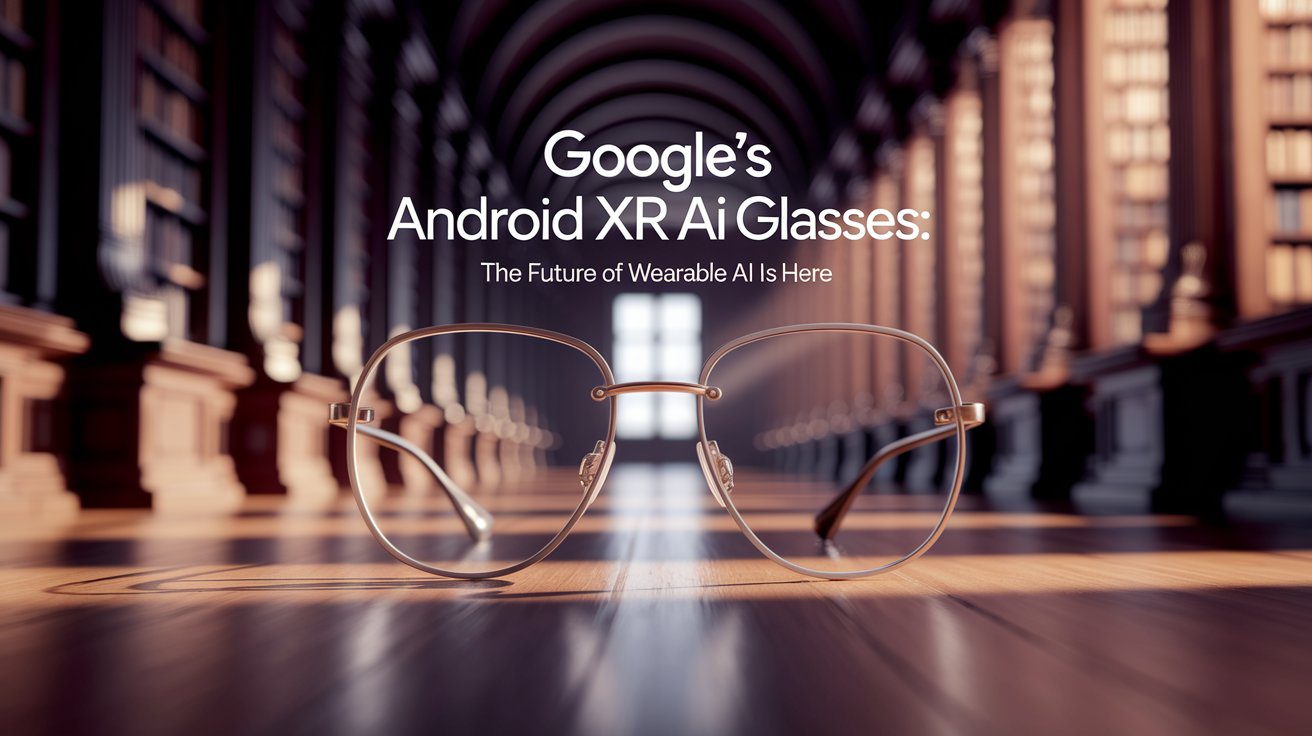
Google just unveiled Android XR, an entirely new platform built for AI-first smart glasses and headsets. I spent hours watching the demos and digging through the developer documentation, and here’s what stands out: these aren’t just “smart glasses” – they’re Gemini AI wearing your face. Real-time translation that appears as subtitles in your vision, visual memory that remembers what you looked at, and navigation arrows that hover in front of you. Samsung’s already shipped the Galaxy XR headset for $1,800, and consumer glasses from Warby Parker and Gentle Monster are coming in 2026.
Table of Contents
What is Android XR?
Android XR is Google’s new operating system for extended reality devices – smart glasses, mixed reality headsets, and everything in between. Announced in December 2024 and launched in October 2025, it represents Google’s most serious attempt at wearable computing since Google Glass.
But here’s what makes it different: Android XR isn’t primarily about AR or VR in the traditional sense. It’s about putting Gemini AI on your face.
My reasoning here: When I first read the announcement, I expected another AR platform trying to compete with Meta Quest or Apple Vision Pro. But after watching the demos from “The Android Show: XR Edition,” I realized Google is making a fundamentally different bet. They’re not selling immersive gaming or productivity environments. They’re selling an AI assistant that can see what you see, hear what you hear, and respond in real-time. That’s a different product category entirely.
The platform is built in partnership with Samsung and Qualcomm:
-
- Samsung provides hardware manufacturing
- Qualcomm supplies the Snapdragon XR2+ Gen 2 chipset
- Google handles the OS and Gemini AI integration
The Two Types of Glasses Coming
Google and its partners are developing two distinct form factors, each targeting different use cases.
Type 1: Audio-First “Screenless” Glasses
These glasses look like normal eyewear but include:
-
- Built-in speakers
- Multiple microphones
- Forward-facing camera
- No visual display
The idea is simple: Gemini AI processes what you see and hear, then responds through audio. Ask “what’s that building?” and Gemini tells you through the speakers. Want to remember something? The camera captures it for later.
Partners: Warby Parker, Gentle Monster
Target release: 2026
Type 2: In-Lens Display Glasses
These include all the above plus a discreet display embedded in the lens. This enables:
-
- Visual navigation arrows
- Real-time translated subtitles
- Notification overlays
- Contextual information about objects
Target release: 2027
The two-tier approach is smart. Google learned from Glass that people aren’t ready to wear obvious tech on their faces in public. By starting with audio-only glasses that look normal, they can build social acceptance while the display tech matures. The Warby Parker partnership is particularly telling – they’re targeting fashion-conscious buyers who wouldn’t touch traditional “smart glasses.”
Key Features – What Gemini Can Do
Based on demos and announcements, here’s what the Gemini integration enables:
Real-Time Translation
This is the killer feature. The glasses can:
- Hear someone speaking in a foreign language
- Translate in real-time
- Either speak the translation through speakers OR display subtitles in your lens
Google showed demos of conversations happening seamlessly across languages. If this works as advertised, it’s genuinely transformative for travel and international business.
Visual Memory
Ask Gemini “what was the name of that restaurant I walked past yesterday?” and it can recall information from what the camera captured. This raises obvious privacy questions, but the utility is undeniable.
Contextual Object Recognition
Point your gaze at something and ask about it:
- “What kind of plant is this?”
- “How much does this product cost on Amazon?”
- “What year was this building constructed?”
- Gemini processes the visual context and responds.
Navigation
Instead of looking at your phone for directions, navigation cues appear in your field of view:
- Turn-by-turn walking directions
- 3D map overlays
- Points of interest highlighted as you approach
Hands-Free Everything
| Action | Voice Command |
|---|---|
| Capture photo | “Take a picture” |
| Set reminder | “Remind me about this when I get home” |
| Make call | “Call [contact name]” |
| Send message | “Text [contact]: [message]” |
| Start timer | “Set a 10-minute timer” |
Samsung Galaxy XR Headset – The First Device
The Samsung Galaxy XR is the first consumer device running Android XR. Launched in October 2025 in the US and Korea for $1,800, it’s a full mixed reality headset rather than glasses.
Specifications
| Component | Specification |
|---|---|
| Display | Dual Micro-OLED, 3,552 x 3,840 per eye |
| Total Resolution | 27 megapixels |
| Refresh Rate | 60Hz / 72Hz / 90Hz |
| Field of View | 109° horizontal, 100° vertical |
| Processor | Snapdragon XR2+ Gen 2 |
| RAM | 16GB |
| Storage | 256GB |
| Weight | 545g (headset) + 302g (battery pack) |
| Battery Life | ~2 hours general use, 2.5 hours video |
| Price | $1,800 |
Sensors
The Galaxy XR packs an impressive sensor array:
- 2 passthrough cameras
- 6 world-facing tracking cameras
- 4 eye-tracking cameras
- 5 Inertial Measurement Units (IMUs)
- 1 depth sensor
- 6-microphone array for voice commands
AI Integration
Gemini is deeply embedded:
- Circle to Search works in mixed reality – draw a circle around real-world objects to search
- Live Maps overlay 3D navigation in your environment
- Real-time translation with visual subtitle overlays
- Contextual assistance for any object you’re looking at
At $1,800, the Galaxy XR is expensive but not unreasonable compared to Apple Vision Pro ($3,499) or Meta Quest Pro ($999). The real question is whether Android XR’s Gemini integration is compelling enough to justify the premium over a standard Quest headset. For enterprise users who need the AI features, probably. For consumers who just want VR gaming? Probably not.
Warby Parker and Gentle Monster Partnerships
Google has partnered with fashion-forward eyewear brands to ensure Android XR glasses don’t look like tech prototypes.
Warby Parker
The classic American eyewear brand is developing AI glasses expected in 2026. Key points:
-
- Focus on making frames indistinguishable from regular glasses
- Audio-first design (no display initially)
- Multiple frame styles
- Prescription lens compatible
Gentle Monster
The Korean luxury eyewear brand brings designer aesthetics:
-
- High-fashion frame designs
- Premium materials
- Partnership announcement suggests multiple style options
- Target audience: fashion-conscious early adopters
After reading through fashion and tech forums, one pattern became clear: the number one barrier to smart glasses adoption isn’t features – it’s that they look like smart glasses. The fact that Google is leading with fashion partnerships rather than tech specs shows they’ve absorbed this lesson. If Warby Parker glasses look like regular Warby Parkers with AI capabilities, adoption could be significantly higher than previous smart glasses attempts.
Samsung’s XR Roadmap Through 2028
Samsung has outlined a multi-year plan for Android XR devices:
| Year | Product | Description |
|---|---|---|
| 2025 | Galaxy XR | Full mixed reality headset |
| 2026 | Screenless AI Glasses | Audio-only, normal appearance |
| 2027 | Display AI Glasses | In-lens display, AR overlays |
| 2028 | Advanced AR Glasses | Full AR capabilities |
This progressive rollout allows:
-
- Manufacturing improvements
- Cost reductions
- Software maturation
- Social acceptance building
My Analysis – Why This Matters
Let me step back and explain why I think Android XR represents a genuine inflection point.
The AI-First Difference
Previous smart glasses (Google Glass, Snap Spectacles, Meta Ray-Bans) were essentially phones on your face. They replicated smartphone functions in a new form factor.
Android XR is different. Gemini’s multimodal AI creates genuinely new capabilities:
-
- Visual memory that knows what you’ve seen
- Real-time translation that appears as subtitles
- Contextual understanding of your environment
These aren’t features you can get by pulling out your phone. They require a device that’s always on your face, always seeing, always listening.
The Privacy Trade-off
This brings up the elephant in the room: Android XR glasses are always-on AI surveillance devices that you wear on your face. The camera sees what you see. The microphones hear what you hear. Everything feeds into Gemini.
Google’s position is that this data is processed locally or securely, but the capability exists. Widespread adoption of AI glasses means a fundamental shift in privacy norms – both for the wearer and for everyone around them.
When I discussed this with friends in the tech industry, opinion was split. Some see massive utility and are willing to trade privacy for convenience. Others find the concept dystopian. What’s clear is that if AI glasses succeed, they’ll reshape social norms around recording and surveillance in public spaces. We’re about to find out whether society is ready for that.
Competition Landscape
| Company | Product | Approach |
|---|---|---|
| Meta | Ray-Ban Smart Glasses | Social media integration |
| Apple | Vision Pro | Spatial computing |
| Android XR | AI-first assistant | |
| Snap | Spectacles | AR creation tools |
Google’s bet is that AI assistance is the killer app, not AR games or spatial apps. Based on how people actually use smartphones (assistant, search, information), this feels like a reasonable bet.
FAQ
Q: When can I buy Android XR glasses?
A: The Galaxy XR headset is available now for $1,800. Consumer glasses from Warby Parker and Gentle Monster are expected in 2026.
Q: Do they require a prescription?
A: Details on prescription lens compatibility haven’t been finalized, but Warby Parker’s involvement suggests prescription options will be available.
Q: How is this different from Meta Ray-Bans?
A: Meta’s glasses focus on camera capture and social sharing. Android XR glasses are built around Gemini AI for real-time assistance, translation, and contextual understanding.
Q: What about battery life?
A: The Galaxy XR headset gets about 2 hours. Glasses form factors will likely have smaller batteries – expect 4-6 hours based on typical smart glasses.
Q: Do I need an Android phone?
A: For full functionality, likely yes. Some features may work standalone, but Gemini integration will require Android ecosystem connectivity.
