

TL;DR
Samsung just launched the Galaxy Z TriFold—a device that folds twice to reveal a 10-inch tablet display, stuffing iPad-level screen real estate into a pocket-sized form factor. Starting at $2,450 in Korea (likely $2,999 in the US), it features a 200MP camera, Snapdragon 8 Elite, 16GB RAM, and a 5,600mAh battery.
Available in Korea from December 12, 2025, with US release in Q1 2026. This is Samsung’s most ambitious foldable yet, and it’s not cheap.
Table of Contents
- What’s Actually New Here
- Complete Specifications
- Design Deep Dive
- Display Analysis
- Z TriFold vs Z Fold 6
- Pricing and Availability
- Who Is This Actually For?
- My Take
- FAQ
What’s Actually New Here
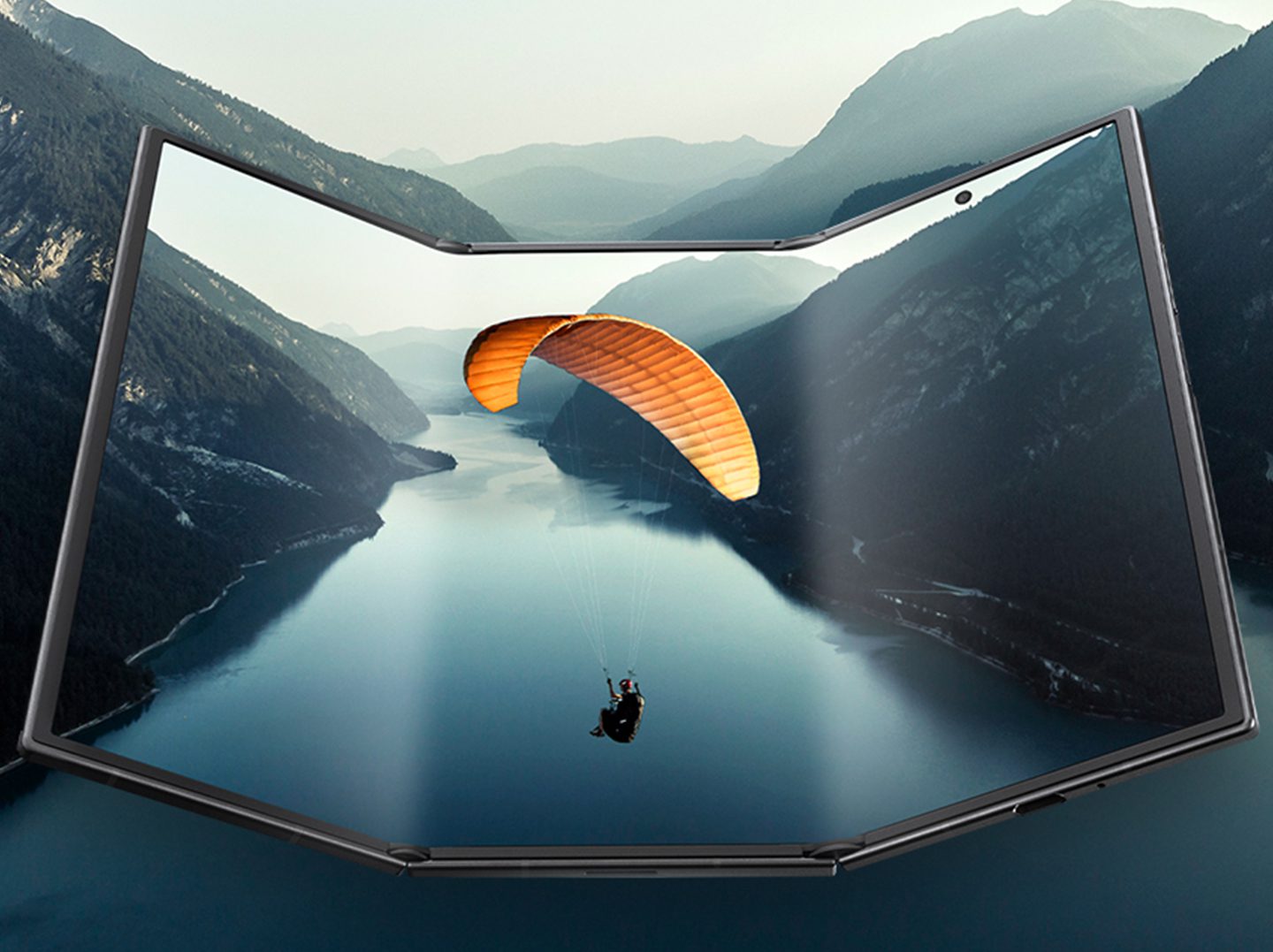
Samsung has been teasing tri-fold technology for years, but the Galaxy Z TriFold is the first time they’ve actually shipped it. The concept is deceptively simple: take the book-style foldable design of the Z Fold series and add a second fold, creating three panels that open into a massive 10-inch display.
When I first saw the announcement on December 2nd, my immediate reaction was skepticism. More folds means more hinges, more potential failure points, and more compromises. But the specs suggest Samsung has addressed the durability concerns head-on:
- Dual titanium hinges with a novel dual-rail structure
- Armor FlexHinge technology that minimizes gaps and creases
- Advanced Armor Aluminum frame construction
- Gorilla Glass Ceramic 2 on the outer display
- IP48 water resistance (same as Z Fold 6)
My reasoning here: Samsung’s approach with the TriFold reminds me of how they handled
the original Galaxy Fold’s durability issues—they over-engineered the solution. The dual-rail hinge
system isn’t just marketing speak; it fundamentally changes how stress is distributed across the fold
lines. Whether this translates to real-world durability over years of use, we’ll only know with time.
Complete Specifications
| Specification | Galaxy Z TriFold |
|---|---|
| Main Display | 10.0″ QXGA+ Dynamic AMOLED 2X, 2160×1584, 120Hz, 1600 nits peak |
| Cover Display | 6.5″ FHD+ Dynamic AMOLED 2X, 120Hz, 2600 nits peak |
| Processor | Snapdragon 8 Elite for Galaxy (3nm) |
| RAM | 16GB |
| Storage | 512GB / 1TB |
| Main Camera | 200MP f/1.7 OIS + 12MP ultrawide + 10MP 3x telephoto |
| Front Cameras | 10MP (cover) + 10MP (main display) |
| Battery | 5,600mAh (three-cell system) |
| Charging | 45W wired, 15W wireless |
| Dimensions (Folded) | ~14mm thick |
| Panel Thickness | 3.9mm / 4.0mm / 4.2mm per panel |
| Weight | 309g |
| OS | Android 16 with One UI 8 |
| Durability | IP48, Armor Aluminum, Gorilla Glass Ceramic 2 |
Design:
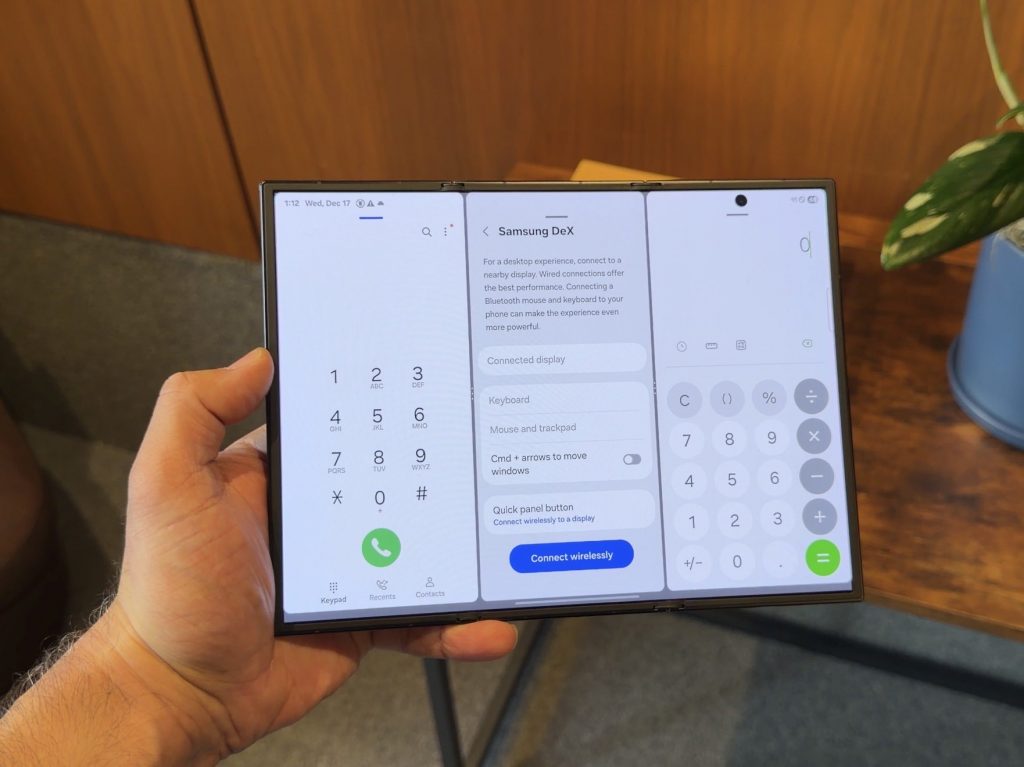
The Z TriFold’s engineering is genuinely impressive. Samsung managed to keep the unfolded thickness under 4.2mm per panel—thinner than most credit cards stacked together. When fully closed, the device is about 14mm thick, which is chunky but not unreasonable for what you’re getting.
The fold mechanism uses what Samsung calls an “inward-folding” design on both hinges. This means the main 10-inch display is always protected when the device is closed, facing inward on all three panels. The6.5-inch cover screen on the outside handles quick tasks without needing to unfold.
The Crease Question
Every foldable has creases where the display bends. With two folds, you now have two creases. Samsung claims their “Armor FlexHinge” technology minimizes visible creases, and the reinforced display overcoat adds durability. Based on early hands-on reports, the creases are noticeable but not distracting—similar to what we’ve seen on the Z Fold 6.
Weight and Ergonomics
At 309 grams, the Z TriFold is heavier than the Z Fold 6 (239g) but lighter than an iPad Mini (297g for the newest version). The difference is you’re getting a 10-inch display that fits in a coat pocket.
Display Analysis
The headline feature is that 10-inch main display. For context:
- Z Fold 6: 7.6 inches
- iPad Mini: 8.3 inches
- Z TriFold: 10.0 inches
- iPad (10th gen): 10.9 inches
You’re essentially getting full iPad territory in a device that folds into something pocket-sized. The resolution (2160×1584) at this size translates to roughly 264 PPI—not retina-sharp, but perfectly adequate for reading, video, and productivity.
My analysis: The 10-inch display changes the use case entirely. The Z Fold 6’s 7.6-inch
screen is great for enhanced phone tasks—bigger Instagram, easier typing, split-screen apps. But the
TriFold’s 10-inch screen enables genuine tablet workflows. You can run three full-width apps side by
side in portrait mode. That’s not a gimmick; that’s a workflow transformation for people who currently
carry both a phone and a tablet.
Brightness and Outdoor Visibility
The cover screen hits 2600 nits peak brightness, matching the Z Fold 6 and making it one of the brightest phone displays available. The main display is slightly dimmer at 1600 nits—still very usable outdoors, but noticeably darker than the cover screen in direct sunlight.
Z TriFold vs Z Fold 6: Complete Comparison
| Feature | Z TriFold | Z Fold 6 | Winner |
|---|---|---|---|
| Main Display | 10.0″ | 7.6″ | TriFold |
| Cover Display | 6.5″ | 6.3″ | TriFold |
| Processor | Snapdragon 8 Elite | Snapdragon 8 Gen 3 | TriFold |
| RAM | 16GB | 12GB | TriFold |
| Main Camera | 200MP | 50MP | TriFold |
| Battery | 5,600mAh | 4,400mAh | TriFold |
| Fast Charging | 45W | 25W | TriFold |
| Weight | 309g | 239g | Z Fold 6 |
| Thickness (Folded) | ~14mm | 12mm | Z Fold 6 |
| Price | ~$2,999 | $1,899 | Z Fold 6 |
The TriFold wins on every spec except portability and price. The question isn’t which is better—it’s whether the ~$1,100 premium and extra bulk are worth it for your use case.
Pricing and Availability
| Region | 512GB Price | Availability |
|---|---|---|
| South Korea | ₩3,594,000 (~$2,450) | December 12, 2025 |
| United States | ~$2,999 (expected) | Q1 2026 |
| China | TBD | Early 2026 |
| UAE, Singapore, Taiwan | TBD | Early 2026 |
| India | ~₹2,44,000 | TBD |
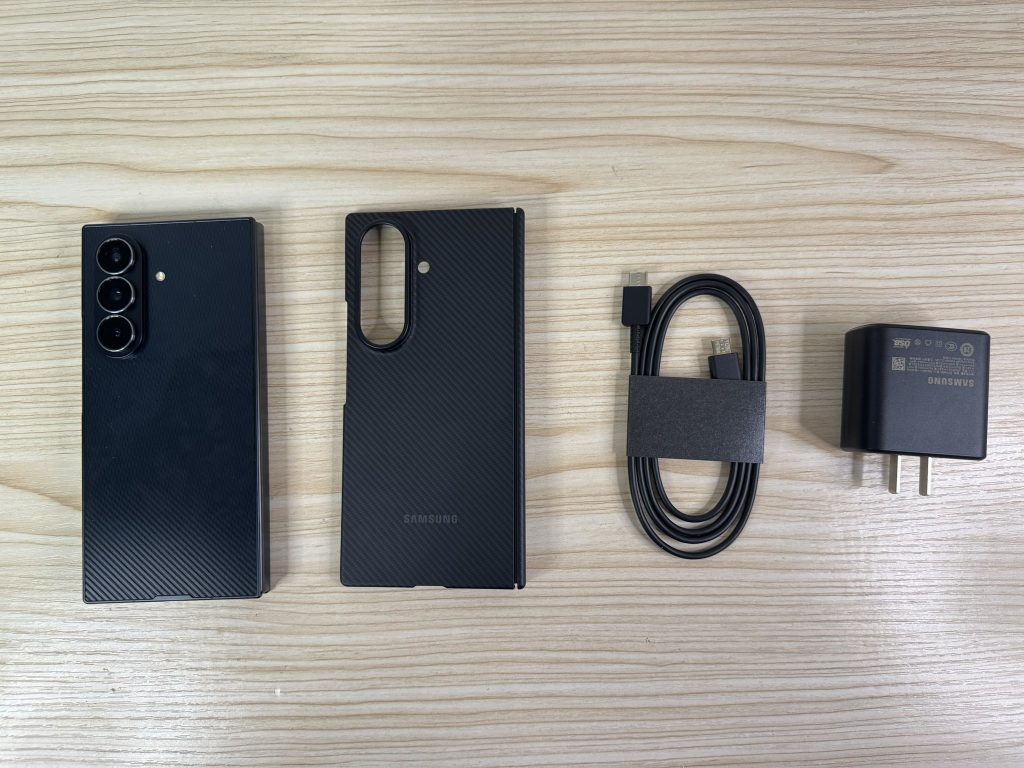
The launch package in Korea includes a Carbon Shield Case, 45W Fast Charger, and Data Cable. Whether these accessories come standard in other regions remains unclear.
Who Is This Actually For?
After analyzing the specs and use cases, I see three clear target audiences:
1. Professionals Who Travel Light
If you currently carry a phone AND a tablet for work, the Z TriFold replaces both. The 10-inch display is genuinely usable for document work, spreadsheets, and presentations. Combined with Samsung DeX, you can connect to a monitor and have a complete workstation.
2. Content Consumers Who Want Maximum Screen
For video streaming, gaming, and reading, screen size matters. The TriFold gives you tablet-grade viewing in a device you actually carry everywhere.
3. Early Adopters and Tech Enthusiasts
Let’s be honest—at $3,000, this is partly a statement device. It’s the most advanced foldable on the market, and for some buyers, that alone justifies the price.
Who Should Skip It
- Anyone on a budget: The Z Fold 6 at $1,899 hits 80% of the value at 60% of the price
- Those who prioritize pocketability: 309g and 14mm folded is substantial
- Anyone worried about durability: More folds = more potential failure points, no matter
what Samsung says
My Take
My analysis: The Z TriFold represents Samsung’s clearest answer to “why foldables?” yet.
Previous foldables felt like solutions looking for problems—neat technology without a compelling use
case upgrade. The TriFold changes this. Going from 7.6″ to 10″ isn’t just “more screen”—it’s crossing
the threshold where tablet-class productivity becomes possible. That said, the price is brutal, and
first-gen tri-fold technology carries risk. I’d recommend waiting for reviews focusing on long-term
durability before dropping $3,000.
Samsung is clearly positioning the TriFold as a halo product—something that demonstrates what’s possible rather than what most people should buy. The more practical play for most users remains the Z Fold 6, which offers excellent foldable benefits at a (relatively) more accessible price point.
FAQ
Is the Galaxy Z TriFold available in the US?
Not yet. US availability is expected in Q1 2026. Initial launch is Korea-only starting December 12, 2025.
How much will the Z TriFold cost in the US?
Pricing hasn’t been officially announced, but based on Korean pricing (~$2,450), US prices are expected to be around $2,999.
Does it have S Pen support?
Samsung hasn’t confirmed S Pen support for the TriFold. Given the display technology, it’s possible but unconfirmed.
How does the battery compare?
The 5,600mAh battery is 27% larger than the Z Fold 6’s 4,400mAh, but it’s powering a significantly larger display. Real-world battery life will depend on usage patterns.
Is it worth upgrading from the Z Fold 6?
Only if you genuinely need the larger display for productivity or media consumption. If you’re happy with the Z Fold 6’s 7.6″ screen, the TriFold doesn’t offer enough other improvements to justify the ~$1,100 price jump.


