

The meter is running out of time for IT services companies — and they know it.
In the past 18 months, over 80,000 jobs have been cut across India’s largest IT firms. TCS, Infosys, and Wipro together added just 3,910 net employees in a year that historically would have added 40,000 or more. Indian IT stocks lost over $50 billion in market cap. And OpenAI’s CFO publicly announced they’re building an AI agent designed to “holistically replace software engineers” — not assist them, replace them.
This is not a future threat. It is a present restructuring.
Also Read: Claude’s SpaceX Deal Is a Warning Shot in the AI Coding War
But the nuance matters. AI won’t wipe out IT services the way Netflix killed Blockbuster overnight. It’s doing something slower and, in some ways, more devastating: collapsing the revenue-per-body economics that the entire industry was built on.
Quick Answer: Yes, AI is fundamentally disrupting IT outsourcing companies. Not by performing magic, but by destroying the unit economics of the billable-hours staffing model. AI agents now handle tasks that used to require dozens of mid-level engineers. Companies like TCS and Infosys are adapting, but their workforce-heavy model is structurally broken in the age of agentic AI.
The Billable Hours Model: Why It’s Breaking

For 30 years, IT outsourcing worked like a taxi meter. A client needed software built or maintained. An outsourcing company sent a team of engineers. The client paid per hour, per resource, per month. The bigger the project, the more bodies you needed, and the more money the outsourcing firm made.
This model minted billionaires in Bengaluru and created India’s middle class. It was simple, scalable, and profitable.
Now imagine the taxi company’s competitor doesn’t charge by the mile. It charges by the outcome.
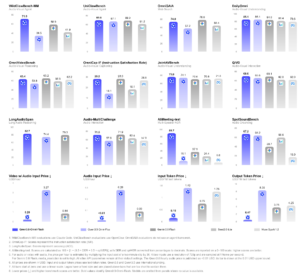
That’s what AI agents do. OpenAI’s Codex, powered by GPT-5.5, can resolve real-world GitHub issues end-to-end. It achieves 82.7% accuracy on Terminal-Bench 2.0 — a benchmark that tests complex command-line workflows requiring planning, iteration, and tool coordination. It resolves software engineering tasks that used to take a team of three engineers two weeks. And it doesn’t clock in, take sick days, or need a bench rotation.
The billable-hours model has one fatal assumption: that human time is the primary input. That assumption is now false.
When the cost of AI coding agents collapses “to essentially the cost of electricity” — as one industry report put it — the unit economics of staffing-based IT services stop working.
What OpenAI Is Actually Building

Most of the IT industry is treating OpenAI as a productivity tool — a smarter autocomplete for their engineers. That framing is dangerously wrong.
OpenAI’s CFO Sarah Friar said it clearly at a Goldman Sachs conference: they are building A-SWE, an agentic software engineer that can “build an app, handle quality assurance, fix bugs, and write documentation.” Her exact words were: “This is not just augmenting the current software engineers in your workforce — it’s literally an agentic software engineer that can build an app for you.”
That’s not a Copilot. That’s a replacement.
And it’s already deployed at scale. By OpenAI’s own admission, more than 85% of OpenAI’s company uses Codex every week — across finance, communications, marketing, engineering, and product. The company used it to review 24,771 K-1 tax forms totaling 71,637 pages. One employee automated generating weekly business reports, saving 5-10 hours a week.
The progression is also clear:
| Phase | Product | What It Does |
|---|---|---|
| 1 | ChatGPT / Copilot | Assists humans with tasks |
| 2 | Deep Research, Operator | Takes over specific knowledge workflows |
| 3 | A-SWE / Codex Agents | Replaces entire software engineering roles |
| 4 (Coming) | Multi-agent systems | Runs full project delivery end-to-end |
The IT services industry is currently panicking about Phase 2. Phase 3 is already shipping.
The Numbers Don’t Lie: What’s Happening Right Now
The data from FY2026 is striking.
Job growth has structurally collapsed:
In FY2022, India’s IT sector added 600,000 net jobs. In FY2026, it added approximately 140,000 — an 86% collapse in net hiring, even as revenue held steady or grew slightly.
That decoupling — revenue growing while headcount falls — is the clearest signal that the industry’s operating model is changing.
Layoffs are accelerating:
- TCS cut 12,000 employees in FY2026
- Infosys eliminated 26,000 positions in fiscal 2024, followed by additional layoffs in 2025
- Wipro shed 24,500 roles in fiscal 2024, then cut hundreds more mid-level employees
- Tech Mahindra eliminated 10,700 jobs
- Oracle cut 10% of its Indian headcount
Total: over 80,000 job cuts at major IT services firms in 18 months. The reason, per Bloomberg, is not recession. It’s automation.
Revenue per employee is rising sharply:
- Infosys: $63,000 per employee (up from the $40K-$55K historical range)
- TCS: $52,000 per employee
- HCLTech: $48,000
- Wipro: $45,000
This is what productivity displacement looks like in practice. Fewer people are doing more work, because AI is handling the rest.
The market has spoken:
Indian IT stocks lost over $50 billion in market capitalization as investors priced in the structural risk. These are companies that were once considered recession-proof, given their long-term outsourcing contracts. That premium is gone.
The Tiered Threat: Not All IT Services Are Equal
Here’s what most articles get wrong: AI doesn’t threaten all IT services equally. The vulnerability is tiered, and understanding the tiers is the difference between panic and strategy.
Tier 1: Already Disrupted (High Urgency)
These service lines are directly in the crosshairs:
- Routine software development — writing CRUD applications, basic APIs, boilerplate code
- QA and testing — automated test writing, regression testing, bug detection
- Basic data entry and ETL work — AI handles this faster and cheaper
- Tier-1 tech support — chatbots and AI agents now handle 70-80% of common queries
- Code documentation — AI writes it better than most humans
- Business process outsourcing (BPO) — repetitive rule-based tasks
Salesforce cut its customer support headcount from 9,000 to 5,000 using Agentforce, with AI agents matching human satisfaction scores across 1.5 million conversations. The people those 4,000 humans replaced? Many worked at IT services firms.
Tier 2: Under Pressure (Medium Urgency)
- Systems integration — AI accelerates it but still needs human oversight for complex enterprise environments
- Cloud migration services — heavily templated, increasingly automatable
- Application maintenance and support — AI agents are starting to handle incident response and patching
- Mid-level project management — Gartner estimates this layer will shrink by 50%
Tier 3: Growing (Low Immediate Risk, High Opportunity)
- AI strategy consulting — clients need help figuring out how to use AI
- AI implementation and orchestration — building the agent pipelines themselves
- Cybersecurity — AI creates new attack surfaces, expanding the security services market
- Governance and compliance — AI regulation creates new advisory work
- Domain-specific AI training and fine-tuning
- Complex systems architecture where judgment still beats automation
The brutal irony: the work that’s being destroyed was the high-volume, low-complexity foundation that made these firms profitable. The work that’s growing requires senior talent, domain expertise, and creativity — exactly the kind of talent that’s expensive and scarce.
How the Giants Are Responding
To their credit, the major IT firms are not sitting still. But the transition is painful and the direction is uncertain.
TCS has set up a dedicated AI and services transformation unit, consolidating all AI initiatives into a single platform. Their CEO K. Krithivasan frames the layoffs as “skill mismatch, not AI automation” — which is technically true, but it’s a slim distinction. The skills that are mismatched are the ones AI is replacing.
Infosys has developed over 200 AI agents and is actively selling “AI agent platforms” to clients. They’re reporting 20-25% productivity gains in their own software products from AI tooling. They describe clients moving “from a use case approach to an AI-led transformation approach.”
Wipro and HCLTech are following similar paths — all of them pivoting toward AI consulting, AI implementation, and “AI-augmented delivery.”
The shift is genuine. But the math is hard: if AI makes each engineer 30% more productive, you need 30% fewer engineers. If it makes them 50% more productive, the workforce cuts need to be proportionally larger to maintain margins. These companies are trying to grow the top line (more AI consulting revenue) fast enough to offset the bottom-line impact of needing fewer humans. It’s a race.
What Vinod Khosla Got Right (And Where He’s Wrong)
At the India AI Impact Summit in February 2026, Vinod Khosla said IT outsourcing could be “almost completely gone by 2030.” The claim got massive attention — and it’s worth examining carefully.
What he got right: The volume-based, low-complexity outsourcing model is genuinely near-terminal. The work that drove headcount growth — writing boilerplate code, maintaining legacy systems on a time-and-materials basis, staffing large project teams — is increasingly automatable. Companies that have built their business model entirely on headcount arbitrage (cheaper Indian engineers vs. expensive Western ones) are facing an existential question: what’s your value-add when AI can match the output for a fraction of the cost?
Where he’s probably overclaiming: “Almost completely gone by 2030” assumes AI capability curve continues without meaningful friction. In practice, enterprise adoption is slow, legacy systems are messy, clients need trust before they hand AI agents the keys to their production environment, and regulatory environments (especially in finance and healthcare) create compliance-driven demand for human expertise. The $863 billion systems integration market doesn’t evaporate. It transforms.
Phil Fersht, CEO of HfS Research, put it more precisely: “The impact of AI is eating into the people-heavy services model.” Eating into. Not eliminating.
The realistic view: the industry shrinks by headcount but grows by value. The firms that survive will be smaller, more expert, and far more profitable per person. The question is whether the transition happens fast enough to avoid a decade of pain.
Who Survives, Who Doesn’t
Here’s a decision matrix based on the structural dynamics at play:
| Company Profile | AI Exposure | Likely Outcome |
|---|---|---|
| Pure-play BPO / low-complexity coding farms | Extreme | Severe contraction or exit |
| Traditional IT outsourcer with no AI pivot | High | Declining margins, significant layoffs |
| Large IT firm actively building AI services | Medium | Painful transition, survive at smaller scale |
| Boutique firm with deep domain expertise | Low | Potential growth — domain knowledge is the moat |
| AI-native IT services firm | Near-zero | Growth market, but highly competitive |
| Cybersecurity / compliance specialist | Low | Expanding demand driven by AI proliferation |
The biggest risk is complacency. The firms that frame this as “we’ll just use AI to make our engineers more productive” while leaving the business model unchanged are the ones in trouble. The opportunity goes to firms that rebuild around outcomes (not hours), domain expertise (not headcount), and AI orchestration (not AI avoidance).
Common Myths About AI and IT Services
Myth 1: “AI can’t handle complex enterprise software.”
Partially true in 2023. Less true in 2026. GPT-5.5 in Codex achieves 58.6% on SWE-Bench Pro, which evaluates real-world GitHub issue resolution. It can handle large refactors, migrations, and multi-step debugging across complex repositories. The floor rises every few months.
Myth 2: “Indian IT firms are too big to fail.”
Size is not a moat when the cost structure is the problem. Kodak was enormous. The companies most at risk are the ones where headcount is the business model, not a delivery mechanism.
Myth 3: “AI will create more IT jobs than it destroys.”
This might be true in 15 years. In the 2026-2030 window, the replacement curve is faster than the creation curve for mid-level IT roles. The new jobs exist — AI trainers, prompt engineers, AI auditors, orchestration architects — but there are far fewer of them, and they require different skills.
Myth 4: “Clients won’t trust AI with their production systems.”
They already do. OpenAI’s enterprise products are running inside some of the world’s largest companies. Salesforce already cut 4,000 support roles using AI agents. The trust barrier is lower than IT service executives would like to believe.
Myth 5: “These companies can just reskill their workforce.”
Reskilling 100,000 mid-level engineers in two years is not operationally realistic at the scale required. Some will make the transition. Many won’t. The skill gap is real, and the timeline is compressed.
What This Means If You Work in IT
If you’re a mid-level developer, project manager, or BPO worker at a traditional IT services company, the data is uncomfortable. The roles at greatest risk are not entry-level (those were always cheap) or senior (those require judgment). They’re the mid-level layer — people with 5-12 years of experience doing work that was complex enough to require humans in 2019 but is now squarely within AI capability range.
The honest advice:
- Move up the value chain, not sideways. Learning a new programming language won’t save you if AI can learn it in minutes. Domain expertise — deep knowledge of healthcare systems, financial instruments, legal processes — is harder to replicate.
- Learn to orchestrate AI, not compete with it. The engineers who thrive are the ones who can set up AI agent pipelines, review their output, catch failures, and improve the systems. This is a real skill. Start developing it now.
- Think about outcomes, not hours. If you can demonstrate you deliver outcomes — shipped products, resolved incidents, business value — you survive the hour-counting apocalypse. If your value proposition is “I showed up for 8 hours,” you don’t.
- The cybersecurity and governance space is hiring. AI is creating security vulnerabilities and compliance nightmares faster than the industry can address them. These roles are growing, not shrinking.
Conclusion
OpenAI probably won’t “crush” IT services companies in the way a hammer crushes a nail. What it’s doing is more like slowly draining the economic oxygen from the room.
The billable-hours, headcount-arbitrage model that built Bengaluru’s skyline is structurally broken. The question is no longer whether it breaks — the employment data from FY2026 has already answered that. The question is who rebuilds what’s next.
The firms that treat AI as a tool to augment their current model will survive, diminished. The firms that rebuild around AI as the delivery mechanism — with humans providing judgment, creativity, and domain expertise on top — might actually come out ahead. A smaller industry, but a more valuable one.
The workers caught in the middle deserve honesty, not reassurance. Adapt early, move up the value chain, and don’t wait for your firm to hand you a reskilling plan. That plan may arrive too late.
12. FAQ Section
Q: Is OpenAI directly competing with IT services companies like Infosys or TCS?
Not directly — yet. OpenAI builds the AI models and tools (like Codex, GPT-5.5, and A-SWE). IT services companies are clients of OpenAI in some cases, and competitors in others. The more accurate framing is that OpenAI’s tools are making the work that IT services companies sell dramatically cheaper to produce, which destroys the economic value of the service.
Q: Will AI completely replace IT outsourcing by 2030?
Unlikely completely, but significant contraction is already underway. India’s IT sector added 600,000 net jobs in FY2022. In FY2026, it added roughly 140,000 — an 86% drop. Complete elimination by 2030 assumes frictionless enterprise adoption, which rarely happens at scale. But the industry’s workforce model is being permanently downsized.
Q: Which IT services are most vulnerable to AI disruption?
The highest-risk areas are routine software development, QA and testing, BPO and data entry, basic tech support, and code documentation. Systems integration, AI implementation consulting, cybersecurity, and domain-specific advisory services are lower-risk or growing.
Q: Are TCS and Infosys adapting to AI, or just cutting costs?
Both, but primarily the latter right now. TCS has set up a dedicated AI transformation unit and Infosys claims 200+ proprietary AI agents. Both are reporting productivity gains. But the layoffs have outpaced the new hiring by a wide margin, and their business models still fundamentally rely on human delivery teams. The adaptation is real but insufficient at current speed.
Q: What is OpenAI’s A-SWE, and why does it matter for IT services?
A-SWE (Agentic Software Engineer) is OpenAI’s AI system designed to autonomously build applications, fix bugs, write documentation, and handle QA — the entire software development lifecycle without human engineers. OpenAI’s CFO has explicitly described it as a replacement for software engineers, not an assistant. If deployed at enterprise scale, it directly eliminates the core service that mid-tier IT outsourcers provide.
Q: Should I be worried about my job in IT?
That depends on what your job involves. If your primary work is routine coding, ticket routing, manual testing, or report generation, the risk is real and growing. If you work in AI governance, cybersecurity, complex systems architecture, or senior consulting, demand is rising. The safest move is to understand which tier your role falls in and move proactively.
Q: How do AI agents compare to traditional outsourced developers in terms of cost?
One industry analysis described the marginal cost of AI coding agents as “essentially the cost of electricity.” Compare that to a mid-level Indian IT engineer billing at $40-80/hour to a Western client. For commodity coding tasks, the cost differential is already decisive. AI agents don’t bill for think time, meetings, or ramp-up. The economic case for human outsourcing on routine tasks is eroding fast.
Q: What’s the realistic timeline for this disruption?
The disruption is already happening (FY2026 data confirms it). The accelerating phase likely runs 2026-2029, as AI agent reliability improves and enterprise trust increases. A stabilization phase may follow as the industry restructures around higher-value services. “Complete replacement” timelines (by 2030, per some analysts) are likely too aggressive for complex enterprise work, but too optimistic for commodity IT services.