

Google may be preparing one of its biggest Gemini upgrades yet. A new leak suggests that the company is testing something called Gemini Omni, possibly a new AI video-generation model or a Gemini-native replacement for the current Veo-powered video experience.
The timing is important. Google I/O 2026 is officially scheduled for May 19–20, with the main Google keynote listed for May 19 at 10:00 AM PT. Google says the event will include livestreamed keynotes, sessions and developer updates, making it the most likely stage for major Gemini announcements.
But before the hype goes too far, one thing should be clear: Gemini Omni has not been officially announced by Google yet. Right now, it is a leak based on UI strings and early reports. Still, the signal is strong enough that AI watchers are taking it seriously.
What Is Gemini Omni?
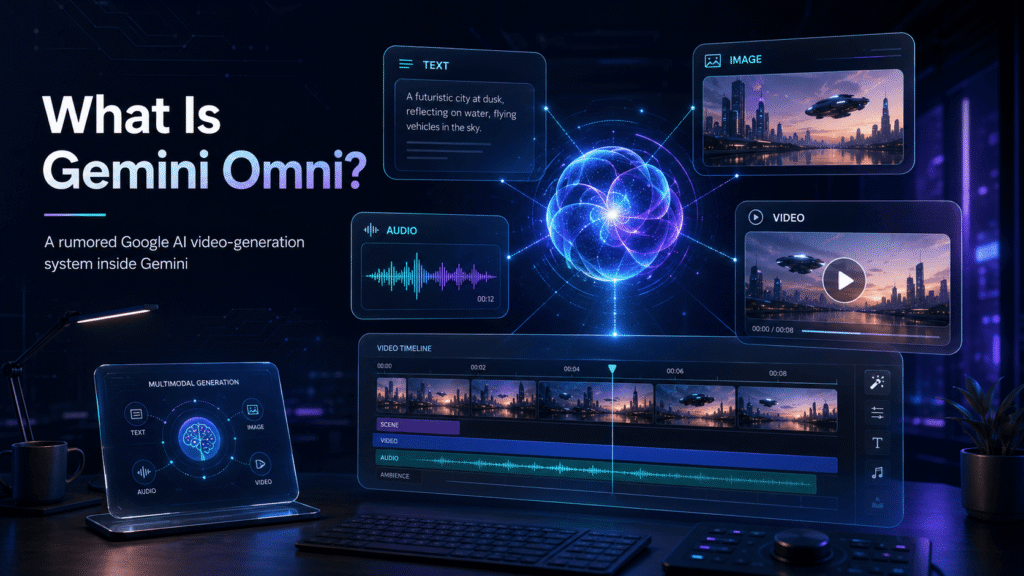
Gemini Omni appears to be a rumored Google AI video model or video-generation product inside the Gemini app. The key leak comes from a reported Gemini video-generation UI string that says: “Start with an idea or try a template. Powered by Omni.” According to leak coverage, this string appeared near “Toucan,” described as the internal name for Gemini’s current Veo 3.1-backed video-generation pathway.
That one phrase — “Powered by Omni” — is why the AI community is speculating that Google may be preparing a new video model, a new Gemini video brand, or a unified multimodal system that handles image, video and possibly audio generation under one Gemini-native model.
The safest interpretation is this: Omni is probably connected to video generation inside Gemini, but we do not yet know whether it is a new model, a rebrand, or a deeper upgrade to Veo.
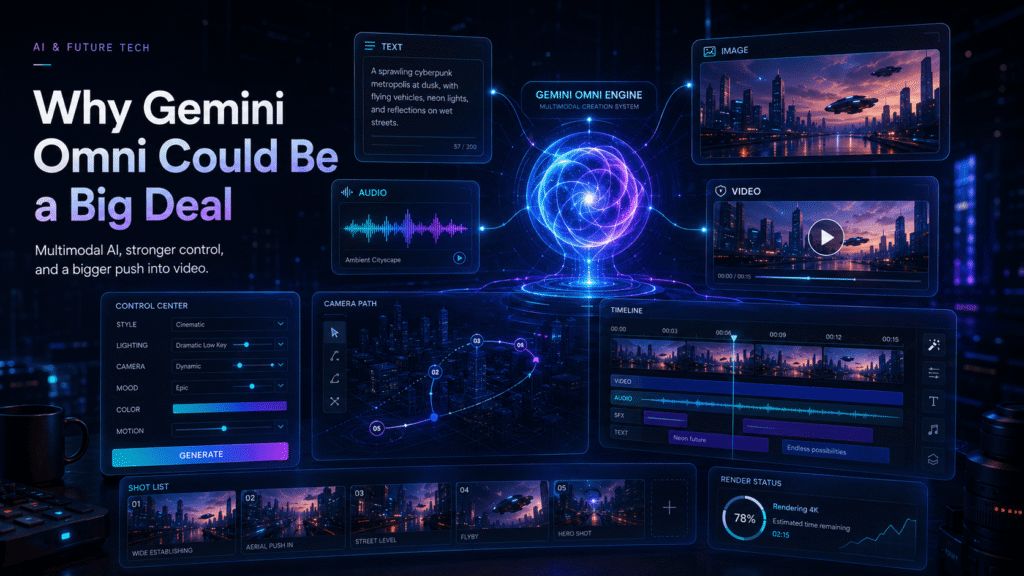
Why Gemini Omni Could Be a Big Deal
Google already has a strong AI video system in Veo 3.1. In Gemini, Veo 3.1 can create high-quality eight-second videos with sound, while Veo 3.1 Lite focuses on faster generation. Google also says Gemini video generation supports mobile use, reference images, vertical video and SynthID watermarking for AI-generated content.
So why would Google need Omni?
The answer may be control. The biggest battle in AI video is no longer only realism. It is about consistent characters, controllable camera movement, reference-based editing, multi-shot scenes, native audio and workflow integration. Google has already been improving Veo in this direction: Veo 3.1 added richer native audio, better cinematic understanding, reference images, scene extension and first-frame-to-last-frame control through the Gemini API.
If Omni is real, it may be Google’s attempt to make these capabilities feel less like a separate “video tool” and more like a native Gemini creation engine.
Gemini Omni vs Veo 3.1: Is Omni Replacing Veo?
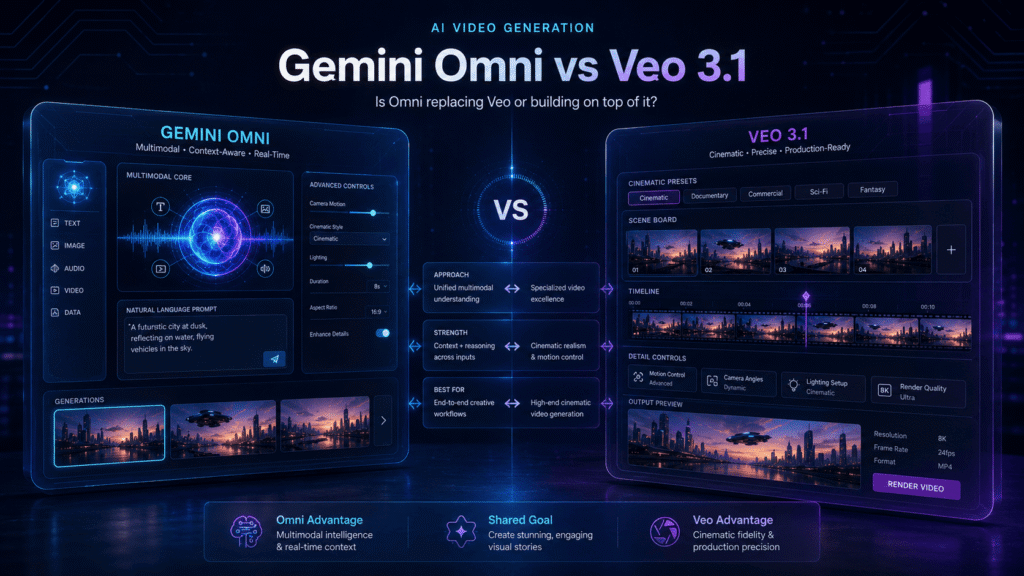
At this stage, there are three possible explanations.
First, Omni could simply be a new public name for Gemini’s video tab, while Veo continues to power the actual generation behind the scenes. This would be the least dramatic option.
Second, Omni could be a new Gemini-trained video model that sits alongside or eventually replaces Veo inside the Gemini app. This would make sense if Google wants one Gemini-branded model family instead of separate names for text, image and video systems.
Third, and most exciting, Omni could be a true multimodal generation model — a single system that can create or transform text, images, audio and video inside one workflow. Leak analysis has pointed to this as the most ambitious reading of the name “Omni,” but also the one with the least confirmation.
For now, Eyestech’s verdict is simple: do not call Gemini Omni a confirmed Veo replacement yet. Call it a likely Gemini video-generation leak.
Why Google May Be Moving Fast: Seedance 2.0 Pressure
The AI video race has become extremely competitive in 2026. ByteDance officially launched Seedance 2.0 in February 2026, describing it as a next-generation video creation model with a unified multimodal audio-video architecture that supports text, image, audio and video inputs.
That matters because the rumored Gemini Omni direction sounds very similar: more multimodal, more controllable and more video-native.
Google’s current Veo 3.1 is powerful, especially for cinematic quality and audio-video generation, but the market is moving toward models that can understand references, preserve characters and edit scenes more precisely. Google also recently introduced Veo 3.1 Lite, a lower-cost model for developers that supports text-to-video, image-to-video, 16:9 and 9:16 formats, 720p/1080p output and 4, 6 or 8-second durations.
That suggests Google is not only chasing quality. It is also trying to make AI video cheaper, faster and more accessible.
Gemini 3.2 Flash and Other Gemini Leaks Before I/O
Gemini Omni is not the only leak circulating before Google I/O 2026. TestingCatalog reports that Google appears to be preparing new Gemini Flash upgrades, with an anonymous Gemini Flash candidate reportedly surfacing on LM Arena and some users briefly spotting a “Flash 3.2” entry in Gemini’s model selector. The same report also mentions Vertex AI migration signals from Gemini 2 Flash toward newer Gemini 3-era Flash models.
Again, this is not official confirmation of Gemini 3.2 Flash. But it fits Google’s pattern: new models often appear in testing, A/B experiments or developer notices before a public announcement.
Google’s official Gemini lineup already includes Gemini 3 Flash, which Google describes as its latest Gemini 3 model built for faster creation, and Gemini 3.1 Pro, which supports text, image, video, audio and PDF input with a 1 million token context window.
So if Gemini 3.2 Flash appears at I/O, it may focus on speed, coding, multimodal understanding and cheaper high-volume use.
What About Gemini Memory and “Teamfood”?
Some social posts and video commentary have mentioned a possible Gemini memory update under the name “Teamfood.” That part should be treated carefully. “Teamfood” may simply refer to an internal testing stage rather than a final consumer feature name.
What is confirmed is that Gemini already has memory and personalization features. Google’s support page says Gemini Apps can use memory of past chats to personalize responses, and users can turn this on or off.
Google also recently promoted easier switching to Gemini by allowing users to import chat history and preferences from other AI apps. Google says “Past chats” is now called “memory,” reflecting Gemini’s ability to remember conversations.
So the real story is not necessarily “Teamfood.” The real story is that Google wants Gemini to become more personal, persistent and workflow-aware.
Gemini Subscription Changes May Also Be Coming
Google’s current India-facing Gemini subscription page lists Free, Google AI Plus, Google AI Pro and Google AI Ultra tiers. The Ultra tier offers the highest limits for models and features, including video generation with Veo 3.1, Deep Think and Gemini Agent access in supported regions.
A separate 9to5Google report says Google is preparing an “AI Ultra Lite” tier and a clearer usage-limit dashboard for Gemini subscribers. If accurate, this could mean Google wants to bridge the gap between Pro and Ultra pricing before or around I/O.
This matters for Gemini Omni because advanced AI video generation is expensive. If Google launches a major new video model, it may attach different limits to Free, Plus, Pro, Ultra Lite and Ultra plans.
When Could Gemini Omni Launch?
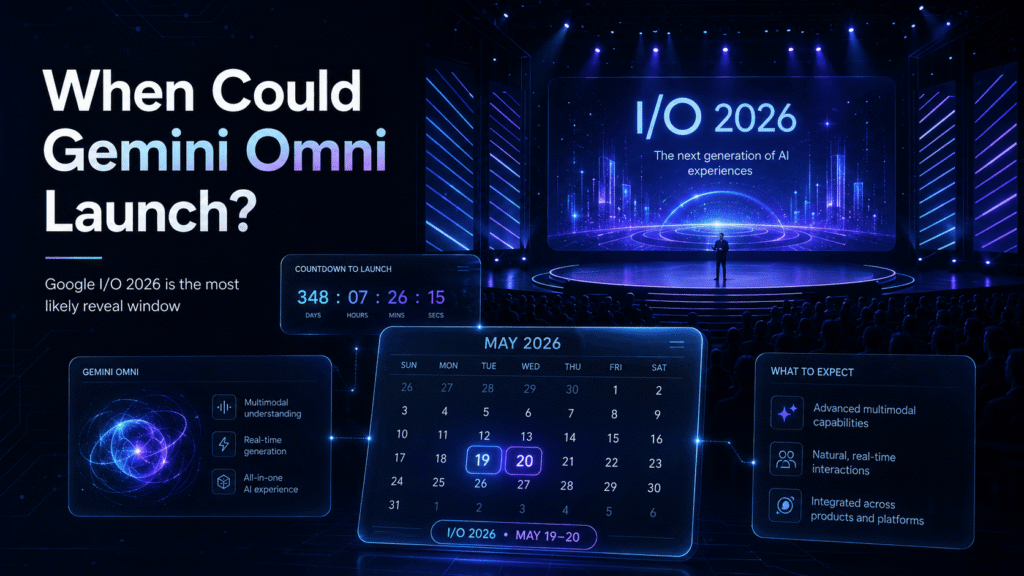
The obvious launch window is Google I/O 2026, happening May 19–20. The leak appeared roughly two weeks before the event, and Google has already confirmed that I/O will include AI and Gemini updates.
That does not guarantee a launch. UI strings can appear without a final product reveal. Google could also announce Omni as an experiment, limited rollout, waitlist feature or developer preview rather than a public release.
Still, if Google wants to make a major AI video statement, I/O is the perfect stage.
What Gemini Omni Could Mean for Creators
For creators, marketers and YouTubers, Gemini Omni could be a major upgrade if it improves three things:
Better control: More accurate camera movement, shot planning, object consistency and scene direction.
Better workflow: Native Gemini integration instead of jumping between Gemini, Flow, AI Studio and other tools.
Better multimodal creation: A single prompt could combine script, image reference, voice, sound effects and video output.
If Google gets this right, Gemini may move from “AI chatbot with video generation” to a full creative production assistant.
What Gemini Omni Could Mean for Developers
For developers, the biggest question is API access. Veo 3.1 is already available through the Gemini API, Google AI Studio and Vertex AI in paid preview, with capabilities such as reference images, scene extension and first-to-last-frame transitions.
If Omni becomes a real model, developers will want to know:
- Will Gemini Omni be available in the Gemini API?
- Will it support 1080p or 4K?
- Will it generate audio natively?
- Will it allow longer clips?
- Will it support image, audio and video references?
- Will it be cheaper than Veo 3.1?
- Will it be available globally or locked to Ultra users first?
Until Google answers these questions, Omni remains exciting but incomplete.
Should You Believe the Gemini Omni Leak?
You should take it seriously, but not blindly.
The leak is credible enough to watch because it reportedly comes from Gemini’s own video-generation UI. It also fits Google’s current direction: stronger video generation, more Gemini-native workflows, cheaper Veo options and heavy AI focus at I/O.
But there is still no official Google announcement. There are no confirmed benchmarks, no pricing, no API documentation and no public demo.
So the best summary is this:
Gemini Omni is likely connected to Google’s next big push in AI video, but the exact product is still unknown.
Eyestech Verdict
Gemini Omni could become one of the biggest AI announcements at Google I/O 2026 if it is more than a rebrand. If it is a true Gemini-native video model, Google may be preparing to compete directly with Seedance 2.0, Sora, Kling and other next-generation AI video systems.
For now, the smartest move is to watch Google I/O closely. If Google confirms Omni, the AI video race could change very quickly.
FAQ
Is Gemini Omni officially announced?
No. As of May 6, 2026, Google has not officially announced Gemini Omni. It is currently based on leaks and UI-string reporting.
What is Gemini Omni expected to do?
Gemini Omni is expected to be related to video generation inside Gemini. It may be a new video model, a new name for Gemini’s video tool, or a unified multimodal model for image, video and audio creation.
Will Gemini Omni replace Veo 3.1?
There is no confirmation yet. Omni could replace Veo, sit alongside Veo, or simply act as a new Gemini-facing brand while Veo continues powering the backend.
When will Gemini Omni launch?
The most likely reveal window is Google I/O 2026, which takes place May 19–20. However, Google has not confirmed that Omni will launch there.
Is Gemini 3.2 Flash also coming?
There are leaks and reports of a Gemini Flash upgrade, including mentions of Flash 3.2, but Google has not officially confirmed Gemini 3.2 Flash yet.
Why is Gemini Omni important?
If real, Gemini Omni could make AI video generation more controllable, more native to Gemini and more competitive against models like Seedance 2.0, Sora and Kling.