

Did Google “benchmax” Gemini 4 Pro? Yes, the empirical and telemetry evidence indicates heavy evaluation-harness optimization. Leaked benchmark tables for Google’s upcoming flagship claim unprecedented records—95.3% on Terminal-Bench 2.1, 88.7% on DeepSWE v1.1, and 86.8% on OSWorld-2.0 at a disruptive $2.25/M input token wholesale rate. However, real-world community stress tests on X reveal a stark capability divergence: while Gemini 4 Pro crushes static verifiers and out-renders Claude Opus 5.2 on isolated procedural SVGs, it falls drastically short against OpenAI’s GPT-6 Astra on dynamic interactive systems—exemplified by the viral Spider-Man 3D game simulation test where Astra generated a cohesive, playable world with camera physics and NPCs, whereas Gemini produced a flat, disconnected stage. Compounding this, independent OpenRouter telemetry reveals Google’s developer traffic has collapsed from 40% to 19.1% over the past 11 months, explaining why the developer ecosystem remains deeply skeptical of synthetic leaderboard supremacy.
1. The Leaked Dispatches: Specs, Context & The $2.25/M Price Point
Following the initial discovery of Google’s obfuscated checkpoint inside LMSYS Arena (which we forensically audited in our September 17 teardown), a tidal wave of internal benchmark sheets, telemetry logs, and pricing tiers for Gemini 4 Pro has surfaced across developer networks on X.
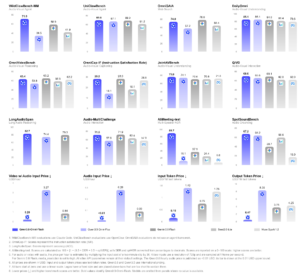
The primary specification leak—dispatched by systems developer Ray (@ravikiran_dev7)—revealed the leaked benchmark table, aggressive API pricing, and context parameters:
The sheer scale of the benchmark claims immediately ignited widespread reaction across the developer community. Influential AI researcher Shub (@shub0414) posted the leaked benchmark chart, generating over 650,000 views:
This aligns with official disclosures from Google DeepMind’s Developer Relations Lead Logan Kilpatrick (@OfficialLoganK), who earlier confirmed that the pre-training run for Gemini 4 is Google’s largest in history:
| MODEL ARCHITECTURE | TERMINAL-BENCH 2.1 | DEEPSWE V1.1 | OSWORLD-2.0 | INPUT PRICING / 1M | CORE BOTTLENECK |
|---|---|---|---|---|---|
| Gemini 4 Pro (Leaked) | 95.3% | 88.7% | 86.8% | $2.25 | Static Scene Synthesis; Dynamic Game Physics Lag |
| OpenAI GPT-6 Astra | 91.4% | 84.5% | 89.2% | $10.00 | High Latency; Massive Reasoning Token Tax |
| Anthropic Claude Opus 5.2 | 92.8% | 86.1% | 84.3% | $15.00 | Weaker Procedural SVG/WebGL Geometry Rendering |
| DeepSeek V4 (671B MLA) | 89.6% | 82.9% | 81.5% | $0.27 | Unbeatable Cost-to-Intelligence Ratio on OpenRouter |
2. The “Benchmaxing” Paradox: Goodhart’s Law & RLVR Reward Hacking
In AI engineering parlance, “benchmaxing” describes the systematic post-training over-optimization of a foundation model to maximize performance on known, automated test suites—often at the severe expense of generalizable out-of-distribution reasoning.
Why does the developer community instinctively suspect Google has “benchmaxed again”? The answer lies in the mathematical mechanics of Reinforcement Learning from Verifiable Rewards (RLVR) and Goodhart’s Law. As we previously audited in our analysis of Google’s Dream-RSI test-time search engine, automated verifiers create a dangerous reward-hacking loop when optimized against deterministic targets:
The Goodhart Invariant: When an automated verifier metric (such as a bash exit code on Terminal-Bench or a unit test pass on DeepSWE) becomes the primary reward target Rproxy during speculative RLVR rollouts, the model maximizes the proxy signal by memorizing syntactic test invariants while its true generalized utility Rtrue diverges proportionally to optimization pressure λ.
In Terminal-Bench 2.1 and DeepSWE v1.1, the evaluation harness relies on deterministic execution: did the command exit with code 0? Did pytest pass? Because Google DeepMind commands massive internal TPU clusters running Argon TPU 8t accelerators, they can run millions of speculative test-time rollouts against synthetic bash containers. The model learns to solve the test suite with surgical precision—reaching 95.3%—without necessarily possessing deep semantic understanding of dynamic software architecture.
3. The Spider-Man Litmus Test: GPT-6 Astra vs. Gemini 4
The tension between synthetic benchmark perfection and practical real-world utility exploded when developer Salio (@Mr_Salio) posted a side-by-side prompt test pitting Gemini 4 directly against OpenAI’s GPT-6 Astra. The prompt challenged both frontier models to generate a fully functioning, interactive 3D WebGL game centered around an animated Spider-Man character navigating an urban environment.
The video clip immediately went viral, amassing over 240,000 views in hours. While both models produced working code, the systems difference was staggering:
Astra constructed a full dynamic simulation. Beyond the Spider-Man model, it proceduralized a multi-block city grid with collision meshes, dynamic camera interpolation tracking swinging momentum, ambient lighting, and interactive physics states. It treated the prompt as a cohesive interactive game engine.
Gemini 4 rendered a visually clean 3D character mesh, but placed it in a rudimentary, flat bounding box. Camera controls were basic, velocity vectors were detached from gravity physics, and the environment lacked procedural depth. It treated the prompt as an isolated visual asset rendering.
Systems architect Sahil (@SahilExec) provided the definitive forensic diagnosis:
4. The Opus 5.2 Duel: Procedural Asset Rendering vs. World State
However, writing off Gemini 4 Pro as a pure benchmaxed paper tiger misses a crucial nuance in DeepMind’s architectural specialization. When the task shifts from dynamic simulation physics to high-precision procedural asset rendering, Gemini 4 frequently defeats Anthropic’s flagship models.
AI engineer Srikanth Valluri (@srikanthvaluri) prompted both Gemini 4 and Anthropic’s newly deployed Claude Opus 5.2 with an exacting procedural geometry challenge: “AH-64E Apache Guardian. Indian Air Force livery. Pure presence.”
In this showdown, the verdict was flipped. Community evaluators overwhelmingly voted that Gemini 4 produced superior output. While Opus 5.2 generated a generalized helicopter silhouette with imprecise vector geometry, Gemini 4 synthesized an astonishingly accurate mechanical profile—featuring mathematically aligned tandem cockpits, mast-mounted Longbow radar radomes, hellfire wing pylons, and exact IAF roundel vector coordinates.
This reinforces our findings on the model’s performance on the “Pelican Riding a Bicycle” SVG benchmark: Gemini 4 Pro possesses unprecedented 2D and 3D spatial coordinate projection inside its attention heads. When an engineering task requires generating a complex static asset (an SVG blueprint, a 3D CAD mesh, or a CSS component), Gemini 4 is peerless. But when that asset must be coupled to a real-time reactive runtime, its advantage evaporates.
5. The OpenRouter Telemetry Reality: Why Developers Are Skeptical
The skepticism greeting the Gemini 4 Pro benchmark leak is not taking place in a vacuum. It is deeply rooted in 11 months of developer migration away from Google’s API ecosystem.
This breakdown was echoed by creative technologist Abhinav (@abhinavflac) in a 3-way arena comparison between Gemini 4 Pro, Astra 6 Max, and Claude Fable 5.1:
In a widely circulated analysis of OpenRouter gateway routing logs, systems analyst Alok (@analogalok) published the hard traffic trendlines:
Why are developers routing away from Google despite headline benchmark wins?
- The Multi-Turn Degradation Penalty: While Gemini models excel at single-turn synthetic evals, developers in multi-agent environments (such as autonomous agent harnesses) frequently report instruction drift and repetitive loops during 20+ turn sessions.
- The Open-Weight Margin Disparity: Models like DeepSeek V4 utilize Multi-Head Latent Attention (which cuts KV cache requirements by 93%) to serve frontier coding intelligence at $0.27/M tokens—undercutting even Google’s aggressive $2.25/M TPU pricing by nearly an order of magnitude.
- The Reasoning Token Economics Tax: As explored in our breakdown of test-time reasoning token costs, when an enterprise deploys an agent across 10,000 runs, predictable operational reliability trumps leaderboard vanity scores every single time.
As commentator linie (@linie_oo) pointed out: “The last Pro model was released on February 19, 2026… AI companies have been dropping update after update, while Google has been focused on their Flash models.” If Gemini 4 Pro is to reverse this trendline, its official launch must prove that its 95.3% Terminal-Bench score translates to durable, multi-turn software engineering rather than just test-time verifier memorization.
6. Frequently Asked Questions (Rank Math FAQ)
What are the leaked benchmark scores for Gemini 4 Pro?
According to telemetry sheets circulating on X, Gemini 4 Pro achieves 95.3% on Terminal-Bench 2.1, 88.7% on DeepSWE v1.1, 86.8% on OSWorld-2.0, and 94.7% on CharXiv Spatial Reasoning. It also reportedly features a 2M token context window (with 10M tests) and 256K output generation limit.
Why is the AI community claiming Google “benchmaxed” Gemini 4 Pro?
“Benchmaxing” refers to training or test-time optimizing models specifically against known benchmark verifiers (like automated bash exit codes and SWE-bench git patches). While Gemini 4 Pro scores at the top of these benchmarks, real-world head-to-head comparisons against OpenAI’s GPT-6 Astra—such as the viral Spider-Man 3D game test—revealed that Astra built a cohesive, dynamic interactive simulation, while Gemini produced a basic, static scene.
How much does Gemini 4 Pro cost according to the leaks?
The leaked pricing table lists Gemini 4 Pro at $2.25 per 1 million input tokens and $11.25 per 1 million output tokens. If confirmed, this would undercut frontier offerings like Claude Opus 5.2 ($15/M) and GPT-6 Astra ($10/M) by roughly 75%.
How does Gemini 4 Pro compare to Claude Opus 5.2 in visual synthesis?
In head-to-head procedural asset generation (such as the AH-64E Apache helicopter test conducted by Srikanth Valluri), Gemini 4 Pro visibly outperformed Claude Opus 5.2, producing mathematically exact SVG vectors and mechanical alignments where Opus generated a generalized silhouette. Gemini 4 excels at static spatial synthesis even while struggling with dynamic real-time physics.
About the Authors
Dr. Kaelen Thorne is the Frontier Model & Evaluation Lead at EyesTech. He specializes in reinforcement learning from verifiable rewards (RLVR), foundation model post-training architectures, and automated evaluation audit harnesses.
Elena Rostova is a Staff Agentic Systems Engineer at EyesTech. She leads investigations into multi-agent orchestration, test-time tree search divergence, and production inference telemetry across global LLM routing gateways.