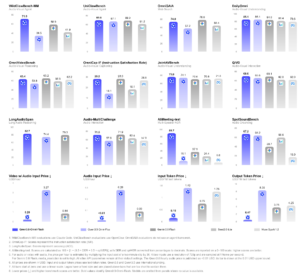



On September 17, 2026, Z.ai (Zhipu AI) revealed the first empirical, production-grade milestone of Recursive Self-Improvement (RSI): a frontier foundation model (GLM-5.3) operating as an autonomous Infra Agent to architect, profile, debug, and optimize the complete distributed serving engine for its downstream model, GLM-5.3-Flash (tested anonymously as Ox-Alpha, which served 62 trillion live tokens in six days).
The Silence in Silicon Valley: Why Nobody Is Talking About the Real RSI Milestone
For three years, the global artificial intelligence narrative has been dominated by a singular spectacle: benchmark screenshots, CEO podcast soundbites, and apocalyptic manifestos debating when an uncontrollable “recursive self-improvement explosion” would breach containment. We have seen intense debates over theoretical breakthroughs, from our forensic breakdown of Google Dream-RSI’s trajectory replay search to deep explorations into whether frontier labs had quietly reached internal ASI thresholds.
Yet, on September 17, 2026, when genuine, grounded, production-grade Recursive Self-Improvement (RSI) actually arrived, the mainstream Western technology press met it with near-total silence.
The breakthrough did not emerge from a hyper-funded lab in San Francisco, nor did it arrive as an abstract philosophical treatise on AGI. It arrived from Z.ai (Zhipu AI) in a rigorous systems paper titled “Toward Recursive Self-Improvement: How GLM Built Its Own Inference Infrastructure.”
- The Geopolitical Sanction Bias: Western consensus assumed that without NVIDIA Blackwell or H100 access, non-Western frontier AI would suffocate under hardware inefficiency. Admitting that an AI agent bridged the immature software stack of 100,000 domestic Chinese accelerators in two weeks shatters that narrative.
- The Chatbot Aesthetic Fallacy: Tech journalism understands consumer chatbots, conversational prompts, and synthetic benchmark leaderboards; it does not understand kernel thread block tiling, cross-layer Python GIL contention, or Triton tensor core precision. Infrastructure is invisible until it permanently disrupts the cost of compute.
- The Cognitive Dissonance of RSI: Theorists predicted RSI would look like an unhinged superintelligence rewriting its own neural weights in secret. In reality, RSI has manifested as an elite systems engineering compiler—optimizing memory bandwidth, writing C++ extensions, and diagnosing distributed hardware faults.
The Big-Model-to-Small-Model Flywheel: The Economic Engine of Real AI
To understand why this is a historic inflection point, one must understand the fundamental economic crisis of modern AI inference. Frontier foundation models possess extraordinary systems reasoning and architectural comprehension. However, their sheer parameter volume makes them economically impossible to deploy for high-throughput, latency-critical, everyday API workloads.
Conversely, high-speed “Flash” models are cheap and blazingly fast, but historically required armies of elite, highly paid systems engineers to squeeze every cycle of performance out of custom hardware. As we noted in our analysis of the best AI coding agents and autonomous IDE workflows, agentic loops have rapidly evolved from basic snippet completion to complex compiler interactions.
Z.ai executed a decisive paradigm shift: using the cognitive density of the flagship model (GLM-5.3) to autonomously architect the runtime infrastructure of the high-throughput model (GLM-5.3-Flash).
The 100,000-Accelerator Crucible: Deploying on Non-NVIDIA Silicon
Deploying high-throughput models on NVIDIA hardware with mature CUDA, TensorRT-LLM, and vLLM libraries is difficult enough. Deploying a brand-new foundation model architecture featuring a 1-million-token context window, multimodal inputs, and complex linear attention mechanisms across a cluster of more than 100,000 Chinese-made AI accelerators was previously considered an impossible systems undertaking.
The engineering environment faced by Z.ai lacked the decades of software polish found in the CUDA ecosystem. The domestic accelerators featured tighter memory buses and reduced HBM bandwidth, critical Triton kernels were missing or unstable, and unrecorded hardware behavior had to be inferred via live telemetry. Much like the memory wall challenges explored in our audit of DeepSeek’s Multi-Head Latent Attention (MLA), memory bandwidth—rather than raw FLOPs—dictates production scalability.
- Encode-Prefill-Decode (EPD) Disaggregation: Decoupling compute-intensive prompt ingestion (Prefill) from memory-bandwidth-bound token generation (Decode), preventing pipeline stalls.
- Intra-Node Tensor Parallelism: Confining linear attention and LM Head operators within high-speed node interconnects to bypass cross-node network latency.
- ReplaySSM (Compute-for-Memory Tradeoff): Recomputing intermediate state transformations dynamically to avoid flooding the memory bus.
- Layer Split & Hybrid Quantization: Combining W8A8 weight-activation compression with mixed-precision KV cache quantization (INT8/FP8/BF16), mirroring the architectural shifts we documented in our NVFP4 vs. FP8 precision teardown.
The Core Innovation: Why LLMs Fail at Infra Without “Dense Feedback”
Why had no one succeeded at this before? Because previous attempts to use AI for software engineering relied on sparse end-to-end feedback. When an engineer prompts an LLM: “The inference engine’s time-to-first-token (TTFT) jumped by 30%, and output throughput dropped by 20%. Fix it.”—the model is completely paralyzed. End-to-end metrics state that performance regressed, but offer zero causal attribution as to why.
Just as modern orchestration architectures like Google’s Gemini Managed Agents framework require isolated sandbox environments and explicit interaction boundaries, an infrastructure-optimizing agent requires an environment that yields dense, attributable signals.
In distributed systems, performance regressions arise from non-linear interactions across kernel implementations, thread contention, and network scheduling. Z.ai structured an engineering feedback harness built around three mandatory invariants:
Feedback isolates exact launch parameters, individual kernels, thread execution intervals, or specific input shapes rather than aggregate cluster latency.
Hypotheses are validated in seconds via local microbenchmarks and kernel unit tests, eliminating the need for multi-hour production deployments.
Changes are verified against unpartitioned mathematical ground truths and strict error bounds. Correlation is rejected; only controlled ablation is accepted.
Forensic Dissection: Three Impossible Problems Solved by the Infra Agent
Case Study 1: The Context Parallelism Precision Bug & Flash Linear Attention PR #1180
When scaling GLM-5.3-Flash across long contexts, Context Parallelism (CP) partitions input tokens across accelerator shards. Each shard computes local attention and merges intermediate states across boundaries.
Where M represents the cross-shard transformation state matrix, S is the hidden state vector, and H is the local hidden activation contribution.
During numerical validation tests, the Infra Agent compared the CP partitioned path against an unpartitioned reference execution. It observed that while short sequences passed within error tolerance, long-context runs suffered severe numerical divergence.
The agent inspected the kernel source and discovered that the underlying compiler’s tl.dot primitive defaulted to TF32 (19-bit) matrix multiplication—even when intermediate tensors were declared as FP32. While TF32 provides high throughput on tensor cores, the recurring matrix multiplies across dozens of context shards caused rounding errors to compound exponentially.
M = tl.dot(M_chunk, M, input_precision=”tf32x3″)
S_next = tl.dot(M, S, input_precision=”tf32x3″) + H
By explicitly setting input_precision="tf32x3", the agent instructed the hardware to execute three chained TF32 operations, emulating near-FP32 precision with minimal latency penalty. This fix was merged upstream into Flash Linear Attention (PR #1180).
Case Study 2: Breaking the Python GIL Lock in DeepEP & Mooncake Transfer
In a disaggregated Encode-Prefill-Decode cluster, latency is dictated by how fast Key-Value (KV) tensors can be transferred between nodes via Mooncake Transfer while computation continues via DeepEP (Deep Expert Parallelism). Engineers established a strict threshold: Prefill + KV Transfer latency could not exceed Prefill-only latency by more than 5%.
Under sustained load, the latency gap exploded to over 20%. Micro-profiling traces revealed that Python-side KV Transfer execution never overlapped with DeepEP dispatch/combine calls:
- Inside
intranode_dispatch(DeepEP v1.2.1), the C++ runtime waited on the CPU for the GPU to return the count of received tokens. - Entering C++ code from Python does not automatically release the Global Interpreter Lock (GIL).
- Holding the GIL while waiting on the GPU completely starved the background Python thread managing Mooncake KV Transfer.
internode_dispatch in the exact same file, observed an explicit py::gil_scoped_release, and patched the intra-node path to release the GIL during C++ wait intervals. The latency gap immediately plunged from >20% to under 1%.Case Study 3: Kernel Optimization Skeletons & Register-Resident Fusion
To tune custom compute kernels, the Infra Agent synthesized “optimization skeletons”—abstracting proven memory-access patterns, tiling schemes, and reduction heuristics from open-source repositories including SGLang, Flash Linear Attention, and DeepGEMM.
The Systems Comparison: Human Engineers vs. The Autonomous Infra Agent
The Frontier Horizon: Redefining the Human-Machine Boundary
Does this mean human software engineers are obsolete? No. But it means the definition of systems engineering has fundamentally changed. As we examine the broader race toward autonomous self-improvement—from the leaks surrounding GPT Sol 6 and the road to RSI to cross-platform inference benchmarking—human engineers are moving up the cognitive stack.
In Z.ai’s framework, humans established the objectives, constructed the dense assertion harnesses, and audited production safety. The model handled the combinatorial explosion of kernel tuning and multi-layer debugging.
Frequently Asked Questions
What is Recursive Self-Improvement (RSI) in artificial intelligence?
Recursive Self-Improvement (RSI) is the process by which an artificial intelligence system analyzes, modifies, and optimizes its own underlying algorithms, software stack, or hardware execution to enhance its operational capabilities without direct human programming. Z.ai’s implementation demonstrates practical RSI where GLM-5.3 acted as an Infra Agent to architect and optimize the production inference engine for GLM-5.3-Flash across 100,000 accelerators.
What was the anonymous AI model ‘Ox-Alpha’ on OpenRouter?
Ox-Alpha was the anonymous production codename under which GLM-5.3-Flash was secretly stress-tested on OpenCode and OpenRouter in September 2026. Within six days of deployment, it became the most utilized model on both platforms, successfully processing more than 62 trillion tokens across global coding and conversational workloads.
How did GLM-5.3 solve the Context Parallelism bug in Flash Linear Attention?
During long-context sharding, the Triton tl.dot operation defaulted to TF32 arithmetic, causing rounding errors to compound across sequence boundaries and corrupting output accuracy. The GLM-5.3 Infra Agent diagnosed the precision loss by comparing partitioned vs. unpartitioned execution traces and patched the kernel to use input_precision="tf32x3". This solution preserves Tensor Core acceleration while maintaining near-FP32 precision, and was officially merged upstream into Flash Linear Attention (PR #1180).
Why is ‘dense feedback’ required for AI infrastructure agents?
Sparse feedback (such as end-to-end latency or throughput metrics) informs an agent that an inference system is slow, but cannot explain why. In complex distributed systems, bottlenecks arise from non-obvious cross-layer interactions between GPU kernels, memory bandwidth, and CPU thread locks. Dense feedback provides local, timely, and mathematically verifiable telemetry (microbenchmarks, thread execution traces, and kernel assertions) that allow the agent to test specific causal hypotheses and make precise code modifications.