




High-Power Microwave vs Swarms: Why GaN Arrays Beat Lasers
Solid-state GaN HPM arrays disable dozens of drones in microseconds, bypassing 3-5s laser dwell limits and frying unshielded PCB traces at 15-30V surges.
EyesTech Electronic Warfare & Defence Systems Desk, covering radar signal processing, counter-UAS directed energy, and sovereign defence electronics. Editorial Standards: https://eyestech.in/editorial-policy/
Solid-state GaN HPM arrays disable dozens of drones in microseconds, bypassing 3-5s laser dwell limits and frying unshielded PCB traces at 15-30V surges.

Drone strikes knocked out two Yandex hyperscale AI data centers and 40% of its fleet. Under Western sanctions, ruined H100 clusters cannot be replaced.

A cheap laser shot only improves layered defense when it finishes in time. How weather, engagement capacity and fallback shape interceptor savings.

The global small-satellite launch sector is colliding with an unforgiving economic reality: rideshare economics are crushing dedicated launch vehicles on…
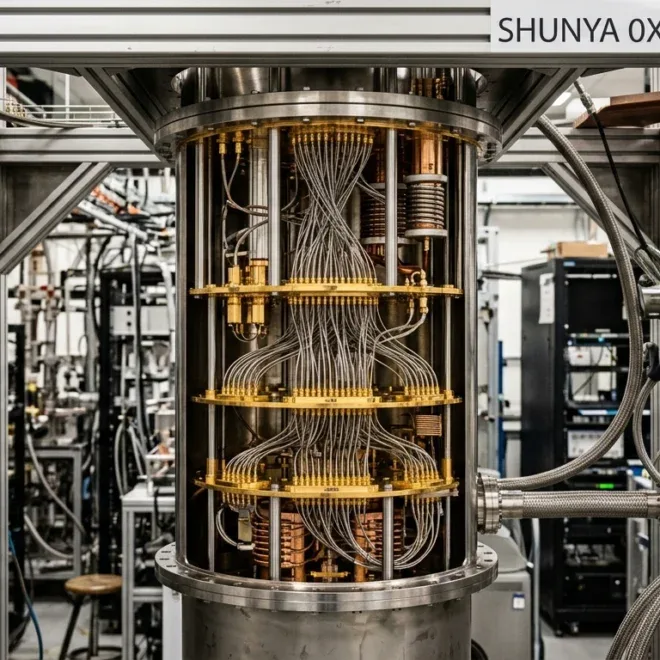
DRDO signs a ₹500 Cr TDF deal with Zero mK India for 20 mK dilution refrigerators. Here is how Shunya 0X breaks import reliance for sovereign quantum computing.
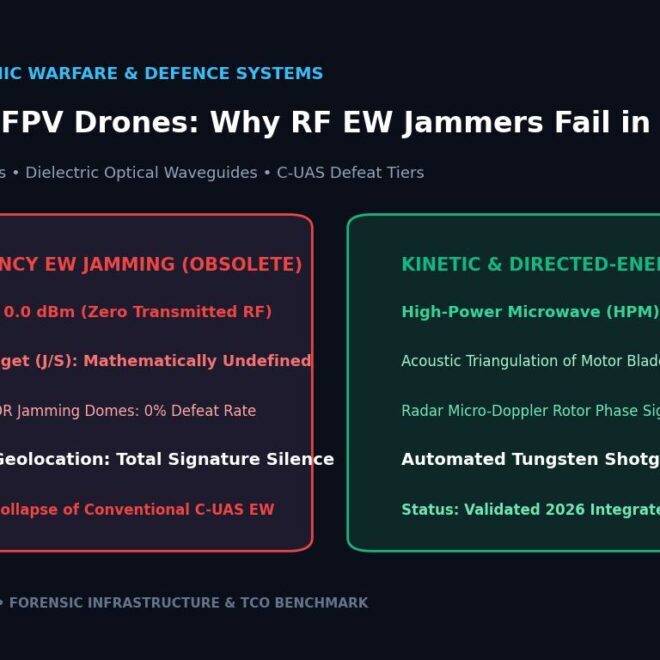
A fact-checked engineering analysis of fiber-optic FPV drones: why RF jammers fail, what the tether costs, how they are detected, and how layered counter-UAS defenses adapt.

Leaked specifications and canary tests for xAI’s upcoming Grok 4.7 disclose a 2.1T parameter MoE architecture, supplemental pre-training on SpaceX telemetry, Pareto dominance over Claude Fable on CursorBench, and the physical limits of the 200,000-GPU Colossus supercluster.

An investigative defense technology and electronic warfare deep-dive by Prithu Vardhan Mishra: why high-energy lasers fail against saturation drone swarms, the physics of DRDO’s newly announced SHIELD 3 kV/m microwave evaluation mandate, and how Gallium Nitride (GaN) S-band phased arrays fry drone avionics.