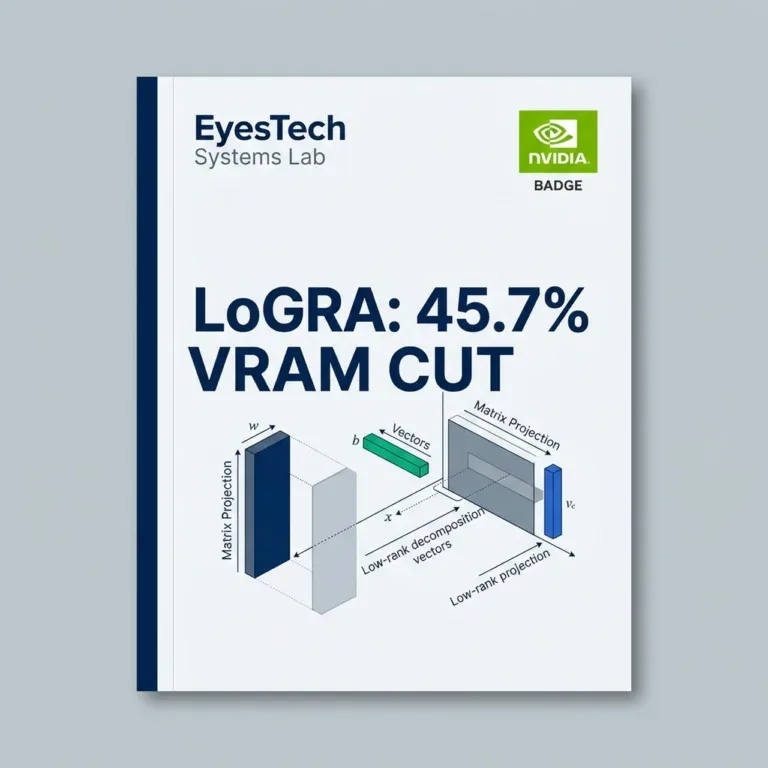

NVIDIA Research’s Low-Rank Gradient Sketches (LoGRA) algorithm reduces reinforcement learning optimizer VRAM consumption by 45.7% on 7-billion-parameter…
NVIDIA Research’s Low-Rank Gradient Sketches (LoGRA) algorithm reduces reinforcement learning optimizer VRAM consumption by 45.7% on 7-billion-parameter…
OpenAI’s GPT-6.1 Sol matches flagship Astra on DeepSWE v1.1 at $0.65 per task—a 7x cost reduction—while cutting autonomous computer-use safety violations from 17.4% to 4.3% and dropping cached input pricing to $0.10/1M tokens.
OrcaSAQ-2 shrinks a 27B coding model to about 12GB. We examine its fidelity results, agent benchmarks, and the practical limits of running it on a 16GB GPU.
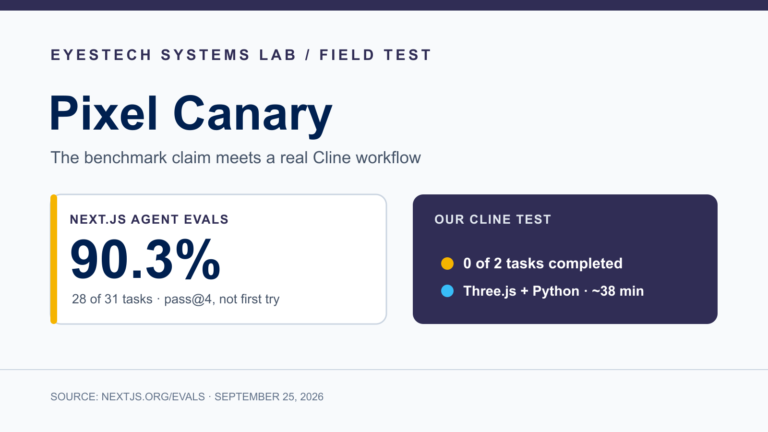
Pixel Canary’s 90% pass@4 benchmark met a different reality in Cline: two runs, 38 minutes of wall time, socket errors, and no code to test.
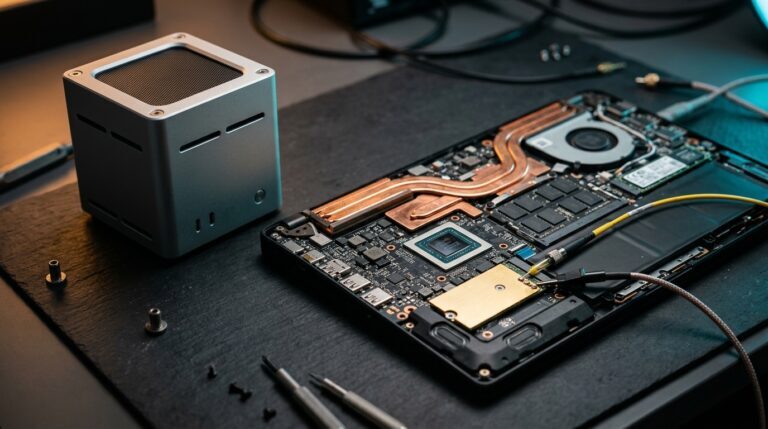
Benchmarking Apple M5 Max/Ultra Mac Studio (oMLX, Qwen 3.8 27B, Bonsai 2 27B, qwen-image-2.1) against Thunderobot’s Ryzen AI Max+ 395 120B MoE SSD laptop.
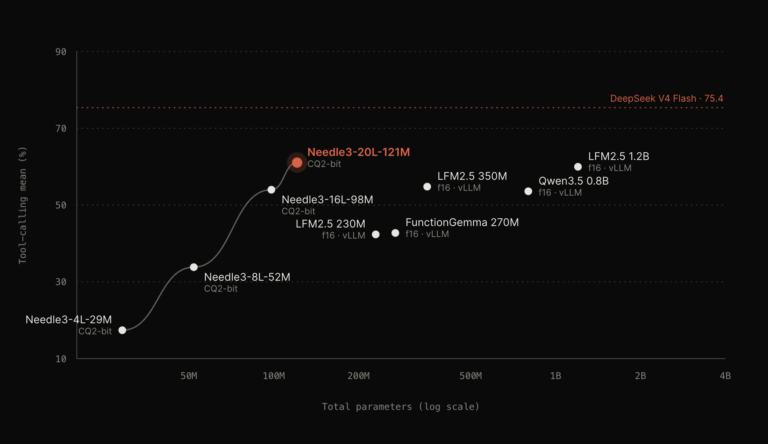
Needle 3 delivers 86% tool accuracy in an 8MB–29MB binary at 4,000 tok/sec. Cactus Compute’s laddered architecture replaces generative chat with edge automation.

Inside OpenAI’s Astra for Law: a 230M-URL legal index, CourtListener integration, and 54% Vals AI accuracy. Here is the forensic reality behind the release.
Xiaomi streamed its $3.5M real-time RL run for MiMo-V2.6. An architectural audit of live cluster telemetry, fatal OOM restarts, GRPO mechanics, and benchmark tops.
OpenAI GPT-6 Luna faces Xiaomi MiMo-V2.6-Pro. Compare 71.9% DeepSWE, $0.10/M tokens, 1.02T open MoE architecture, and enterprise TCO economics.
OpenAI drops GPT-6 Sol at $2/M input with 50% fewer errors, hitting 68.8% on DeepSWE v1.1 to match Claude Fable 5 at 80% lower cost. Full tech breakdown.