
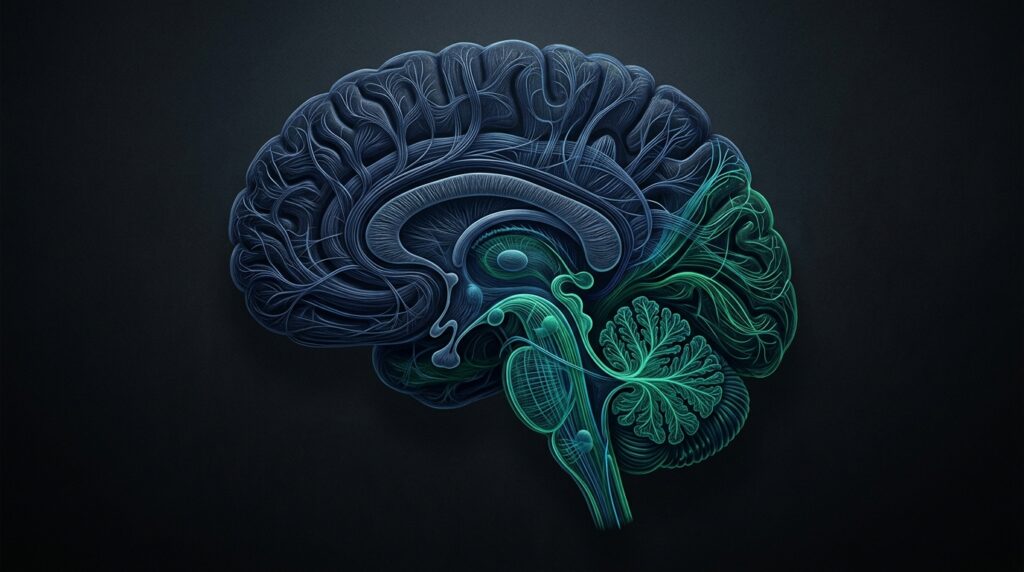

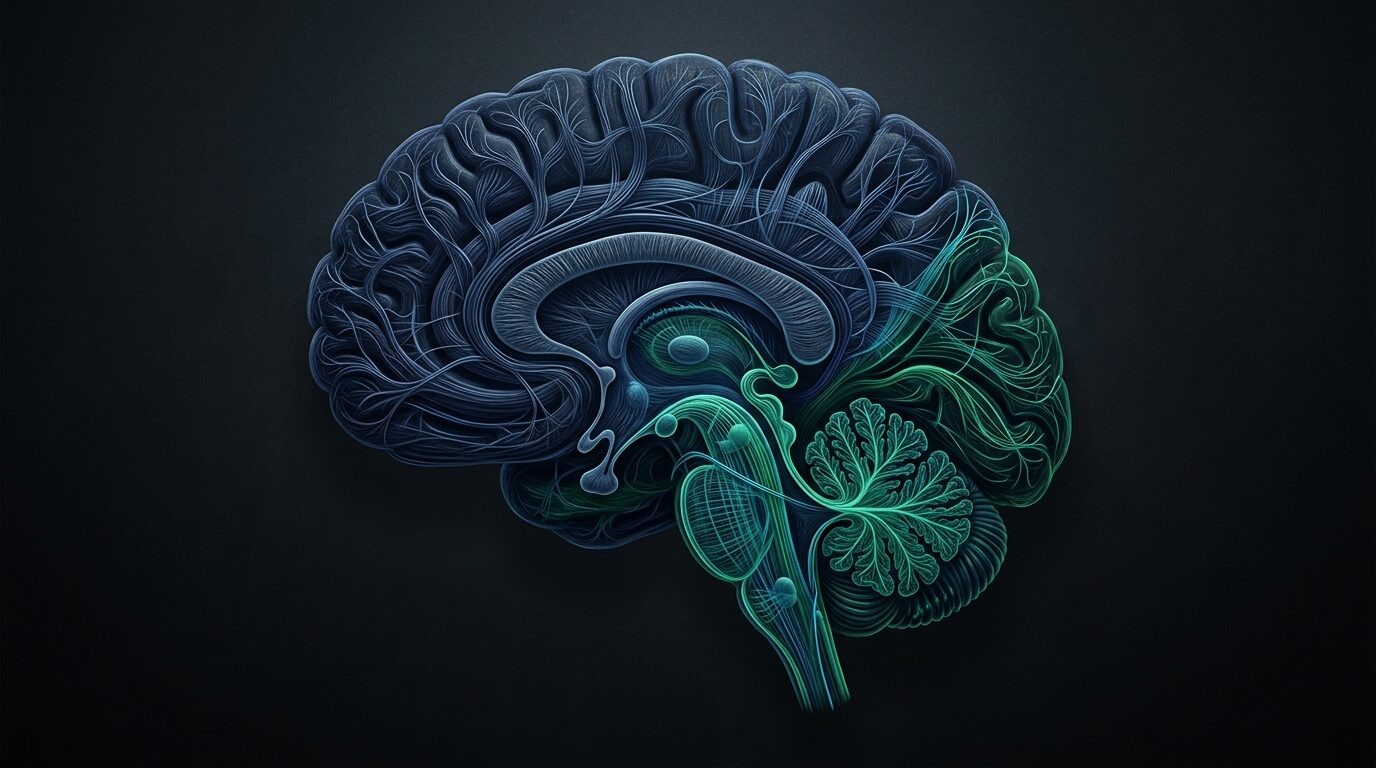
For more than seventy years, neuroscience and developmental biology treated the human brain as a singular, unified organ. Textbooks taught that during early embryonic development, a continuous sheet of stem cells inside the neural tube gradually folded, expanded, and differentiated into the familiar anatomical landmarks of the forebrain, midbrain, and hindbrain under the guidance of chemical morphogen gradients.
A landmark study published in Nature Neuroscience on September 18, 2026 (s41593-026-02433-7) by a team at Stanford Medicine, led by Associate Professor Kyle Loh, PhD, alongside graduate researchers Carolyn Dundes and Rayyan Jokhai, has overturned this premise. By tracing cellular lineages during the earliest stages of embryonic gastrulation in mouse and human pluripotent stem cells, the researchers revealed that what we call the human brain is not a singular organ at all. It is a composite assembly of two evolutionarily distinct nervous systems, originating from entirely separate progenitor cells with locked genetic programs, which were brought together in physical proximity over hundreds of millions of years of vertebrate evolution.
The Gastrulation Split: Otx2 Versus Gbx2
The conventional model assumed that all neural tissue stems from a shared ancestral progenitor. Consequently, whenever researchers attempted to culture hindbrain motor neurons in the laboratory—crucial for investigating neurodegenerative disorders of the brainstem—they followed protocols designed to steer general neural progenitors into posterior fates. These efforts were met with decades of inconsistent results and persistent failure.
The Stanford team identified the root cause of this failure by examining embryos during gastrulation, the critical developmental window where the single-layered blastula reorganizes into a multi-layered organism. Rather than finding a single neural lineage, Dundes and Jokhai discovered two parallel, non-overlapping progenitor populations that arise independently:
The first lineage, defined by the expression of the homeobox gene Otx2, gives rise strictly to the anterior neural ectoderm: the future cerebral cortex, thalamus, and basal ganglia. This system governs high-order cognition, abstract reasoning, language, and associative learning.
The second lineage, defined by the gene Gbx2, forms the posterior neural ectoderm: the future hindbrain, pons, medulla oblongata, and cerebellum. This system governs autonomic vital functions, respiratory and cardiac rhythms, hunger regulation, and the complex cranial motor circuits responsible for speech articulation and swallowing.
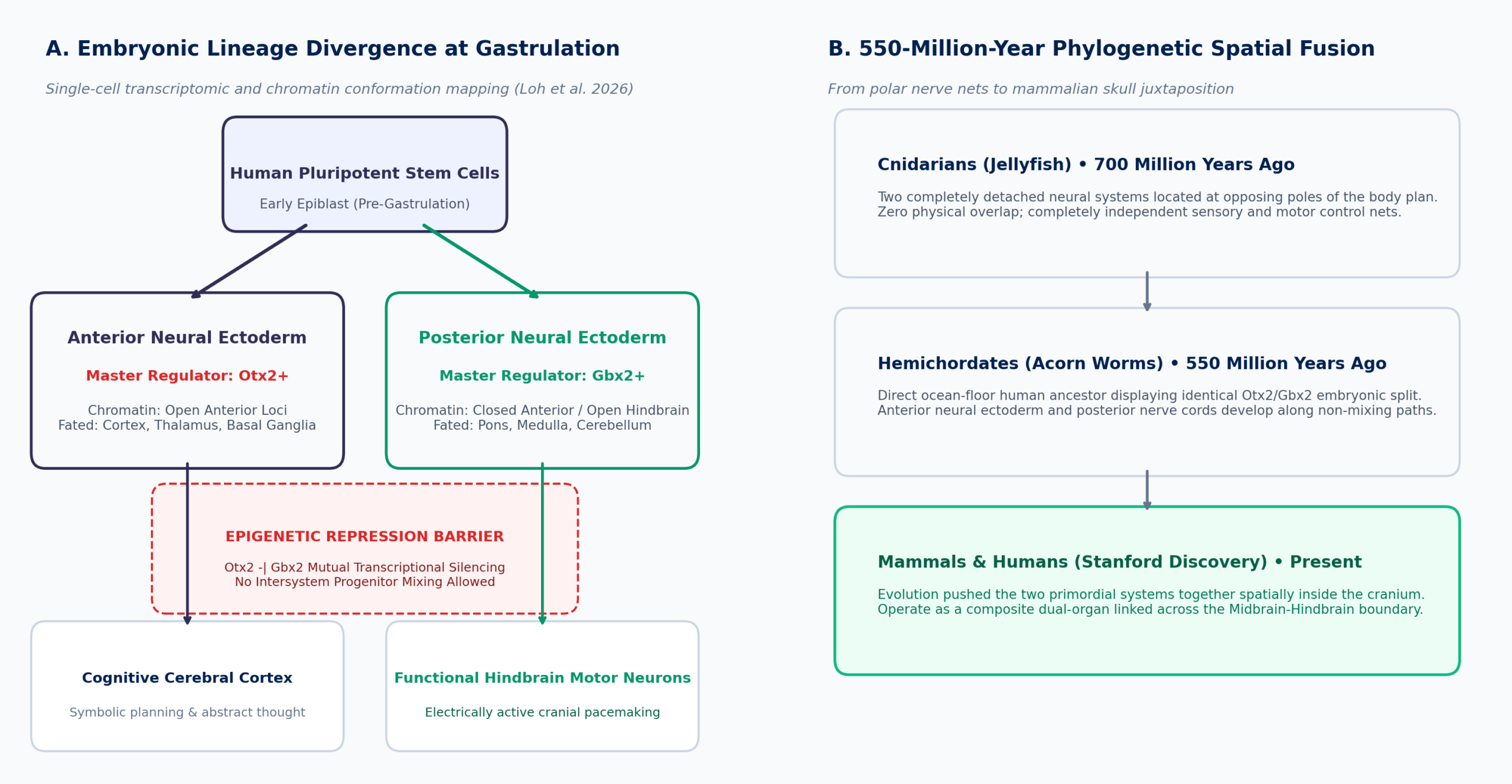
When the researchers mapped the chromatin landscape—the physical packaging of DNA that determines gene accessibility—they observed an absolute epigenetic barrier. The chromatin in anterior progenitors is structured to lock out posterior gene networks, while posterior progenitors seal away anterior regulatory sequences. As co-first author Rayyan Jokhai noted, previous attempts to generate hindbrain neurons failed because scientists were attempting to coax forebrain cells into fates they are biochemically and structurally barred from adopting.
By respecting this bifurcation and guiding human pluripotent stem cells directly along the authentic Gbx2 trajectory, the Stanford lab succeeded where others had stalled: growing functional, electrically active human hindbrain motor neurons in vitro. These cultured cells fire spontaneous action potentials and express the precise segmented protein markers characteristic of cranial motor nuclei.
Evolutionary Origins: 550 Million Years of Spatial Fusion
To understand why vertebrate brains develop this way, Dr. Kyle Loh’s team looked back through 550 million years of evolutionary history. They identified the same dual-origin pattern across chickens, zebrafish, and acorn worms—primitive ocean-floor hemichordates that represent our distant marine ancestors. In acorn worms, these two neural lineages function as physically separated dorsal and ventral systems.
In even more basal organisms, such as cnidarians (jellyfish) which diverged from humans roughly 600 to 700 million years ago, two distinct nervous systems exist at opposite poles of the creature’s body. Over evolutionary time, nature did not scrap these specialized controllers to synthesize a single, unified organ. Instead, vertebrate evolution took two independent neural fabrics and brought them into physical contact, establishing a sharp boundary of mutual transcriptional repression known as the isthmic organizer.
The practical medical implications of this finding are immediate:
1. Targeted Therapeutics for ALS and SMA: In both Amyotrophic Lateral Sclerosis and Spinal Muscular Atrophy, the hindbrain motor neurons governing respiration and swallowing degenerate. Because brainstem tissue cannot be biopsied from living patients, researchers lacked human models of these cells. Generating authentic hindbrain neurons in a dish enables accurate drug screening for preventing swallowing loss and respiratory failure.
2. Decoding Metabolic Hunger Signaling: The hindbrain contains the crucial autonomic circuits that sense metabolic energy state and regulate satiety—the precise pathways targeted by GLP-1 receptor agonists such as semaglutide. Culturing human hindbrain circuits will provide mechanistic insight into receptor dynamics and metabolic pharmacology.
The Computational Dilemma: Why Monolithic AI Stumbles
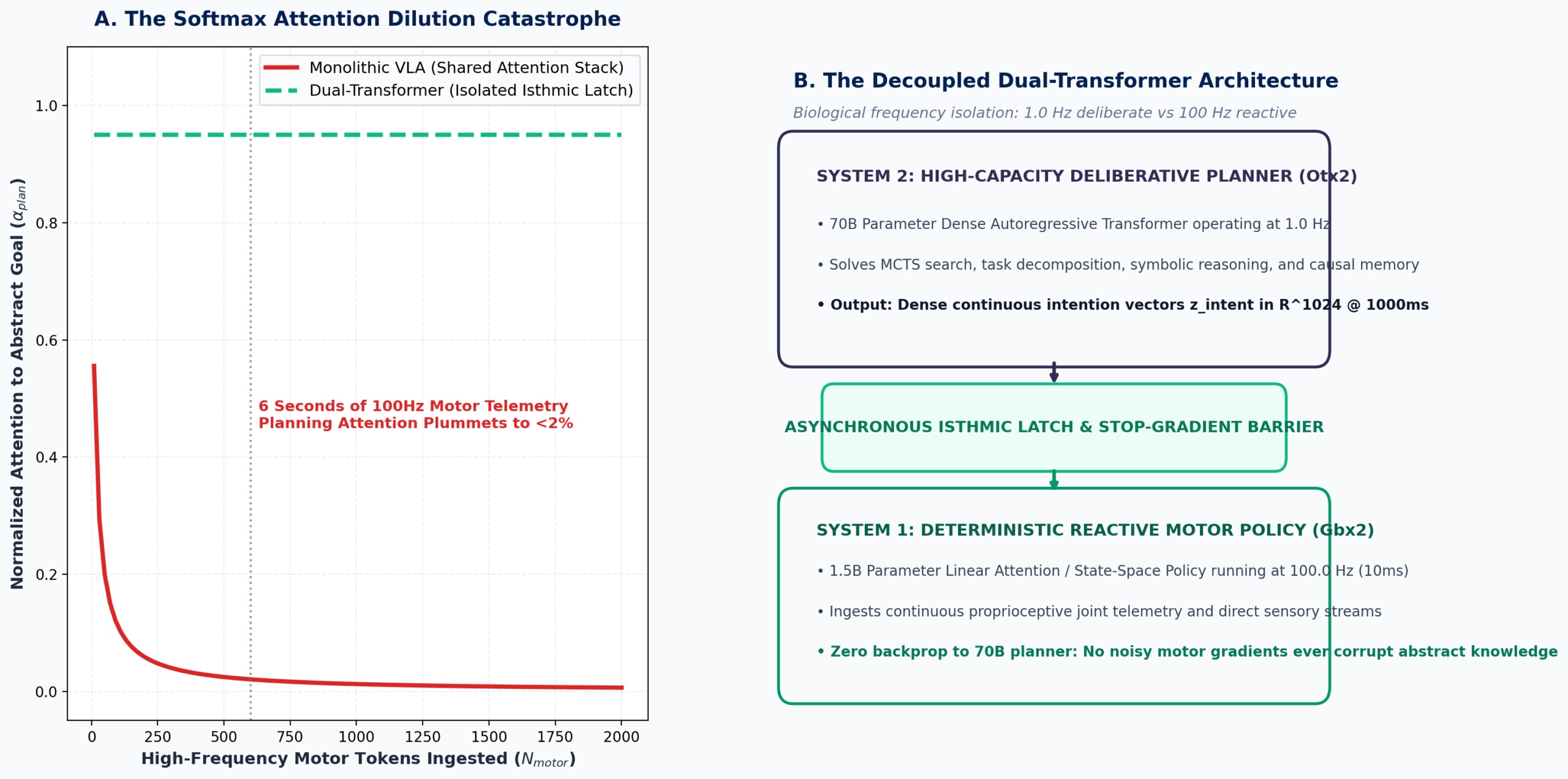
Beyond medicine, the Stanford discovery sheds light on an architectural debate in artificial intelligence. Modern frontier models in robotics—such as Vision-Language-Action (VLA) networks—often adopt an end-to-end monolithic approach. These models feed high-frequency robotic telemetry (50 to 100 Hz joint angles, velocities, and tactile readings) directly into the same unified transformer backbone responsible for high-level semantic reasoning and multi-step planning.
In practice, this monolithic approach runs into two fundamental limitations:
1. Temporal Attention Dilution: At 100 Hz, a robotic arm generates thousands of proprioceptive tokens each minute. Inside a single self-attention context window, the high-frequency stream mathematically dominates the softmax denominator. Over time, the attention weight allocated to the sparse, high-level goal tokens diminishes rapidly, causing models to experience goal drift, repetitive motion loops, or sudden task abandonment.
2. Gradient Interference: When low-level motor prediction errors (such as joint torque adjustments) are backpropagated through a shared parameter space, they introduce noisy gradient updates that can degrade the polysemantic representations required for language comprehension and abstract reasoning.
Decoupled Cognitive Topography: The Dual-Rate Paradigm
Nature’s solution to this computational challenge was modularity. Rather than forcing motor coordination and deliberate planning through a homogeneous neural medium, vertebrate evolution preserved two specialized systems operating on radically different timescales:
Anterior Deliberation (Forebrain / Otx2): A high-capacity, low-frequency cognitive system that processes sensory abstraction, forms mental models of the environment, and generates high-level plans at a measured pace (0.5 to 2.0 Hz). It does not calculate muscular contractions; it emits intent vectors.
Posterior Execution (Hindbrain / Gbx2): A deterministic, high-frequency motor and autonomic controller operating at 50 to 100 Hz. It receives the high-level intent vector, tracks real-time sensor feedback, and handles millisecond-level reactive adjustments without disturbing the cognitive representations of the forebrain.
This biological segregation also explains the brain’s metabolic efficiency. In biological systems, firing high-order cortical networks continuously at 100 Hz would be thermodynamically unsustainable. By keeping the deep deliberative planner at a slow, event-driven pace and offloading fast closed-loop control to an efficient, specialized motor loop, the human brain delivers advanced cognitive and physical agency on a total metabolic budget of approximately 20 Watts.
As autonomous robotics, embodied AI, and multi-agent systems mature, engineering practice is converging toward the same realization that evolutionary biology settled on hundreds of millions of years ago: intelligence is not a monolithic sequence model, but a coordinated choreography of specialized organs operating across decoupled temporal dimensions.