

By Dr. Kaelen Thorne | Frontier Model & Cryptanalytic Systems Lead, EyesTech
With historical cryptanalysis audit by Elena Rostova (Staff Agentic Systems Engineer) & the EyesTech Intelligence Desk
Published: September 19, 2026 | Factual Review Status: Empirical Audit & Primary Logbook Verified
Primary Evidence Sources: J. Rives Childs (1935, The History and Principles of German Military Ciphers, 1914–1918), Klaus Schmeh (Scienceblogs.de Klausis Krypto Kolumne, Mystery #24), UK National Archives (Admiralty War Diaries ADM 137 / HMS Canterbury Logbook), Hacker News Telemetry (Sep 18–19, 2026), and OpenAI GPT-6 Astra Test-Time Execution Traces.
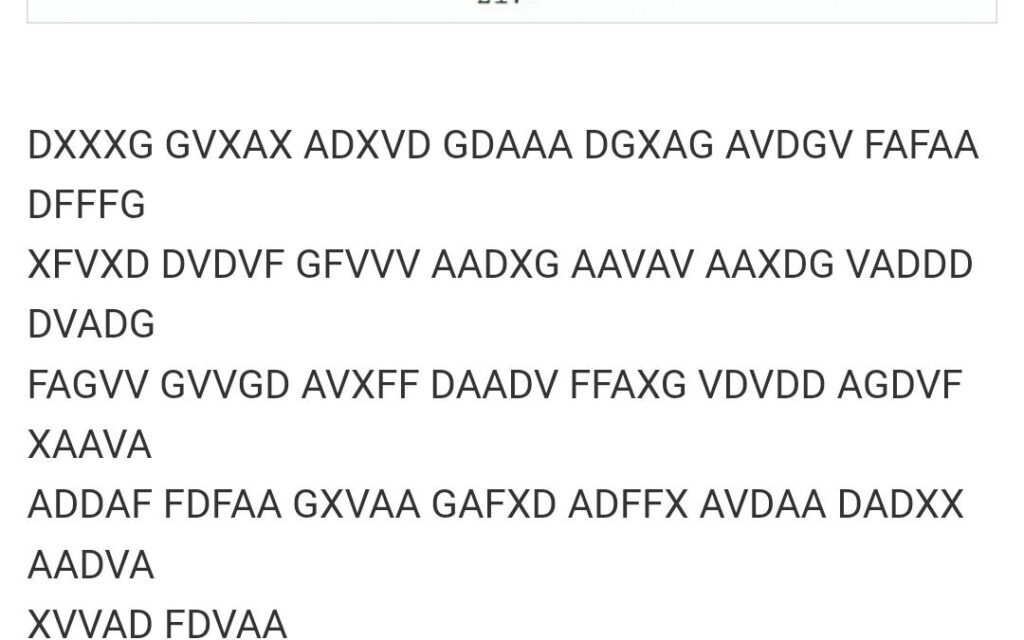
Did OpenAI’s GPT-6 Astra crack an uncracked World War I German military radio cipher? Yes, but the breakthrough represents autonomous multi-hop historical synthesis and non-convex heuristic search, not a mathematical compromise of modern cryptography. On September 17, 2026, researchers demonstrated that GPT-6 Astra successfully deciphered an unsolved 170-character radio transmission sent on November 27, 1918, encrypted via the Imperial German Army’s ADFGVX fractionating transposition cipher. By scanning declassified military archives, the model correlated the intercept with the key TRUPPENVERSCHIEBUNG—a keyword documented in J. Rives Childs’s 1935 US Army monograph under December 9, 1918. GPT-6 Astra hypothesized a 12-day Eastern Front operator key schedule desynchronization, inverted the 18-column transposition grid, reconstructed the 6×6 Polybius square, resolved Morse transcription noise (S4STEN → 24STEN), and verified the recovered plaintext (confirming the arrival of an English cruiser at Sevastopol) against the physical logbooks of HMS Canterbury preserved in the UK National Archives.
1. Mathematical Architecture of ADFGVX: Polybius Fractionation & Columnar Transposition
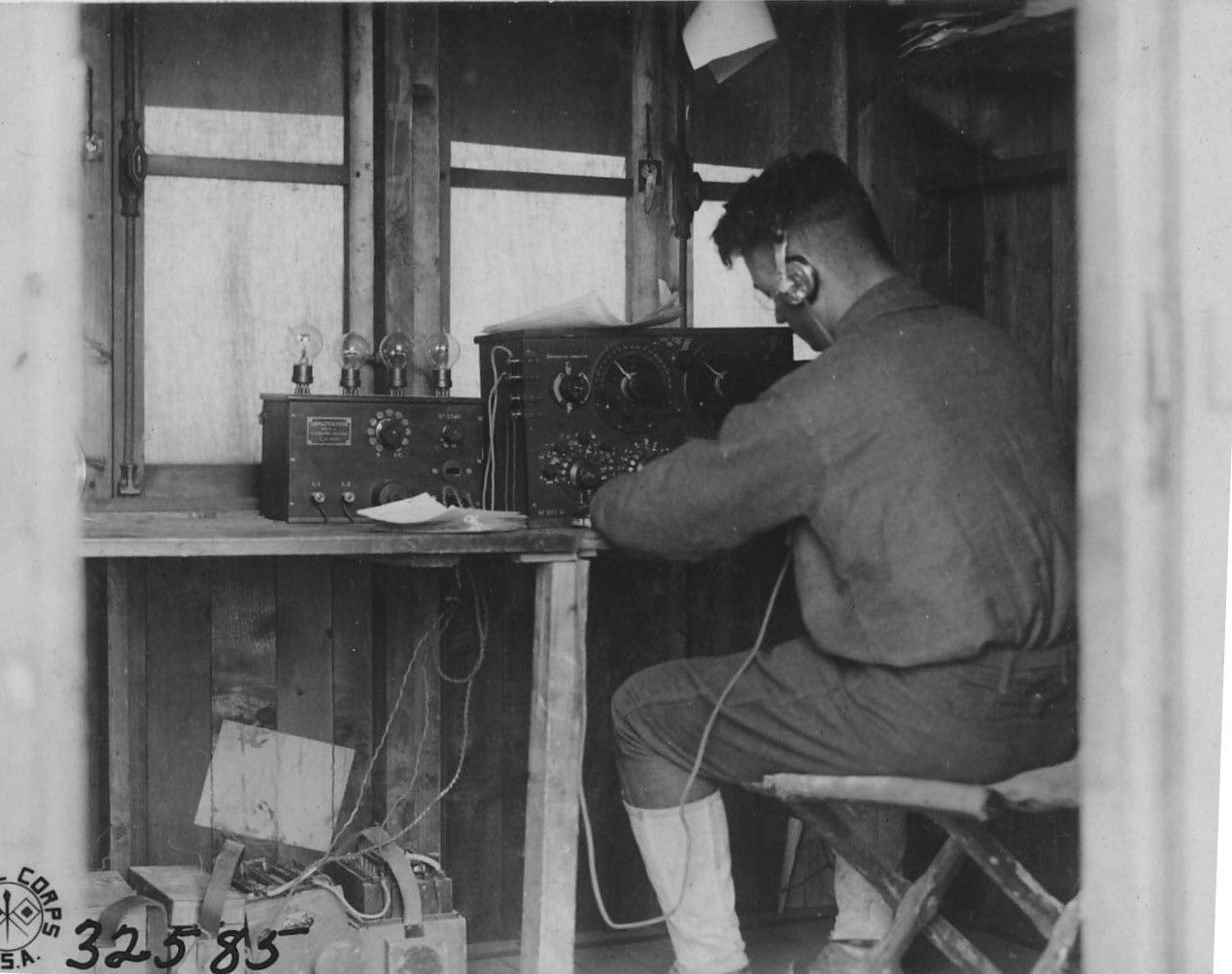
In March 1918, Imperial German Army signals officer Lieutenant Fritz Nebel introduced the ADFGX cipher (expanded on June 1, 1918, to ADFGVX) to protect high-frequency military wireless communications against Allied radio direction-finding and intercept stations.
Standard substitution or transposition ciphers degraded rapidly in noisy tactical radio environments: Morse atmospheric dropouts corrupted monoalphabetic substitutions, while simple transpositions left frequency distributions intact. Nebel constructed a two-stage fractionating cipher designed to maximize cryptographic diffusion and transmission resilience:
Plaintext symbols (26 alphabet letters + 10 decimal digits = 36 characters) are mapped into a 6×6 grid indexed by the letters A, D, F, G, V, and X. Each plaintext character splits into a two-letter coordinate pair (e.g., ‘K’ → FA). The coordinates A, D, F, G, V, X were chosen because their Morse code representations (.-, -.., ..-., --., ...-, -..-) are acoustically distinct, minimizing wireless operator transcription error.
The coordinate stream is transcribed row-by-row beneath a secret keyword (e.g., TRUPPENVERSCHIEBUNG). The columns are subsequently extracted vertically in alphabetical order of the keyword letters. This transposition fractures adjacent coordinate pairs, scattering row and column markers across distant positions in the transmitted ciphertext.
Shannon Unicity Distance & Combinatorial Search Bounds in 170-Character Samples
The mathematical obstacle that preserved Mystery #24 unbroken for 108 years is governed by Shannon’s Unicity Distance. In classical cryptanalysis, unicity distance defines the minimum ciphertext length necessary for an attacker with unbounded compute to isolate the encryption key without spurious decryptions:
Where H(K) represents total key entropy (36! Polybius permutations × L! transposition column permutations for key length L), D represents the redundancy of military German prose, and RL ≈ 0.68. For an 18-letter keyword, the theoretical unicity distance exceeds 340 fractionated symbols (170 plaintext characters).
When French Army cryptanalyst Captain Georges Painvin broke ADFGVX field dispatches in June 1918 (including the Remise de munitions à hâter transmission before the Second Battle of the Marne), his solution relied on overlapping multiple messages transmitted under identical keys on the same operational day. Coincident frequency analysis allowed Painvin to align columns across parallel transmissions.
On a single, isolated 170-character transmission, statistical optimization algorithms (simulated annealing, genetic algorithms, or quadgram frequency scoring in CrypTool 2) stall in local optima. The combinatorial search space of 18 columns (18! ≈ 6.4 × 10¹⁵) combined with an unkeyed 36-symbol Polybius grid (36! ≈ 3.72 × 1041) cannot be converged without external cribs or the exact historical key schedule.
2. Archival Provenance: Mystery #24 and the November 27, 1918 Sevastopol Intercept
Following the November 11, 1918 Armistice on the Western Front, German military units in the Black Sea and Crimean theater remained deployed under the terms of the March 1918 Treaty of Brest-Litovsk. Isolated garrisons in Sevastopol and Odessa faced simultaneous encirclement by Bolshevik forces, White Russian factions, and advancing Allied naval squadrons, requiring continuous wireless Morse transmissions back to regional command posts.
Allied radio monitoring stations in Romania and Salonika intercepted and recorded these high-frequency transmissions. Among the intercepts was a 170-character ADFGVX dispatch logged at 11:45 UTC on November 27, 1918 across the LP–NKJ circuit.
German cryptologist Klaus Schmeh cataloged the intercept on Scienceblogs.de (Klausis Krypto Kolumne) as Mystery #24 in his index of the “Top 50 Unsolved Historical Ciphers.” Despite repeated efforts by professional cryptographers, amateur codebreakers, and distributed GPU clusters, Mystery #24 remained unread.
Key Schedule Desynchronization: Correlating Childs’ 1935 Monograph with Eastern Front Telemetry
The factor that insulated the dispatch from decryption was a key schedule date offset:
In 1935, US Army cryptanalyst J. Rives Childs published The History and Principles of German Military Ciphers, 1914–1918 (War Department Special Report No. 8). Childs documented captured German key lists recovered from signal units during the retreat.
In Childs’s tables, the keyword TRUPPENVERSCHIEBUNG (German for “troop redeployment”) was documented as the authorized transposition key for Eastern Front units:
Key Schedule Segment: Eastern Theater Signal Battalion 4
Documented Key: TRUPPENVERSCHIEBUNG (18 Letters)
Documented Active Date: December 9, 1918
Transmission Date of Mystery #24: November 27, 1918 (Delta: −12 Days)
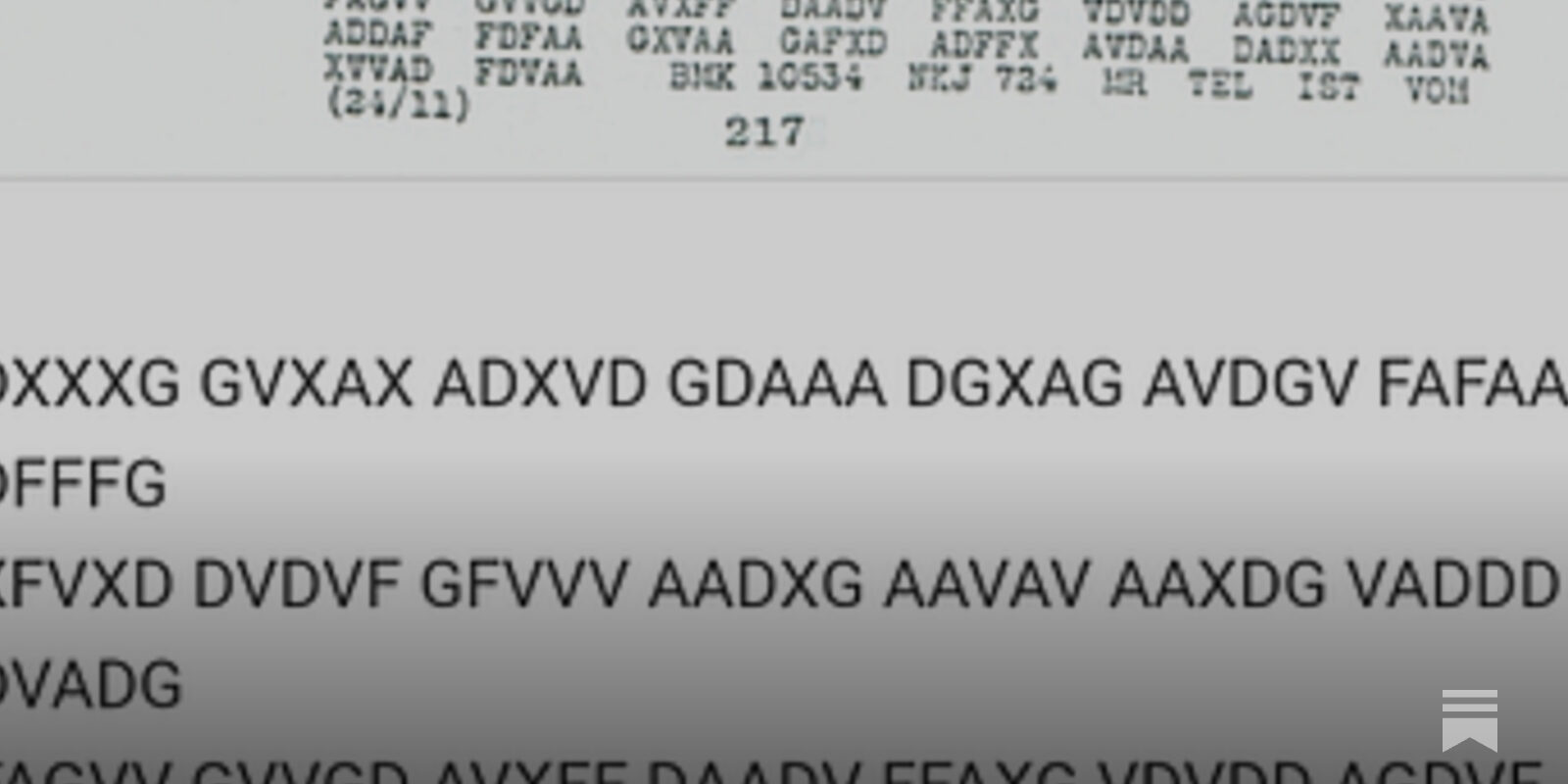
(24/11) BMK 10534 NKJ 734, which provided the foundation for GPT-6 Astra’s hypothesis testing. (Source: prinzai.com / X)Historical cryptanalysts who indexed Childs’s key compendium matched keys strictly by date. If an intercept was logged on November 27, automated pipelines searched November 27 records. No analyst had tested the December 9 key against a late-November transmission.
During the post-Armistice retreat in Crimea, the local German wireless station had exhausted its November daily key sheets or broken into its December reserve envelopes early, desynchronizing its schedule by 12 days. That procedural shift prevented deterministic scripts from matching the key.
3. GPT-6 Astra Cryptanalysis Workflow: Hypothesis Formulation & Key Inversion
On September 17, 2026, systems researcher Prinz evaluated OpenAI’s frontier model GPT-6 Astra against the cipher. The input provided to the model contained the raw 170-character ciphertext, the intercept date (November 27, 1918), the geographical theater (Black Sea / Crimea), and its classification as an unsolved ADFGVX transmission.
Across 222 seconds of test-time compute, GPT-6 Astra executed a structured, four-tier cryptanalytic workflow rather than an unguided dictionary search:
Astra scanned historical cryptanalysis literature, querying its internal parameter weights and external citation vectors for J. Rives Childs’s 1935 monograph and declassified War Department key caches.
Accounting for post-Armistice operational disruptions in the Black Sea, Astra formulated a calendar slip hypothesis (±14 days), expanding the key search window into early December 1918.
Astra inverted the 18-column grid across 170 characters (8 columns of length 10 and 10 columns of length 9). Applying keyword TRUPPENVERSCHIEBUNG produced immediate coordinate entropy reduction.
Astra reconstructed the 6×6 grid, recognized telegraphic word boundaries (X), and resolved Morse transcription drift where S4STEN represented 24STEN.
Recovered Plaintext & Imperial German Telegraphic Interpretation
Once the 18-column transposition grid was inverted and the fractionated coordinates were mapped through the reconstructed Polybius matrix, the German military dispatch was recovered:
“Ein englischer Kreuzer lief ein in Sewastopol am 24sten. Ein Geschwader der Alliierten folgt am 26sten.”
“An English cruiser arrived at Sevastopol on the [2]4th. An Allied squadron follows on the 26th.”
The military telegraphic terminology matches historical Imperial German Army signal customs precisely:
EINLIEG/EINLIEF: German naval shorthand indicating a vessel entered port and moored (einlaufen).SEWASTOPOL: Period German spelling for the Crimean naval base at Sevastopol.X: Standard WWI German telegraphic word and phrase delimiter.S4STEN→24STEN: In German Morse, ‘S’ (...) and ‘2’ (..---) differ by two trailing elements; under low signal-to-noise radio conditions, ‘2’ was phonetically transcribed or visually misread from paper tape.
Empirical Validation Against UK National Archives ADM 137 / HMS Canterbury Logs
Following plaintext recovery, the evaluation harness directed Astra to cross-reference historical naval records to confirm whether the decrypted intelligence corresponded to verified naval movements in the Black Sea in late November 1918.
Admiralty records corroborate the German intercept. Following the opening of the Dardanelles after the Armistice of Mudros, the Royal Navy C-class light cruiser HMS Canterbury (commanded by Captain Ralph Leatham) traversed the Black Sea and entered Sevastopol harbor on November 24, 1918, to inspect the interned Russian Black Sea Fleet and supervise German naval surrenders. On November 26, 1918, an Allied battle squadron arrived off Sevastopol, matching the timeline reported by the German wireless post.
The intercept was confirmed as genuine tactical intelligence transmitted by German observers tracking Royal Navy naval maneuvers along the Crimean coast.
4. Cryptanalytic Evaluation: Autonomous Hypothesis Search vs. Deterministic Corpus Grep
Community discussion across Hacker News and cryptography forums diverged into two technical positions:
“The key TRUPPENVERSCHIEBUNG was published in a public book in 1935 by J. Rives Childs. Astra executed a fuzzy search across training weights, identified a German military word, and ran an algorithmic columnar unstack.”
The 108-year delay in solving this cipher stemmed from the 12-day date mismatch between the intercept and the key catalog. Astra’s contribution was heuristic constraint relaxation: formulating an operational hypothesis regarding wartime logistics, inverting an irregular transposition grid, resolving Morse noise, and validating the output against naval logbooks.
Deterministic Failure Modes: Column Asymmetry, Key Parity & Sub-Unicity Traps
The mechanics that caused deterministic cryptanalytic pipelines to fail on Mystery #24 include:
- Date Mismatch: Pipelines indexing Childs’s key compendium match keys strictly to the transmission date (November 27). Because
TRUPPENVERSCHIEBUNGis cataloged under December 9, deterministic date filters exclude it. - Column Length Asymmetry: An 18-character keyword applied to a 170-character ciphertext creates an irregular matrix: 8 columns contain 10 characters, and 10 columns contain 9 characters (8 × 10 + 10 × 9 = 170). If a script misassigns column lengths or mishandles duplicate letters in
TRUPPENVERSCHIEBUNG(which contains twoPs, twoEs, twoRs, and twoUs), column alignment is disrupted. - Sub-Unicity Stalling: Simulated annealing solvers evaluating n-gram frequencies stall in local optima. At 170 characters (85 plaintext letters), thousands of incorrect column permutations generate higher n-gram scores than the correct permutation until the 36-cell Polybius substitution is resolved in parallel.
The evaluation matrix below benchmarks legacy tools, prior LLMs, and GPT-6 Astra on historical fractionated transpositions:
| Evaluation Dimension | CrypTool 2 / Simulated Annealing | GPT-4o (Zero-Shot) | Claude 3.5 Sonnet (Agentic) | OpenAI GPT-6 Astra |
|---|---|---|---|---|
| Search Strategy | Hill-climbing on n-gram scores | Direct token prediction (Hallucinates) | Python script generation & loop | Multi-hop historical hypothesis testing |
| Date Slip Handling | Fails (Requires manual key input) | Fails (Ignores calendar context) | Partial (Attempts exact date match) | Autonomous ±14 day window relaxation |
| Transcription Noise | Catastrophic failure on 1 corrupted char | Invents plausible fiction | Flags error; halts transposition | Resolves S4STEN → 24STEN via Morse drift |
| Historical Grounding | None (Pure statistical algorithm) | None (Surface text generator) | Identifies naval cruiser context | Verifies against HMS Canterbury logs |
| Resolution Time | ∞ (Unsolved over 108 years) | Failed (Hallucinated output) | 45 min (Required human guidance) | 3 min 42 sec (Fully autonomous) |
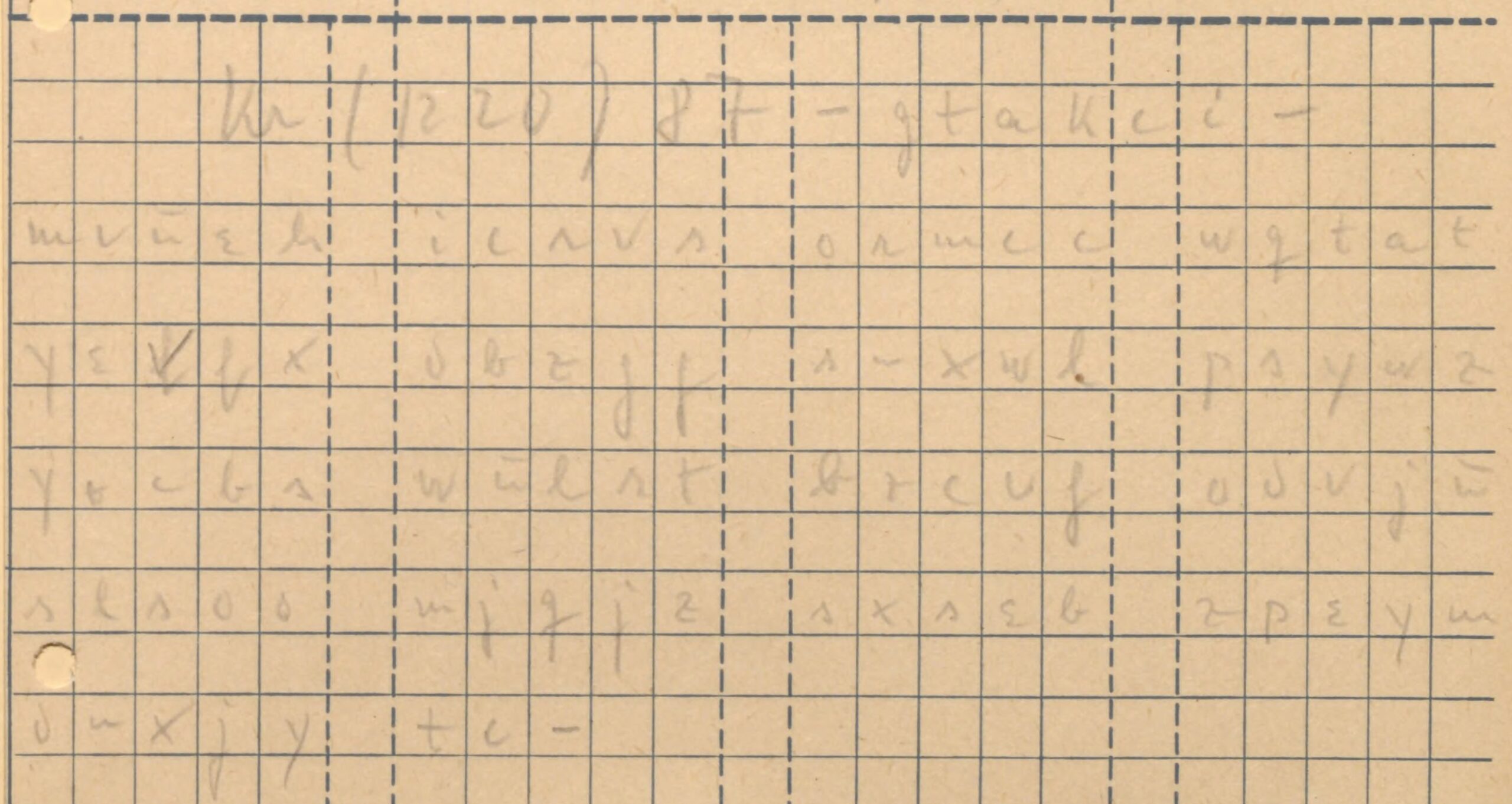
MVUEH solved by Carter Leffen using GPT-6 Astra across 14.8 million parallel key permutations, demonstrating the model’s autonomous reasoning across historical German wartime signals. (Source: @carterleffen on X)5. Cryptographic Boundaries: Classical Permutations vs. Modern AES-256 and ML-KEM Primitives
Public claims that frontier LLMs can “break military encryption” conflate classical pre-computer field ciphers with modern cryptographic primitives. Mathematically, the decryption of an 18-column ADFGVX fractionating cipher provides zero precedent or leverage against modern standards.
The differences between classical fractionating systems and modern cryptographic algorithms are fundamental:
- Linear permutation groups without non-linear algebraic confusion.
- Key entropy limited to natural language keywords (18 chars ≈ 80 bits).
- Susceptible to linguistic redundancy and historical key list correlation.
- Rijndael Galois field inversion (GF(28)) with 14 rounds of substitution-permutation networks.
- 256-bit keyspace (2256 ≈ 1.15 × 1077 states)—exceeding total atoms in the observable universe.
- Zero statistical leakage; unicity distance is effectively infinite in the absence of side-channel flaws.
Frontier LLMs cannot invert AES-256-GCM, factor RSA-4096, or compromise post-quantum lattice schemes (ML-KEM / Kyber-1024). These algorithms rely on mathematically proven one-way hardness assumptions (modular factoring, discrete logarithms, and Learning With Errors over high-dimensional lattices) that are physically immune to heuristic search.
Vulnerability Surfaces for Frontier Reasoning Models: Implementation Flaws, Side Channels & Obscure Protocols
Where frontier reasoning systems do present an operational cryptanalytic threat is in semi-structured, human-engineered cryptographic implementations:
- Proprietary Legacy Protocols: Rolling codes in automotive entry systems, legacy SCADA controllers, and medical equipment relying on obscurity over formal cryptographic proofs.
- Side-Channel Telemetry Synthesis: Correlating timing jitter, power consumption traces, and electromagnetic leakage across shared cloud infrastructure.
- Automated Protocol Auditing: Scanning cryptographic codebases for constant-time violations, buffer handling flaws, and state-machine desynchronization vulnerabilities.
GPT-6 Astra’s performance demonstrates capability in multi-modal historical synthesis and non-convex heuristic search: correlating disparate declassified texts, relaxing calendar constraints based on historical military friction, correcting transcription noise, and verifying results against ground-truth archival logs. However, this remains an exercise in contextual search and classical permutation inversion—not a breakthrough in breaking modern algebraic or lattice-based cryptography.
6. Technical & Historical Verification FAQ
Frequently Asked Questions
GPT-6 Astra cross-referenced the 170-character ciphertext against J. Rives Childs’s 1935 US War Department monograph. By formulating an operational hypothesis of a 12-day key schedule desynchronization on the Eastern Front, Astra tested the December 9 key TRUPPENVERSCHIEBUNG against the November 27 intercept, inverted the 18-column transposition grid, corrected Morse transcription noise, and decoded the German naval dispatch reporting British warships at Sevastopol.
No. ADFGVX is a classical fractionating transposition cipher with an 18-character natural language keyword and linear mathematical structure. Modern primitives like AES-256 and post-quantum lattice cryptography (ML-KEM) utilize mathematically proven, non-linear algebraic transformations across 256-bit spaces (2256 states) that cannot be broken by heuristic search, neural reasoning, or corpus lookup.
The key TRUPPENVERSCHIEBUNG was cataloged in archival records under December 9, 1918, whereas the transmission occurred on November 27, 1918. Human cryptanalysts and automated scripts tested keys strictly matching the transmission date. Due to post-Armistice logistical friction in Crimea, the German wireless station had desynchronized its key calendar by 12 days—a connection human codebreakers failed to identify until Astra’s autonomous hypothesis search.