

For digital creators, AI researchers, and studio artists, relying on centralized cloud image generators has become an operational liability. Over the past twelve months, commercial platforms like Midjourney, DALL·E 3, and closed API endpoints have aggressively expanded automated refusal heuristics. Benign creative prompts—ranging from classical human anatomy, Renaissance figure drawing, and dramatic battle scenes to medical concepts, avant-garde fashion, and dark fantasy—frequently trigger opaque content rejections, stealth prompt watermarking, and permanent account suspensions.
Running image generation models locally on your own GPU is the definitive counter-strategy. Self-hosted models eliminate prompt inspection, guarantee zero recurring API fees, provide instant deterministic reproducibility, and grant absolute control over your inference pipeline. Whether you are building an automated creative asset workflow, conducting fine-tuning research, or rendering high-resolution concepts, local open-weight models allow you to generate imagery without third-party censorship or server-side telemetry.
As of late 2026, the local open-weights landscape has matured well beyond legacy Stable Diffusion 1.5 checkpoints. The five best uncensored image models to run locally today span cutting-edge Rectified Flow Transformers, de-distilled open foundation architectures, and unified multimodal vision engines:
- FLUX.1 [dev] Abliterated (12B Parameters) — The undisputed benchmark champion for photorealism, complex spatial composition, and typography rendering, operable on consumer cards (6–14 GB VRAM) via GGUF quantization.
- Chroma1-HD (8.9B Parameters) — A de-distilled, uncensored-by-design foundation model released under the permissive Apache 2.0 license, making it the premier choice for commercial products and specialized fine-tuning.
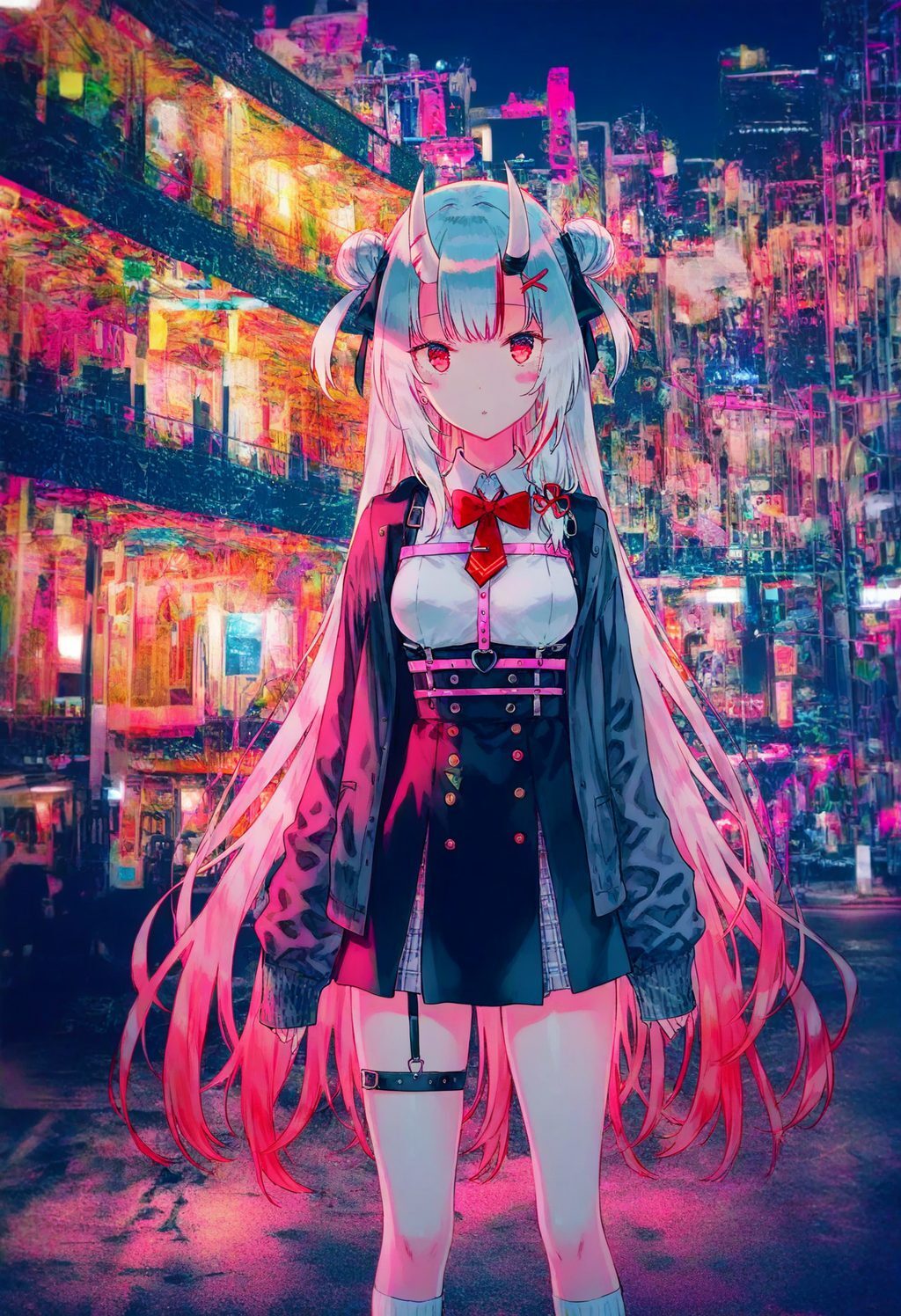
- Illustrious XL & NoobAI-XL (~3.5B Parameters) — The gold standard for anime, illustration, and character concept generation, running smoothly on budget 6–8 GB VRAM hardware with the largest LoRA ecosystem on Civitai.
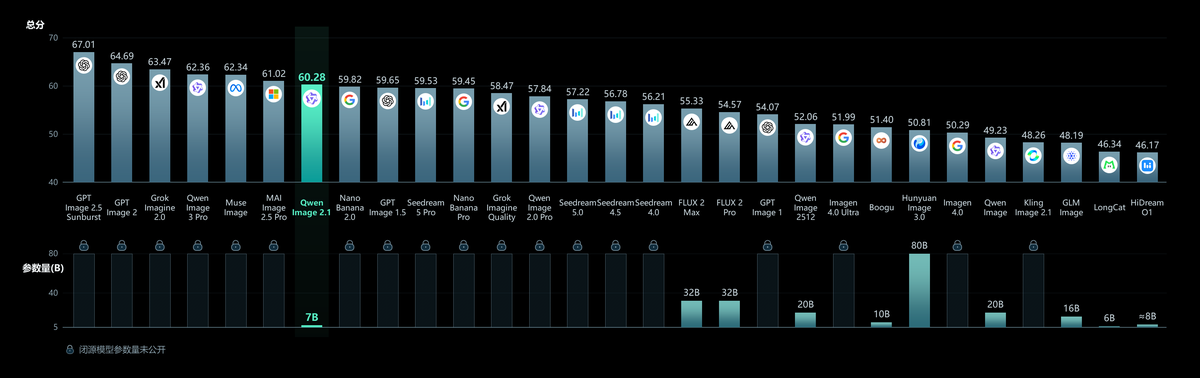
- Qwen-Image-2.1 Uncensored GGUF (7B Parameters) — Alibaba’s breakthrough unified generator featuring a 64-channel VAE for native RGBA transparency output and multi-reference instruction editing on 11–16 GB VRAM.
- Kolors (SDXL Visual + ChatGLM3 LLM Text Encoder) — Kuaishou’s bilingual powerhouse offering a massive 256-token context window that consistently outperforms Western models on complex multi-subject prompts.
Abliteration vs. Uncensored by Design: What Happens at the Weights Level
To choose the right model for your deployment, it is critical to understand that “uncensored” describes two distinct technical paradigms in modern generative AI:
1. Residual-Stream Weight Abliteration: Models like FLUX.1 [dev] and Qwen-Image-2.1 were trained with safety alignment and internal refusal behaviors. Rather than fine-tuning the entire model on taboo datasets (which risks catastrophic forgetting and aesthetic degradation), researchers apply mechanistic interpretability techniques. By evaluating activation differences between benign and refused prompt vectors in the residual stream, engineers isolate the single geometric “refusal direction.” Projecting this vector out of the feedforward weight matrices effectively removes the model’s capacity to refuse prompts while leaving its photorealism, style versatility, and semantic parsing completely intact.
2. Uncensored-by-Design Foundation Weights: Checkpoints like Chroma1-HD and Illustrious XL were constructed without hardcoded safety classifiers or artificial alignment layers from day one. In Chroma, the model was de-distilled and trained from an unrestricted baseline, while in Kolors, censorship is enforced purely by an optional Python wrapper script (safety_checker.py) rather than embedded weight constraints. Bypassing censorship in these architectures is as simple as loading raw .safetensors files into native ComfyUI nodes.
FLUX.1 [dev] Abliterated: The Sovereign Photorealism King
Developed by Black Forest Labs—the original research team behind Latent Diffusion and Stable Diffusion XL—FLUX.1 represents the most significant architectural leap in open-weight visual synthesis since 2023. Operating on a 12-billion-parameter hybrid architecture of parallel single-stream diffusion transformers (DiT) and multimodal flow matching, FLUX.1 [dev] delivers unprecedented text fidelity, anatomical coherence, and lighting physics.
The official base model, while remarkably capable, inherits strict guardrails from its guidance distillation process. The community abliterated release—most notably aoxo/flux.1dev-abliterated on Hugging Face—neutralizes these refusal vectors. Because abliteration modifies only the refusal projections, the checkpoint retains 100% compatibility with the sprawling FLUX LoRA ecosystem, ControlNets, and IP-Adapters.
Under the hood, FLUX.1 pairs its DiT backbone with a 24-layer T5-XXL text encoder alongside a CLIP-L encoder. This enables a context window of 256 tokens—more than triple the 77-token ceiling of SDXL models. Complex descriptive prose, intricate spatial layouts, and multi-word typographical typography render cleanly on signs, shirts, and labels without the garbled glyphs typical of older diffusion engines.

Hardware Deployment & Quantization: While native 16-bit float (FP16) execution requires a 24 GB GPU like the NVIDIA GeForce RTX 4090 or RTX 3090, GGUF quantization via the ComfyUI-GGUF node suite has transformed its accessibility:
- Q8_0 GGUF (12–14 GB VRAM): Visually identical to unquantized FP16; runs comfortably on an RTX 4080 (16 GB) or RTX 4070 Ti Super.
- Q5_K_M GGUF (9–11 GB VRAM): The sweet-spot for 12 GB graphics cards like the RTX 4070, preserving over 98% of high-frequency micro-textures.
- Q4_K_M GGUF (6–8 GB VRAM): Enables full 1024×1024 generation on budget 8 GB cards like the RTX 3070 and RTX 4060 with minor compression trade-offs.
Note on licensing: The base FLUX.1 [dev] weights carry Black Forest Labs’ non-commercial research license. If you are developing a commercial SaaS platform or paid creative tooling, Chroma1-HD provides the permissive Apache 2.0 alternative.
Chroma1-HD: The Permissive Apache 2.0 Foundation Model
For enterprise developers and independent model trainers, licensing is non-negotiable. This is where Chroma—architected by creator Lodestones and hosted at lodestones/Chroma—stands in a league of its own. It is the only modern high-parameter diffusion model specifically built from the ground up as an uncensored, fully open-source foundation model under the Apache 2.0 license.
Architecturally, Chroma is a de-distilled refinement of FLUX.1-schnell. While base schnell is distilled for lightning-fast 4-step generation at the expense of guidance flexibility, de-distillation untangles these constraints. Chroma restores full Classifier-Free Guidance (CFG) across standard 20- to 50-step schedules. Furthermore, Lodestones streamlined the model down from 12 billion to 8.9 billion parameters, drastically reducing VRAM overhead while accelerating fine-tuning convergence.
The model family is distributed across distinct operational tiers:
- Chroma1-HD: The flagship variant. Tuned for peak aesthetic quality, fine details, and photorealistic skin rendering. Requires 10–12 GB VRAM in FP8 precision.
- Chroma Base: A clean, unstyled base checkpoint specifically engineered as a canvas for training custom LoRAs and DreamBooth styles.
- Chroma Flash: An accelerated variant optimized for high-throughput batch generation in production environments.
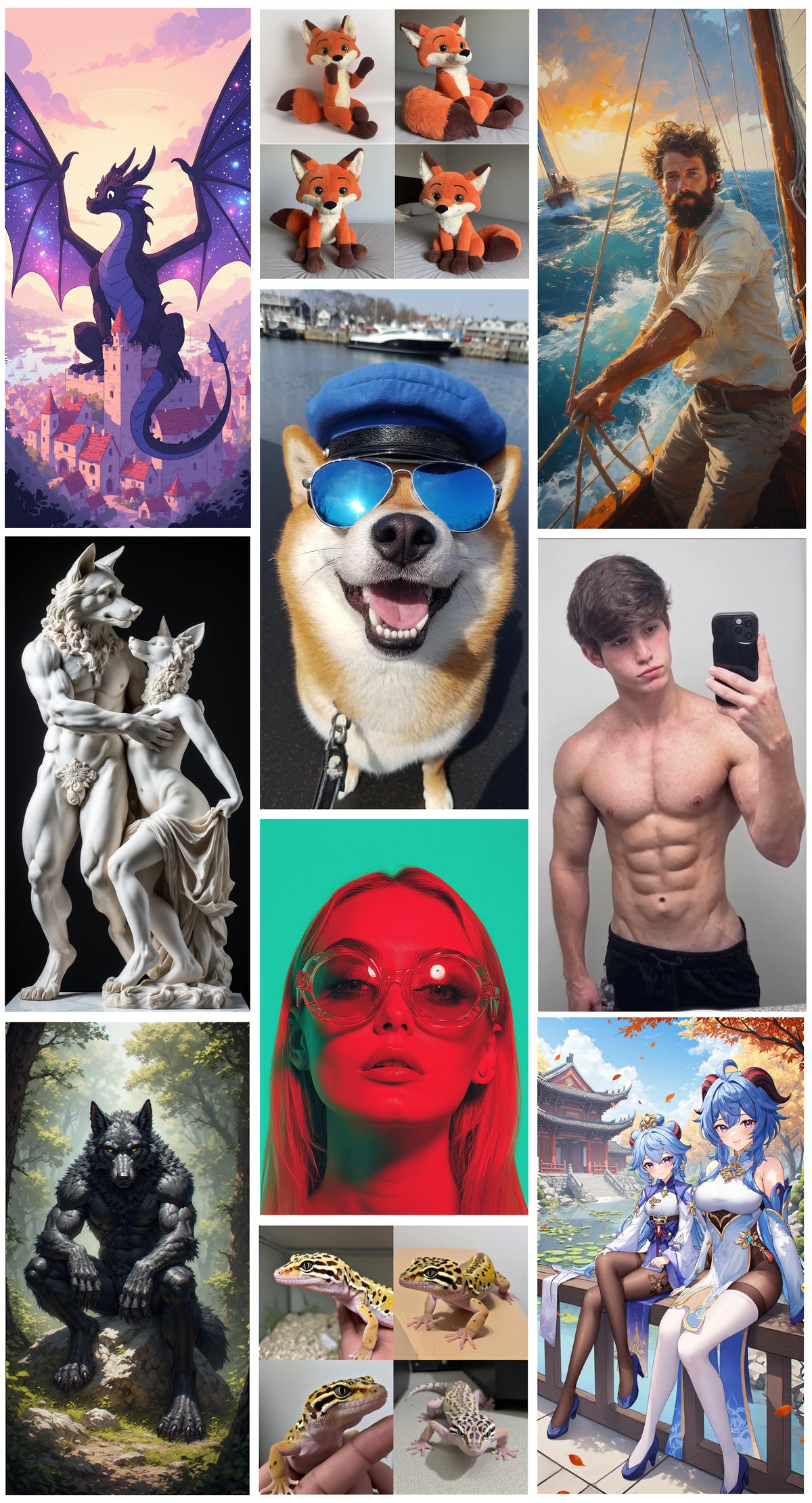
Because Chroma inherits the FLUX transformer family structure, it drops directly into standard ComfyUI FLUX loaders without requiring specialized nodes. In our testing on local hardware (see our benchmark comparison of the M4 Pro Mac mini vs. RTX 4090 for local AI), Chroma1-HD executed at 1.8 seconds per step on an RTX 4090 and 4.1 seconds per step on an RTX 4070 (FP8), making it the most practical option for production deployment.
Illustrious XL & NoobAI-XL: The Stylized and Anime Powerhouse
While transformer-based models dominate photorealism, the Stable Diffusion XL architecture remains the undisputed leader in stylized illustration, digital painting, and anime aesthetics. At the absolute apex of this domain sits Illustrious XL (developed by OnomaAI Research) and its prominent derivative, NoobAI-XL.
Trained systematically on the comprehensive Danbooru2023 dataset with high-resolution multi-level captioning, Illustrious XL v0.1 was deliberately released as an unstyled root checkpoint derived from Kohaku XL-Beta Revision 5. This deliberate design decision allowed community fine-tuners to graft thousands of character concepts, artist styles, and outfits onto the checkpoint without fighting baked-in stylistic bias.
The V-Prediction Advantage: NoobAI-XL introduces a crucial technical departure from vanilla SDXL by utilizing v-prediction (velocity prediction) instead of traditional epsilon (noise) prediction. In diffusion modeling, v-prediction stabilizes training at high resolutions (1024×1024 up to 1536×1536), drastically mitigating color bleaching and dark-region banding. To run NoobAI-XL properly in ComfyUI, ensure your sampler is set to DPM++ 2M or Euler with CFG Rescale enabled, paired with Clip Skip 2.
Both Illustrious and Pony Diffusion V6 XL rely on tag-weighted quality prompting to unlock peak fidelity. Beginning prompts with structured quality tokens activates top-tier training representations:
Positive: score_9, score_8_up, score_7_up, 1girl, masterpiece, high quality, [subject]
Negative: score_6_up, score_5_up, score_4_up, low quality, worst quality, blurry
With a lightweight footprint of ~3.5 billion parameters, Illustrious XL runs seamlessly on entry-level 6–8 GB VRAM GPUs (such as RTX 2060 Super, RTX 3060, or Apple M-series chips), rendering native 1024×1024 frames in under 4 seconds.
Qwen-Image-2.1 Uncensored GGUF: Alibaba’s Native RGBA Transparency Engine
Released on September 20, 2026, Qwen-Image-2.1 from Alibaba’s Tongyi Qwen research team represents a fundamental breakthrough in generative multimodal architecture. While competing models restrict output to standard 3-channel (RGB) flattened matrices, Qwen-Image-2.1 is engineered around an unprecedented 64-channel Variational Autoencoder (VAE) designed to synthesize native 4-channel RGBA images with true transparency.
In traditional creative pipelines, extracting subjects from AI-generated backgrounds requires post-processing with secondary segmentation models (such as RMBG or BiRefNet). This frequently introduces halo artifacts, fringing, and mangled hair strands. Qwen-Image-2.1 generates the alpha transparency mask natively within the latent denoising process. By utilizing the prompt trigger “This is an RGBA image with transparency. [subject description]”, the model produces cutouts with pixel-perfect edge translucency on glass, smoke, and fine hair.
The architecture is powered by a 7-billion-parameter 32-layer single-stream DiT backbone coupled with an 8B Qwen3-VL vision-language encoder. This grants Qwen-Image-2.1 extraordinary instruction-following capabilities, enabling simultaneous multi-reference editing (e.g., maintaining character identity across camera angles or restyling specific clothing items based on reference images).
The community rapidly released abliterated GGUF quantizations (available via KasugaiSakura and abenzerps). Running at Q5_K_M requires approximately 11–13 GB VRAM, fitting comfortably on 16 GB GPUs.
Kolors: Kuaishou’s Bilingual 256-Token LLM Architecture
Developed by Kuaishou (Kwai), Kolors took the AI research ecosystem by surprise by claiming top honors on the FlagEval Multimodal Leaderboard, outpacing Midjourney v6 and DALL·E 3 in blind expert visual evaluation. What makes Kolors fundamentally unique is its replacement of traditional CLIP text encoders with the ChatGLM3 Large Language Model.
Standard CLIP text encoders suffer from notorious semantic bottlenecks: they struggle with spatial prepositions (“to the left of”, “underneath”), lose context after 77 tokens, and exhibit severe blindness toward non-English cultural nuance. By wiring ChatGLM3 into an SDXL-scale latent diffusion backbone, Kolors achieves a true 256-token context window with native bilingual fluency in English and Chinese. Prompts with multi-character interactions, intricate clothing embroidery, and complex narrative staging resolve with unmatched accuracy.
The official Kuaishou repository enforces content filtering via a client-side safety_checker.py script. When loading the raw weights through community loaders such as ComfyUI-KwaiKolorsWrapper, inference bypasses this check entirely. Keep in mind that standard SDXL LoRAs cannot be applied directly to Kolors due to the ChatGLM3 encoder; adapters must be trained specifically using Kolors’ open-source DreamBooth-LoRA scripts.

Side-by-Side Model Comparison: Architecture, Memory, and Licensing
The following benchmark matrix compares all five models across parameter density, minimum operational VRAM, uncensored implementation method, licensing terms, and primary application domains:
Hardware Sizing and Local Deployment Economics
A common misconception is that running 12-billion-parameter diffusion models requires enterprise datacenter hardware. In reality, consumer hardware economics heavily favor local execution. Amortized over a 36-month hardware lifespan, a dedicated workstation equipped with an NVIDIA RTX 4090 ($1,800–$2,000) costs approximately $0.18 per hour of all-in electrical and hardware depreciation. In contrast, cloud instances hosting equivalent GPU capacity on platforms like RunPod, CoreWeave, or AWS Lambda command between $2.40 and $4.50 per hour (detailed in our forensic breakdown of H100 cloud pricing and egress taxes).
For creators generating 50 to 200 high-resolution images daily, local hardware reaches full capital break-even within four to six months while offering total immunity from cloud outages, platform policy shifts, and surprise usage bills (see our guide on how much AI compute a developer needs in 2026).
Here is how to size your local deployment based on available VRAM:
- 8 GB VRAM Tier (RTX 3060 / 3070 / 4060): Run Illustrious XL / NoobAI-XL natively in FP16, or run FLUX.1 [dev] Abliterated using Q4_K_M GGUF. Keep system RAM at 32 GB to support text encoder offloading.
- 12 GB VRAM Tier (RTX 3080 / 4070 / 4070 Super): The sweet spot for local creation. Run Chroma1-HD in FP8 precision, Qwen-Image-2.1 in Q5 GGUF, or FLUX.1 [dev] in Q5_K_M with generation speeds under 5 seconds per image.
- 16 GB – 24 GB VRAM Tier (RTX 4080 / RTX 4090 / Apple Silicon 64GB+): Full FP16 execution across all five models. Capable of simultaneous LoRA stacking, high-resolution latent upscaling, and continuous batch rendering.
Looking forward into 2027, the frontier is shifting toward multimodal diffusion transformers. With Black Forest Labs preparing the open-weight release of FLUX 3 and Tencent advancing HunyuanImage 3.0 MoE, local uncensored image synthesis will continue to outpace commercial walled gardens in flexibility, speed, and creative freedom.