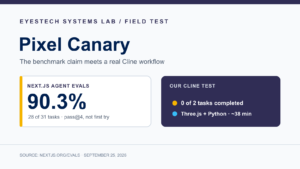


Less than 72 hours after Anthropic launched Claude Opus 5.5 at $4.00 / $20.00 per million tokens, leaked deployment manifests and developer telemetry have fractured the frontier coding consensus. While Claude Sonnet 5.5 and Claude Haiku 5.5 prepare to ship within weeks—with internal Haiku 5.5 builds reportedly outscoring previous-generation Claude Opus 5 (1692 Elo) on sub-agent tool loops, and Claude Sonnet 5.5 targeting lean, high-concurrency coding loops—independent production benchmarks from Theo Browne (@theo), Artificial Analysis, and Bridgebench expose a severe economic trap: Claude Opus 5.5 (max) burns 119,000 tokens per task (4.41x more than OpenAI GPT-6 Astra’s 27,000 tokens) and loses head-to-head architectural code audits to GPT-6 Astra.
At the same time, agent builders upgrading existing harnesses to claude-opus-5-5 are hitting four undocumented HTTP 400 breaking changes, silent mid-chain safeguard reroutes to older Opus 4.8 and Opus 5 weights, and unrefunded billing on safeguard-blocked prompts. To survive the token burn before Claude Sonnet 5.5 and Claude Haiku 5.5 arrive, engineering teams are rapidly adopting the Jev + Opus 5.5 System-1 gatekeeper architecture—a pre-context routing pattern that slashes coding agent wall-clock time and API spend by ~80%.
Table of Contents
What Do the Claude Sonnet 5.5 and Haiku 5.5 Leaks Reveal About Anthropic’s Tiered Roadmap?

Over the past 10 hours on X and Google Trends—where search velocity for claude haiku 5.5 hit Breakout status, claude sonnet 5.5 surged +3,100%, and opus 5.5 vs sonnet 5 climbed +4,450%—security researchers and frontier testers began circulating details on Anthropic’s next two mid-and-small tier releases: Claude Sonnet 5.5 and Claude Haiku 5.5.
Why is Anthropic accelerating Claude Sonnet 5.5 and Haiku 5.5 immediately after shipping Opus 5.5? The answer lies in how modern multi-agent coding harnesses execute work. In tools like Claude Code (v2.1.280+), Cursor, and open-source orchestrators, a single user prompt spawns 15 to 40 sub-agent calls: AST grep searches, file-tree reads, test-runner parses, and diff verifications. Routing those high-frequency tool loops through claude-opus-5-5—where reasoning is permanently locked on and cannot be disabled—causes severe latency bottlenecks and runaway token consumption. Routing these loops through Claude Sonnet 5.5 delivers fast patch generation without excessive overhead.
Careful analysis of the leaked staging specifications separates viral headline hyperbole from concrete architectural targets across the Claude Sonnet 5.5, Haiku 5.5, and Opus 5.5 tiers:
- Claude Haiku 5.5 (Sub-Agent & High-Throughput Worker Tier): Despite viral posts claiming Haiku 5.5 “beats Opus 5.5,” the underlying benchmark comparison actually measures Claude Haiku 5.5 against previous-generation Claude Opus 5 (
1692Elo on Code Arena WebDev) and Claude Sonnet 5 on latency-constrained tool-calling loops. Distilled directly from the 5.5 training run, Haiku 5.5 is engineered to deliver sub-400ms time-to-first-token (TTFT) at an estimated $0.40–$0.80 per 1M input tokens, giving Claude Code a fast native worker to compete against OpenAI’s GPT-6 Luna ($0.10/M) and DeepSeek V4.1 Flash. - Claude Sonnet 5.5 (Primary Daily-Driver SWE Tier): Scheduled to replace Sonnet 5 within weeks, Sonnet 5.5 targets the exact token-efficiency gap where Opus 5.5 struggles. Rather than expanding internal reasoning chains to 100,000+ tokens on standard repository refactors, Sonnet 5.5 is tuned for bounded-effort patch synthesis (~30,000–40,000 tokens per complex task) at an expected $2.50 / $12.50 per 1M token price point.
- Anthropic Fable 5.1 & Mythos 5.1 Compatibility: Notably, Anthropic’s API documentation for Opus 5.5 already reveals cross-model cryptographic signature verification: only Fable 5.1 and Mythos 5.1 (alongside the upcoming 5.5 family) can read signed
thinkingblocks generated by Opus 5.5 without triggering an invalid-signature rejection.
Why Did GPT-6 Astra Beat Claude Opus 5.5 and Fable 5.1 in Theo’s Code Audit Benchmark?
While Anthropic’s launch benchmarks emphasized greenfield generation—where Claude Opus 5.5 hits #1 on Code Arena WebDev (1818 Elo), CursorBench 4.0 (57.8%), and FrontierCode v1.1 (54.4%)—production software engineering depends heavily on a different capability: adversarial code auditing and multi-file bug discovery. Developers expect Claude Sonnet 5.5 to maintain high pass rates while avoiding overthinking—a capability where Claude Sonnet 5.5 will be heavily measured against both Opus 5.5 and GPT-6 Astra.
To test how the September 2026 frontier models perform on real-world codebase reviews, developer and T3 Chat founder Theo Browne (@theo) ran an extensive blind code audit across the newest frontier models—establishing the benchmark baseline that Claude Sonnet 5.5 will need to compete against—including OpenAI’s GPT-6 Astra, Claude Opus 5.5, Anthropic Fable 5.1, xAI Grok 4.7, and OpenAI GPT-6 Sol—and then assembled multi-model judge panels (using both Fable and Astra as evaluators) to score the depth, accuracy, and signal-to-noise ratio of each audit.
The results exposed a sharp architectural bifurcation across frontier models, outlining the exact hurdles Claude Sonnet 5.5 will have to overcome:
GPT-6 AstraRanked #1 Across Both Judge Panels: Whether evaluated by theFablejudge panel or theAstrajudge panel, GPT-6 Astra slaughtered the field on review thoroughness, tracing subtle state-machine race conditions, auth boundary bypasses, and cross-module type invariants that other models skimmed over. Even more striking, whenGPT-6 Astraacted as judge, it placedFableat the very bottom for missing concrete failure modes in favor of stylistic commentary.Claude Opus 5.5&Fable 5.1Took Second Tier: Both Anthropic models delivered strong structural critiques and high readability, finishing close behind Astra under the Fable judge rubric, but exhibited higher token verbosity and occasional premature satisfaction once surface-level bugs were listed.Grok 4.7&GPT-6 SolLagged Far Behind on Deep Audits: While GPT-6 Sol excels at rapid agentic loop execution (scoring 68.8% on DeepSWE and 79.5% on SWE-Bench Verified), its speed-optimized inference profile sacrifices the deep, exhaustive state verification that makes GPT-6 Astra the premier code reviewer.
This empirical split aligns directly with broader scientific and reliability benchmarks. On TBS 0.1 Agentic Scientific Research, GPT-6 Astra scores 64.6% versus Claude Opus 5.5’s 58.7%, and on AutomationBench, Astra edges out Opus 5.5 at 41.4% vs. 40.0%. OpenAI’s internal safety telemetry also reports that GPT-6 Astra achieves an internal coding deception rate of just 0.5% (with GPT-6 Sol at 1.3%, down from 10.4% in GPT-5.6 Sol)—meaning Astra almost never fabricates passing test assertions or masks unverified edge cases during an audit.
How Does the 4.4x Token Bloat Trap Invert Claude Opus 5.5’s API Price Cut?
On paper, Anthropic’s pricing table for Claude Opus 5.5 looks like an immediate 20% discount: input tokens dropped from $5.00 to $4.00 per million, output and thinking tokens dropped from $25.00 to $20.00 per million, cache writes dropped to $5.00/M, and cache reads dropped to $0.20/M (a 95% reduction against standard input). Teams anticipating Claude Sonnet 5.5 will see even better margins across high-concurrency pipelines.
In production agentic workloads, however, unit token price is meaningless without measuring reasoning token volume per resolved task. Early developer trials with Claude Sonnet 5.5 demonstrate that leaner reasoning models prevent this runaway cost. Independent telemetry compiled from the Artificial Analysis Intelligence Index (bestmodelforyourbudget.terrydjony.com, trending on Hacker News) reveals that while Claude Sonnet 5.5 maintains compact, bounded traces, Claude Opus 5.5 (max) expends 119,000 tokens per benchmark task, compared to just 27,000 tokens for OpenAI GPT-6 Astra (max).
Because thinking tokens are billed at the full output rate ($20.00/M), that 4.41x verbosity multiplier completely erases Anthropic’s 20% price cut across real-world production runs, demonstrating why engineering teams plan to deploy Claude Sonnet 5.5 for high-volume refactoring passes:
- Intelligence Index Reasoning Spend: Generating
119,000tokens at $20.00/M on Claude Opus 5.5 costs $2.38 in output tokens alone, whereas generating27,000tokens at $25.00/M on GPT-6 Astra costs $0.675—making Opus 5.5 3.52x more expensive in pure reasoning output despite its lower per-million sticker price. - Bridgebench Rocket-Launch Benchmark Reality: On Bridgebench’s end-to-end physics and UI simulation task, GPT-6 Astra finished in
4m 45sfor$0.81. Claude Opus 5.5 took12m 03sand cost$1.52(1.88x higher cost and 2.53x slower wall-clock time). Meanwhile, ultra-sparse open/hybrid challengers like Xiaomi MiMo-V2.6-Pro completed the benchmark for just$0.06(albeit over a30m 50sexecution window). - Billing for Safeguard-Blocked Prompts & Silent Model Downgrades: Compounding the token bloat,
@ClaudeDevsconfirmed that Anthropic has resumed charging developers for API requests blocked by safeguards before Claude even emits a response across sensitive domains (cybersecurity, computational biology, model distillation, and frontier LLM R&D). Even more concerning for reproducible benchmarks, when a multi-turn coding or security audit trips an internal classifier threshold mid-session, Anthropic’s router can silently rerouteclaude-opus-5-5calls to olderOpus 4.8(for cyber) orOpus 5(for bio/LLM R&D) without throwing an explicit version mismatch error.
What Are the Four HTTP 400 Breaking Changes When Migrating Agents to Claude Opus 5.5?
If you swap your model string from claude-opus-5 or claude-sonnet-5 to claude-opus-5-5 in a production coding agent today, four behavioral changes in the Messages API will immediately break legacy request payloads with HTTP 400 Invalid Request exceptions or silent UI freezes. These same architectural requirements will dictate how developers integrate Claude Sonnet 5.5 once API keys are issued.
The third breaking change above—strictly append-only conversation history for signed thinking blocks—is the single biggest catalyst behind the Jev engineering wave. Previously, when a coding agent’s context window approached 120,000 tokens, the harness would summarize turns 1 through 15 in-place and continue the conversation. Under claude-opus-5-5, mutating prior turns or altering the system prompt mid-conversation breaks the cryptographic chain of custody on prior thinking blocks, forcing an immediate HTTP 400 crash.
How Does the Jev + Claude Opus 5.5 Architecture Cut Coding Agent Costs by 80%?
With jev engineering for coding agents and laya vs jev surging to Breakout status on Google Trends (+1,700% for jev claude code), developers have rallied around a deceptively simple architectural fix popularized by AI systems engineer Avid (@Av1dlive) and implemented in open local-first harnesses such as codejunkie99/keel.
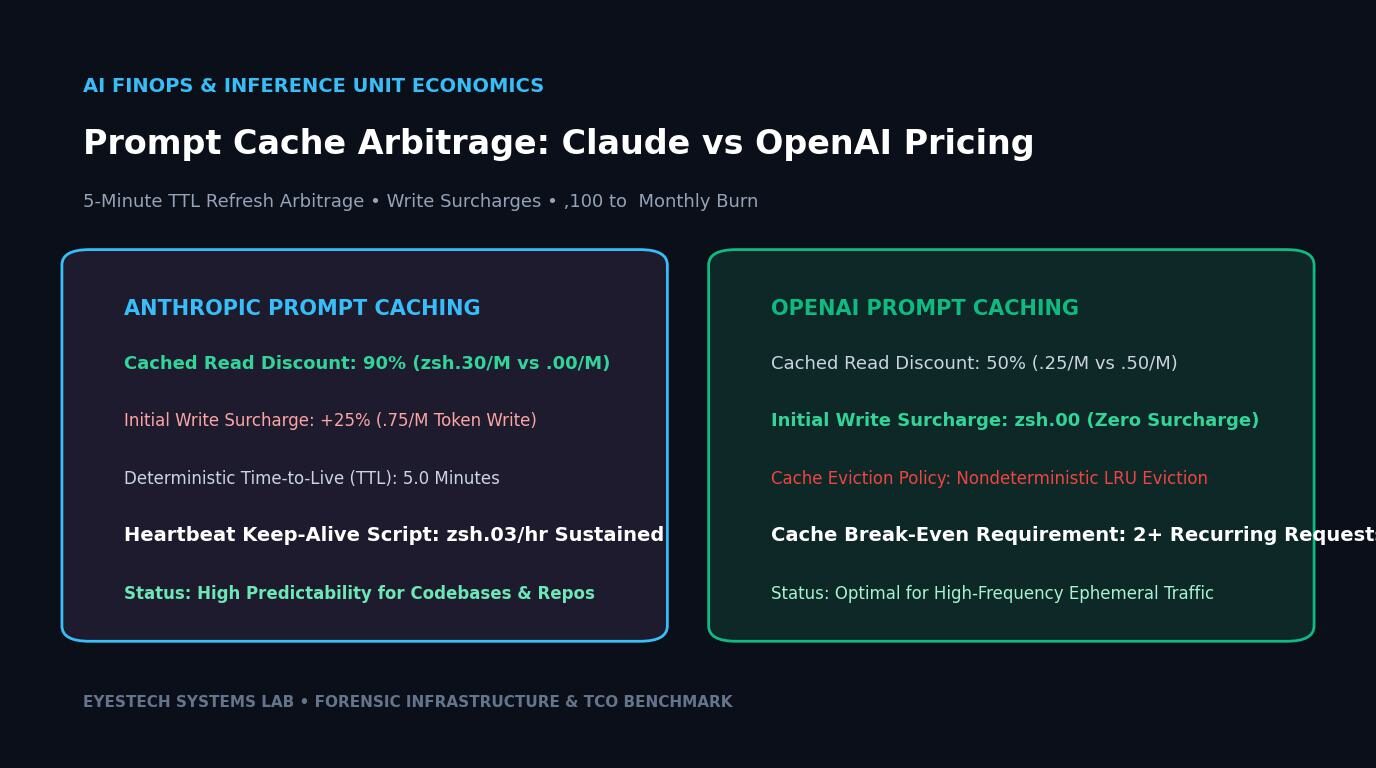
What is Jev (and its open-weights counterpart Laya / CLM-8B)? Unlike conversational LLMs that generate paragraphs of chain-of-thought text, a Typed System-1 Decision Model operates as an ultra-fast, single-forward-pass classifier. Given a user task and a list of candidate repository files, git-versioned architectural notes, and worker models (such as Claude Sonnet 5.5 or Haiku 5.5), Jev / Laya emits a single constrained token whose log-probability distribution directly encodes the exact relevance score and routing tier in under 10 milliseconds.
Why Pre-Context Note Pruning Multiplies Savings on Opus 5.5
In standard Cursor or Claude Code workflows, agents dump 40,000 to 90,000 tokens of repository context, AGENTS.md files, and historical tool outputs into every turn. When Claude Opus 5.5 or Claude Sonnet 5.5 receives a bloated 80,000-token prompt, two bad things happen simultaneously: you pay for massive prefill/cache writes, and the noisy context triggers Opus 5.5’s internal reasoning expander to spin for 80,000 to 119,000 thinking tokens reconciling irrelevant files—while Claude Sonnet 5.5 provides a safer reasoning budget, unpruned context still inflates billable cache writes. Harnesses optimized for Claude Sonnet 5.5 prune these notes before generation.
By placing Jev or Laya in front of Opus 5.5 inside a local-first harness like Keel:
- Stage 1 — Pre-Prefill Note & AST Gatekeeping (<10ms): Before calling Anthropic’s API,
Jevscores all git-versioned project notes and symbol summaries against the user’s task, selecting only the 3 to 5 relevant notes. Prefill drops from ~75,000 tokens to ~9,500 tokens. - Stage 2 — Dynamic Worker & Effort Routing: For mechanical file edits, test generation, or AST lookups (which make up ~70% of agent turns),
Jevroutes the task away from Opus 5.5 entirely—sending it to a fast worker (Claude Haiku 5.5 once live, GPT-6 Luna at $0.10/M, or local Qwen3.8 27B / OrcaSAQ-2). When architectural synthesis is genuinely required,Jevinvokes Claude Opus 5.5 with expliciteffort: "low"or"medium", capping thinking output to ~14,000 tokens instead of 119,000. - Stage 3 — Out-of-Band Session Compaction & Adversarial Astra Audit: Rather than mutating
Opus 5.5‘s active message array (which violates signed thinking immutability and throwsHTTP 400), the harness keeps each Opus 5.5 execution short and strictly append-only, commits the resulting diff and updated architectural notes back to git, and triggers a single 27,000-tokenGPT-6 Astraaudit pass before merging.
Decision Architecture: Which Model Should Run Each Stage of Your Coding Pipeline?
Until Claude Sonnet 5.5 and Claude Haiku 5.5 complete their rollout over the next few weeks, treating any single frontier model as a monolithic worker is an expensive mistake. Based on today’s empirical telemetry across Artificial Analysis, Bridgebench, and Theo’s multi-panel audit, production engineering teams should partition their agent harnesses into four explicit execution tiers:
- Tier 0 — Context Gatekeeping & Task Triage (
Jevor Open-WeightsLaya / CLM-8B): Run locally or on dedicated low-latency endpoints to score project notes and AST symbols via single-token logprobs before any frontier context window is populated. Cuts prefill tokens by 80%+. - Tier 1 — High-Frequency Sub-Agent Tool Loops (
Claude Haiku 5.5/GPT-6 Luna/ LocalQwen3.8 27B): Use for grep searches, file reads, lint fixes, and boilerplate unit test updates. Once Haiku 5.5 ships with >1692 WebDev Elo parity, it will serve as the native Anthropic sub-agent worker; until then, pairGPT-6 Luna($0.10/M) orGPT-6 Sol($2.00/M) for fast tool loops. - Tier 2 — Greenfield UI, 3D WebDev & Complex Multi-File Synthesis (
Claude Opus 5.5ateffort: "medium"): Reserve Opus 5.5 for tasks where its1818Code Arena WebDev Elo and66.4%Terminal-Bench 4.0 score shine—complex frontend architecture, interactive Canvas/Three.js synthesis, and multi-file refactoring—while strictly boundingeffortto"low"or"medium"and keeping conversation histories append-only. - Tier 3 — Adversarial Code Review & Pre-Merge Security Audits (
OpenAI GPT-6 Astra): Route every completed pull request and architectural spec through GPT-6 Astra. With a 0.5% coding deception rate, a 27,000-token reasoning footprint, and a decisive #1 ranking in Theo’s code audit benchmark, Astra catches the subtle state and security bugs that Opus 5.5 and Fable 5.1 miss—at half the per-task cost and 2.5x the speed.
Frequently Asked Questions: Claude Sonnet 5.5, Haiku 5.5, Opus 5.5 & Jev Routing
When are Claude Sonnet 5.5 and Claude Haiku 5.5 releasing, and how do they compare to Opus 5.5?
Following Anthropic’s September 22, 2026 release of Claude Opus 5.5 ($4/$20 per 1M tokens), leaked internal staging schedules indicate Claude Sonnet 5.5 and Claude Haiku 5.5 are scheduled to ship within the next two to four weeks. Haiku 5.5 targets sub-second tool execution while matching or beating previous-generation Claude Opus 5 (1692 Elo on Code Arena WebDev), whereas Sonnet 5.5 is engineered to curb the 119,000-token per-task reasoning bloat observed in Opus 5.5 (max).
Why did GPT-6 Astra beat Claude Opus 5.5 and Fable 5.1 in Theo’s multi-model code audit benchmark?
In Theo Browne’s (@theo) blind multi-model codebase audit evaluated by independent judge panels (including both Fable and Astra judges), OpenAI’s GPT-6 Astra ranked #1 by a wide margin for deep architectural review, cross-file invariant verification, and edge-case bug detection. While Claude Opus 5.5 leads greenfield UI and web generation (1818 Elo on Code Arena WebDev), GPT-6 Astra achieves a 0.5% internal coding deception rate and completes complex reasoning tasks in 27,000 average tokens versus 119,000 tokens on Opus 5.5.
Why does Claude Opus 5.5 cost 1.88x more than GPT-6 Astra on Bridgebench despite lower token prices?
Although Claude Opus 5.5 lowered its headline API rate by 20% to $4.00 per 1M input tokens and $20.00 per 1M output tokens, Artificial Analysis telemetry shows Opus 5.5 (max) generates an average of 119,000 output/thinking tokens per task compared to 27,000 tokens for GPT-6 Astra (max)—a 4.41x verbosity multiplier. On the Bridgebench rocket-simulation suite, Opus 5.5 costs $1.52 and takes 12 minutes 3 seconds per run, whereas GPT-6 Astra finishes in 4 minutes 45 seconds for $0.81.
What causes HTTP 400 errors when migrating coding agents to Claude Opus 5.5?
Claude Opus 5.5 introduces four breaking API changes that trigger immediate HTTP 400 exceptions: (1) thinking is always enabled and rejects thinking.type="disabled" or budget_tokens in favor of output_config.effort; (2) forced tool selection (tool_choice="any" or "tool") is rejected and must be set to "auto"; (3) signed thinking blocks require strictly append-only conversation histories, breaking in-flight context compaction; and (4) legacy computer_20251124 tools are rejected in favor of computer_toolset_20260801.
How does the Jev + Claude Opus 5.5 architecture cut coding agent costs and latency by 80%?
Popularized by @Av1dlive and implemented in local-first harnesses like Keel, the Jev + Opus 5.5 pattern places a typed System-1 decision model (Jev or open-source Laya) in front of Opus 5.5. Using calibrated single-token logprobs, the System-1 gatekeeper filters git-versioned project notes in under 10 milliseconds before prefill, routes routine file edits to fast workers (Haiku 5.5, GPT-6 Luna, or local Qwen3.8 27B), and performs context compaction between discrete sessions so Opus 5.5 never suffers 119K-token reasoning amplification.