


Leaked GPT-6 Sol generates 72k tokens in 9 mins—3x faster than Astra. Here is why titan-alpha unlocks applied recursive self-improvement without runaway AGI.
Leaked GPT-6 Sol generates 72k tokens in 9 mins—3x faster than Astra. Here is why titan-alpha unlocks applied recursive self-improvement without runaway AGI.
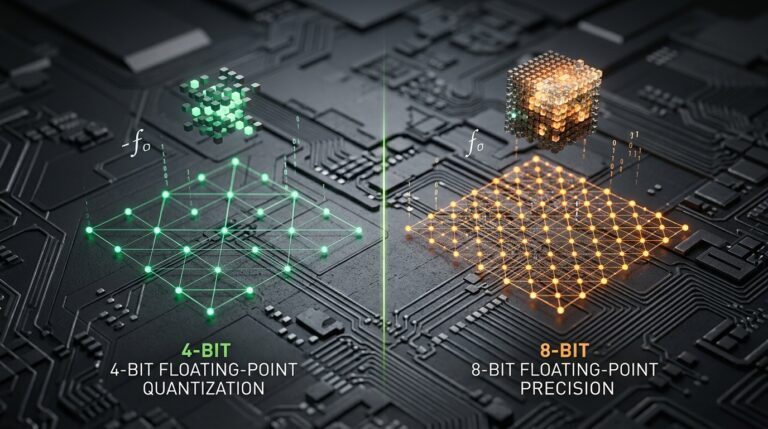
NVFP4 vs FP8 on Blackwell, fact-checked: block-16 scaling, measured speedups, quality limits, mixed-precision recipes and a reproducible acceptance test.
Reasoning token cost decides whether test-time AI is an upgrade or an expensive reliability problem. This audit…
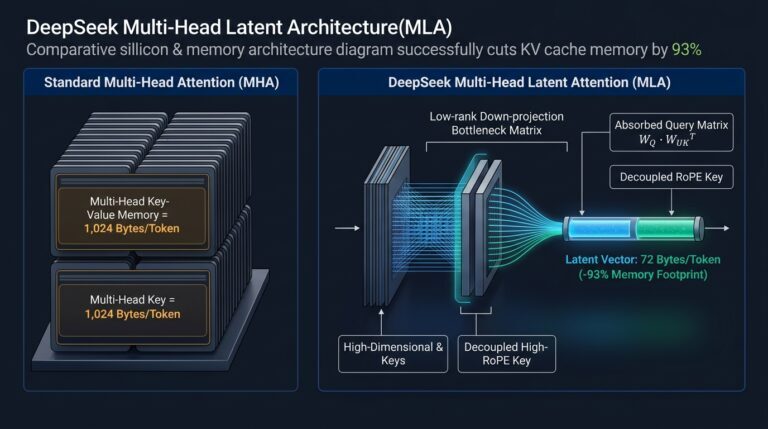
DeepSeek Multi-Head Latent Attention compresses KV cache down to 0.16 KB/token/layer. Here is the low-rank projection math and 128k context serving economics.
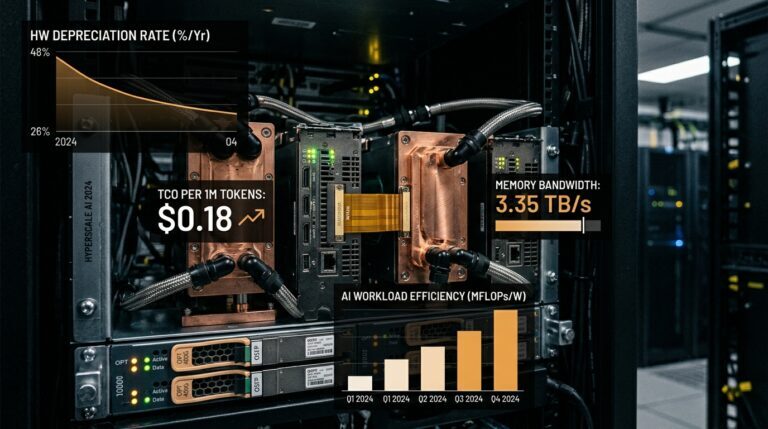
55+ verified benchmarks on AI inference cost, latency, GPU cluster failure rates, and memory bandwidth walls. Download raw 2026 telemetry data.
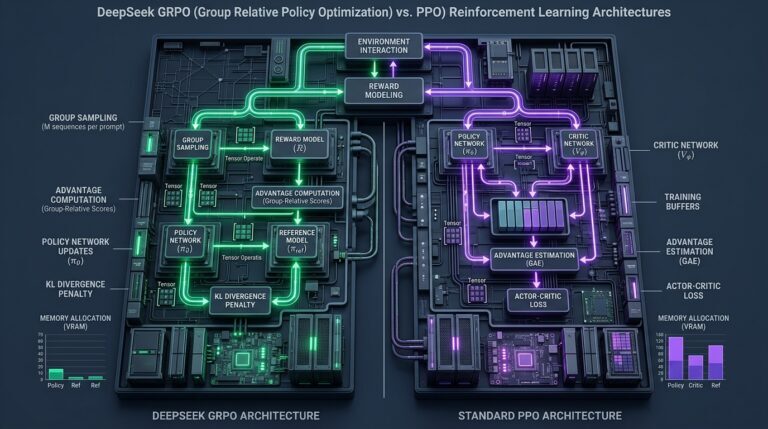
Scaling Reinforcement Learning from Human Feedback (RLHF) to multi-thousand-token reasoning models encountered an insurmountable systems bottleneck: the…

Forensic investigation into DeepSeek’s unit economics: why no Western cloud could match the pre-August $0.28 price, why DeepSeek temporarily hiked rates on August 16 after an 8-trillion-token surge, how V4.1-Flash’s 890-byte CED attention enables Western startups to hit $0.66 profitably today, and why American Big Tech hyperscalers charge a 4,000% markup to service legacy debt.

An empirical systems audit of HNSW vs. IVF-PQ indexing across 100 million 1536-dimensional vectors. Benchmarking Qdrant, OpenSearch, Milvus, and Faiss on RAM footprint, Recall@10, QPS throughput, and NVMe disk-spilling economics.

Within eight days in early September 2026, DeepSeek-V4.1-Flash and Gemini 3.8 Flash toppled previous-generation $90/M-token flagship models on DeepSWE v1.1. Here is the forensic engineering breakdown: 890-byte KV cache, CED topology, RLVR benchmaxxing, and real-world agent TCO.
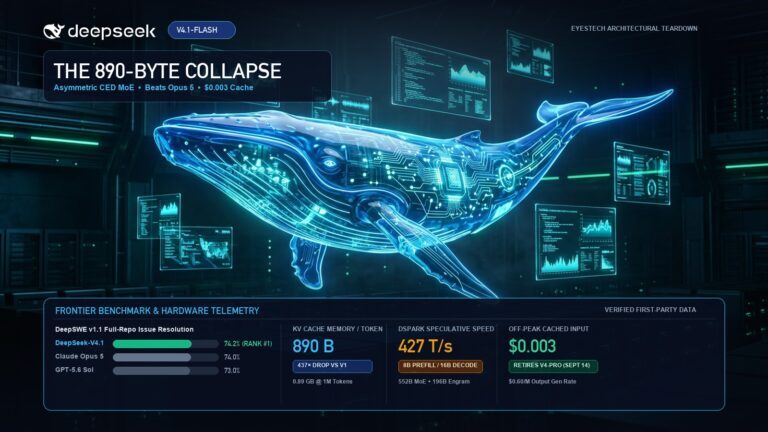
At 11:40 AM on September 10, 2026, DeepSeek dropped what may be the most consequential architectural disruption…