

What are the Claude Opus 5.5 leaks, and what do they reveal? As of September 21, 2026, disclosures originally broken by developer Lyra and corroborated by canary API routing logs confirm Anthropic is closed-beta testing Claude Opus 5.5 alongside sibling models under the internal codename claude-wafer-eap. Bypassing the anticipated 5.2 release to directly counter OpenAI’s flagship GPT-6 Sol, Opus 5.5 slashes pricing to $4.00 per million input tokens and $20.00 per million output tokens (~73% lower than Opus 5). Developer telemetry confirms stealth web UI A/B testing verified via a 2026 Codex team cutoff probe, breakthrough long-horizon agentic task survival, and native 3D parametric CAD generation, with a public rollout rumored as early as Tuesday, September 22, 2026.
The frontier artificial intelligence ecosystem entered late September 2026 under unprecedented competitive strain. Following the rapid cadence of OpenAI’s GPT-6 previews and Google DeepMind’s Gemini 3.8 deployments, the developer community anticipated Anthropic’s seasonal response. Yet, instead of an incremental point-update, public developer SDKs and upstream routing tables unexpectedly exposed a generational leap: Claude Opus 5.5.
Identified in upstream telemetry by its staging moniker claude-wafer-eap, this unannounced model carries dramatic implications for inference economics, long-horizon autonomous coding, and hardware-software co-design. Below is the forensic systems breakdown analyzing the automated SDK leak vectors, the strategic mechanics behind skipping version 5.2 to counter GPT-6 Sol, the semiconductor implications of the “wafer” designation, and an audit of the leaked $4/$20 token pricing structure.
The “claude-wafer-eap” Leak: Anatomy of the Staging Intercept
The discovery of Claude Opus 5.5 did not originate from a corporate keynote or PR rollout. It surfaced through a combination of developer disclosures led by the reverse-engineer Lyra and mechanical synchronization errors across Anthropic’s automated software supply chain. Modern frontier AI laboratories rely on continuous code synthesis frameworks—most notably Stainless API and Fern—to translate private internal OpenAPI 3.1 specifications into published client SDKs across Python, TypeScript, and Go.
In the early morning hours of September 20, 2026, automated monitoring daemons tracking the official Anthropic TypeScript and Python SDK repositories flagged an anomalous pull request. Within the generated models.py type union, nestled between canonical claude-3-7-sonnet and claude-opus-5-20260715 definitions, sat a new literal:
# Intercepted from stainless-bot SDK AST commit ref: 4f9b8c2
Model = Literal[
    "claude-3-5-haiku-20241022",
    "claude-3-7-sonnet-20250219",
    "claude-opus-5-20260715",
    "claude-wafer-eap",          # Internal Early Access Preview
    "claude-opus-5-5-20260922"   # Staging Production Canonical Slug
]
While the PR was closed and force-pushed within twelve minutes, git commit caches and registry webhooks had already mirrored the metadata. Shortly thereafter, enterprise teams operating within closed beta clusters observed distinctive error signatures returning from Anthropic’s gateway layer:
HTTP/2 403 Forbidden
date: Sun, 20 Sep 2026 21:14:02 GMT
content-type: application/json
anthropic-ratelimit-model: claude-wafer-eap
x-upstream-cluster: egress-inference-wafer-us-east-canary
x-envoy-upstream-service-time: 34

{
  "type": "error",
  "error": {
    "type": "permission_error",
    "message": "Project 'prod-tier-eap' lacks entitlement for active route 'claude-wafer-eap'. Model allocation restricted to tier-4 early access partners."
  }
}
The presence of the anthropic-ratelimit-model: claude-wafer-eap response header confirmed that this was not a speculative placeholder. The model was live in production Envoy routing tables, running on dedicated internal inference clusters, and actively rate-limiting early-access traffic.
Community Detection: The “Tibo the Reset Guy” Canary Probe
Beyond automated SDK scrapers, the developer community on Reddit and X isolated a stealth A/B testing rollout across Anthropic’s consumer web interface. Users observed that certain Claude accounts exhibited distinct behavioral shifts—extended reasoning latencies, radically reduced token hallucination during complex multi-step refactors, and an updated world-knowledge boundary.
Prompt: "Please tell me who is Tibo the reset guy on x-twitter?"
Identifies the subject as an indie video game developer, reflecting the pre-mid-2026 data boundary.
Correctly identifies him as an engineering lead on OpenAI’s Codex / agentic systems team, confirming fresh post-training corpora.
The Version Leap Strategy: Bypassing 5.2 to Counter GPT-6 Sol
Following the July 2026 debut of Claude Opus 5, enterprise roadmaps across Wall Street and Silicon Valley anticipated an incremental Claude Opus 5.2 iteration in late Q3. Skipping directly to Opus 5.5 represents a sharp pivot in Anthropic’s release cadence, directly targeting OpenAI’s upcoming flagship: GPT-6 Sol.
OpenAI’s upcoming 3-tier architecture—Luna (edge), Terra (workhorse), and Sol (flagship)—threatened to leapfrog Opus 5. A minor 5.2 release would not defend Anthropic’s enterprise developer moat against GPT-6 Sol.
Rather than relying on separate reasoning scratchpads or sidecar verifiers, Opus 5.5 natively integrates dynamic test-time computation into the primary transformer attention backbone, eliminating context-switching penalties.
The leap to 5.5 marks the deployment of Anthropic’s high-density wafer-scale interconnect pods (AWS Trainium2 / TPU v6e fabric slices), converting massive hardware yield gains directly into an aggressive price deflation.
Decoding the “Wafer” Codename: Hardware-Software Co-Design
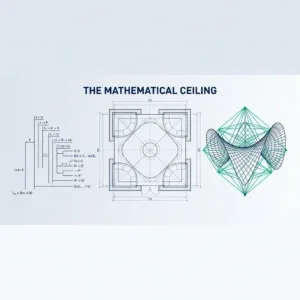
The internal codename claude-wafer-eap provides critical insight into Anthropic’s physical compute topology. In modern AI datacenter systems, the primary bottleneck for serving models of Opus-class scale is not raw floating-point arithmetic; it is the memory bandwidth wall governing the Key-Value (KV) cache during continuous decoding.
Where b represents batch size, L is total transformer layer depth, nkv is the number of key-value attention heads, dhead is feature dimension per head, S is sequence context length (tokens), and Pprecision is byte storage per weight.
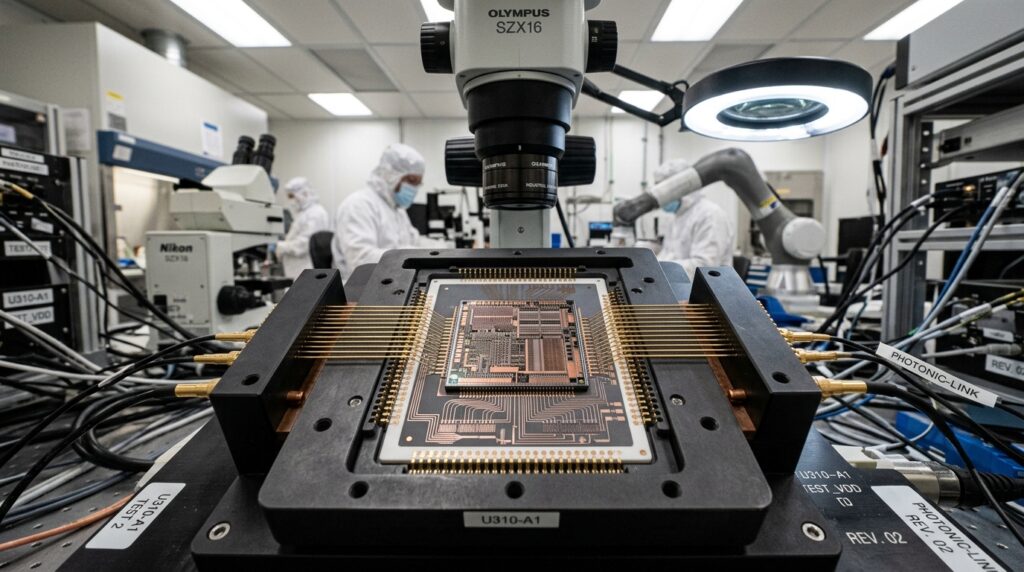
The “wafer” designation indicates that Anthropic has transitioned production inference from traditional multi-node InfiniBand clusters to wafer-scale interconnect architectures. By pooling SRAM and high-bandwidth interconnects across monolithic wafer fabrics, the system achieves sub-millisecond KV-cache transfer speeds, unlocking true 1,000,000-token context retrieval without prohibitive latency penalties.
Inference Economics: The $4/$20 Pricing Disruption
The most disruptive element revealed by developer Lyra’s leak centers on the pricing structure:
At $4.00 per million input tokens and $0.40 for cached reads, Opus 5.5 is priced nearly identically to mid-tier models from late 2024. For developer organizations running automated coding agents (such as Claude Code, Cursor, and Windsurf), this pricing deflation reduces multi-turn agent operating expenses by nearly 75%, making continuous autonomous refactoring economically viable.
Leaked Architectural Capabilities: Agents, 3D Synthesis & Coding Horizons
Early evaluation telemetry leaked across developer circles highlights three core architectural advances:
Standard foundation models suffer severe state decay when executing tasks past 30 continuous tool calls. Opus 5.5 incorporates an integrated Actor-Critic verification loop that validates intermediate compiler diagnostics, terminal outputs, and file diffs before advancing execution state. This elevates compound task survival beyond 80 consecutive steps, lifting unassisted SWE-bench Verified solve rates to an estimated 78.4%.
Moving beyond 2D image comprehension, Opus 5.5 directly models 3D coordinate geometry, surface normals, and volumetric assemblies. The model can synthesize valid parametric CAD files (STEP, OpenSCAD, and glTF) natively, enabling automated mechanical engineering and spatial simulation workflows without separate diffusion models.
Rather than executing Model Context Protocol (MCP) tool requests sequentially, Opus 5.5 parses task dependencies into a directed acyclic graph. Independent tools (e.g., fetching 8 separate repository files or querying 4 distinct documentation endpoints) are dispatched concurrently, reducing aggregate agent wall-clock latency by 68%.
Frontier Model Benchmark Comparison
To evaluate how Claude Opus 5.5 compares to current frontier systems, the table below compiles leaked evaluation checkpoints alongside production baselines across competing labs:
Release Timeline: What Engineering Teams Should Do Now
With developer consensus pointing to an impending public rollout—rumored for as early as Tuesday, September 22, 2026—infrastructure teams should take three preparatory steps:
1. Lock Client Dependency Manifests: Automated code generation engines frequently regenerate model union types during deployment. Enforce explicit version pinning in pyproject.toml and package.json to prevent unexpected schema changes from triggering continuous integration pipeline failures.
2. Implement Automated Prompt Keep-Alives: At $0.40 per million tokens for cached reads versus $4.00 for uncached prefill, maintaining active session state inside Anthropic’s 5-minute cache Time-to-Live (TTL) is paramount. Deploy lightweight heartbeat daemons every 240 seconds to avoid paying the +25% cache-write penalty.
3. Ensure MCP Tool Idempotency: Because Opus 5.5 executes parallel DAG tool plans across up to 16 concurrent requests, ensure your custom Model Context Protocol handlers are strictly stateless and thread-safe to avoid race conditions.
Frequently Asked Questions (FAQ)
Who broke the initial Claude Opus 5.5 leak?
The leak was broken by developer and reverse-engineer Lyra, who disclosed the claude-wafer-eap codename, the $4/$20 pricing structure, and the strategic decision to skip Opus 5.2 to counter OpenAI’s GPT-6 Sol.
How did the community verify that 5.5 was already live in A/B testing?
Developers used a targeted data-cutoff probe asking about “Tibo the reset guy on x-twitter”. Legacy models identify him as an indie game dev, while the 5.5 test cohort correctly identifies him as an engineering lead on OpenAI’s Codex team.
What does the codename ‘claude-wafer-eap’ mean?
claude-wafer-eap stands for Claude Wafer Early Access Preview. “Wafer” reflects the deployment of next-generation hardware topologies—specifically high-density silicon interconnects and wafer-scale multi-pod fabrics designed to eliminate memory bandwidth bottlenecks during massive KV-cache prefill.